



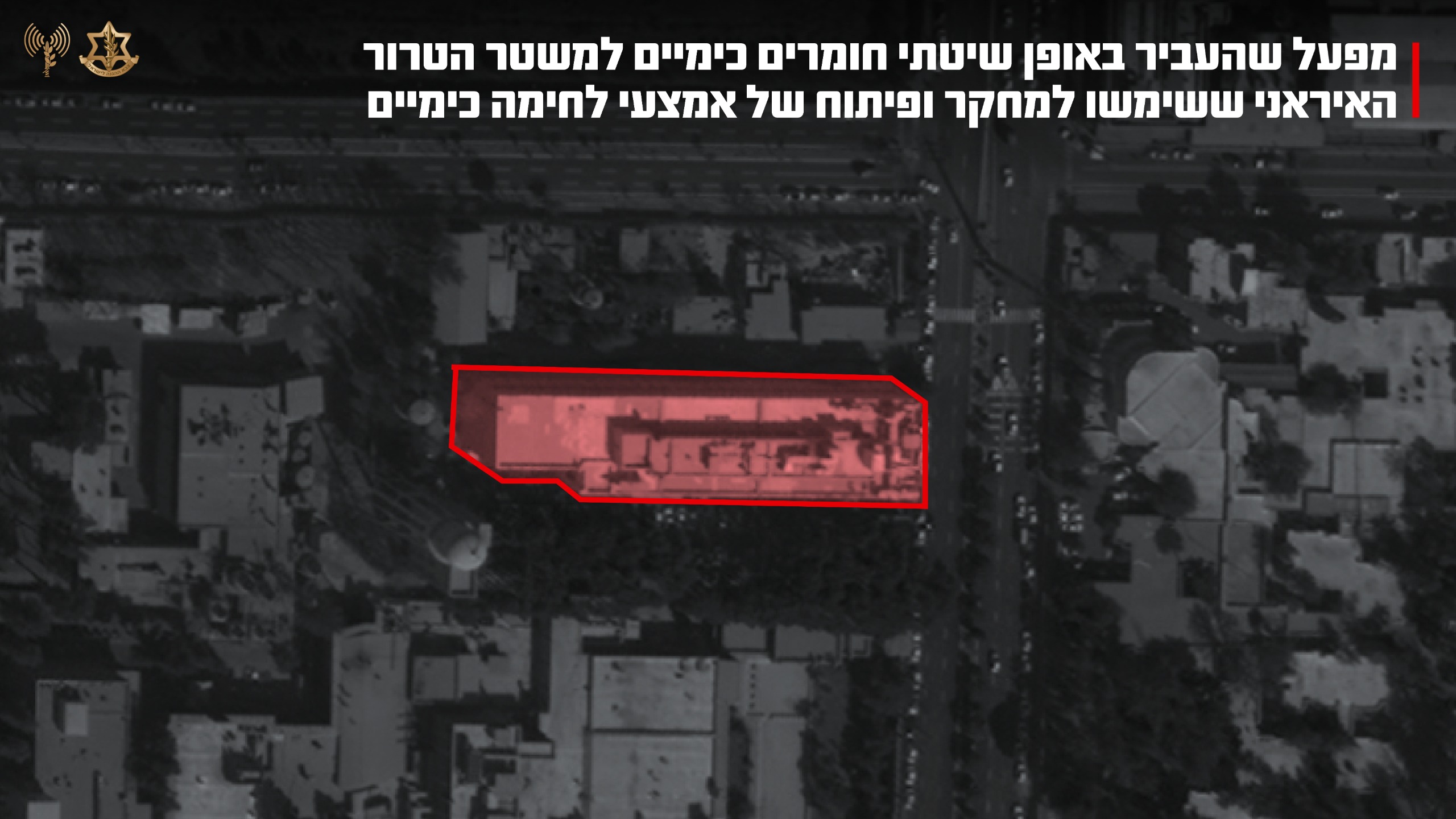
On March 31 this year, the Israeli Air Force struck a plant in Tehran. It was not a nuclear facility or a missile factory, but a pharmaceutical plant that, according to the IDF, supplied the Iranian regime with materials used to develop chemical weapons. But that plant was only one link in a much wider network that operated for years behind universities, research labs and companies that presented themselves as civilian. The network connects scientists, defense development bodies and Iran’s pharmaceutical industry.
An investigation drawn from the book “Thwarting the Bomb” by intelligence researcher Ronen Solomon reveals the method behind Iran’s chemical weapons program. The program relies on three main arms:
- Research, carried out at universities and scientific institutions.
- Development, carried out at defense facilities subordinate to Iran’s Defense Ministry.
- Production, through plants and companies that also operate in civilian fields.
This division operates at several sites in Iran, with the most prominent example along the Tehran–Karaj axis.
The story begins at the IRGC’s Imam Hossein University. As early as 2005, Dr. Hossein Fakhrian published research on fentanyl, a substance with a powerful effect on the central nervous system. Also linked to him is researcher Mohammad Javad Tajizadeh, who, according to information provided to our investigation, conducted research on substances that affect the nervous system.
But this activity was not limited to scientific publications. According to the U.S. State Department, in 2014 the university sought to purchase significant quantities of an anesthetic from China. In 2023, documents were revealed showing that a grenade designed to disperse an anesthetic agent had also been developed at the university. A year later, the United States announced that Iran had already developed and filled munitions with pharmaceutical-based chemical agents.
Academic research, however, is only the first stage. At the heart of the defense system operates SPND, the research and development body founded by Mohsen Fakhrizadeh, considered the father of Iran’s military nuclear program, who was eliminated in 2020; under the organization operates the Shahid Meisami Group, which the United States sanctioned for involvement in the development and production of incapacitating chemical agents. According to the investigation’s findings, experiments with Novichok and variants of sarin were also carried out at this center. Substances in the fentanyl family can cause loss of consciousness and respiratory depression. Mustard gas causes severe damage to the skin and respiratory system, and nerve agents such as sarin and Novichok can cause paralysis and death.
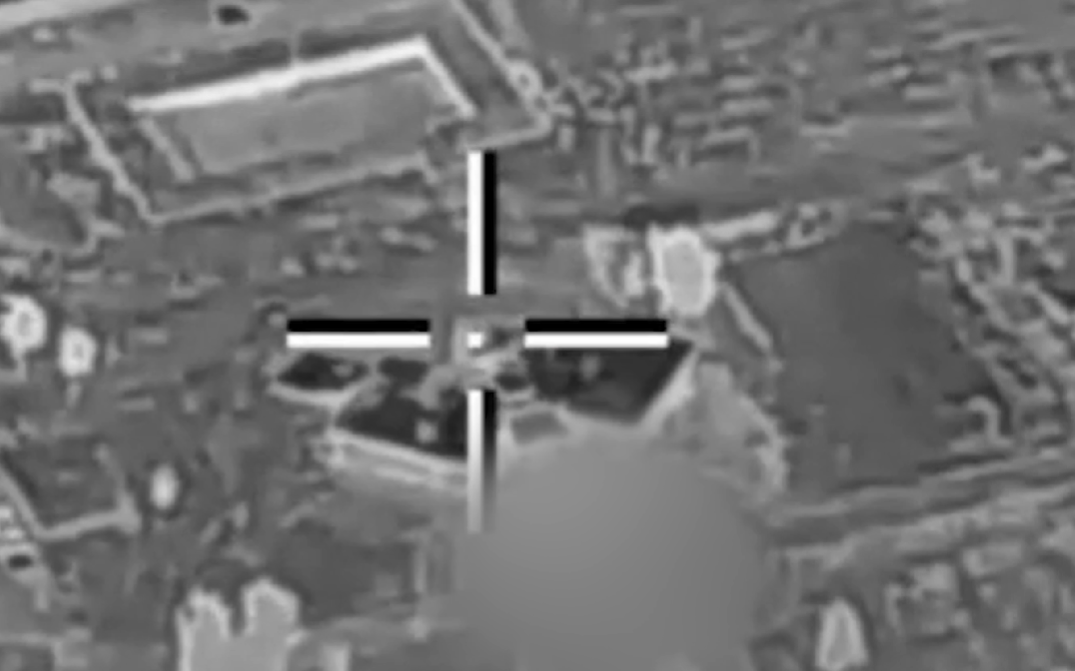
The third stage is the pharmaceutical industry. According to the IDF, the Tofigh Daru plant, which presented itself as a drug manufacturer, supplied fentanyl-family substances to SPND. In December 2023, Javad Mashayekh, a figure connected to the defense organization, was even documented in the plant’s laboratories. This is where the three links connect: the university where the research was conducted, the defense center where the capabilities were developed, and the plant that supplied materials for the program. During the waves of Israeli strikes, all three sites were hit. The Shahid Meisami center was attacked, the chemistry center at Imam Hossein University was destroyed according to the IDF, and at the end of March the Tofigh Daru plant was also struck. In other words, Israel hit the three central links identified along this axis.
The findings are not limited to the Tehran area. In Isfahan Province, the research company Hakiman al-Sharq operates, presenting itself as a company working in medicine and health. In July 2024, the United States sanctioned it for involvement in chemical weapons research and development. According to the investigation’s findings, the company operated in a research environment that also included academic institutions, including the ISTT science park.
According to information provided by Solomon, elements linked to SPND also operated in the area. The investigation thus points to an attempt to combine scientific activity, defense development, and civilian-looking companies at other sites in Iran.
Iran’s chemical weapons program did not begin in the 2000s. Iran already produced chemical weapons during the war with Iraq, and according to the United States, it even transferred such weapons to Libya in 1987. Last year, Mohsen Rafighdoost, the former IRGC minister, also confirmed this.
Now, after the Israeli strikes, the big question is what remains of this program. According to the investigation, attempts were made to rebuild the damaged research facilities even after the war. But the concern is not only about the labs and plants.
Iran already possesses missiles with cluster warheads, and according to the investigation’s findings, it is possible in principle to adapt dispersal systems for unconventional agents as well. There is currently no public evidence that Iran has already integrated chemical weapons into these warheads, but that possibility requires examining the threat beyond the nuclear program as well.