




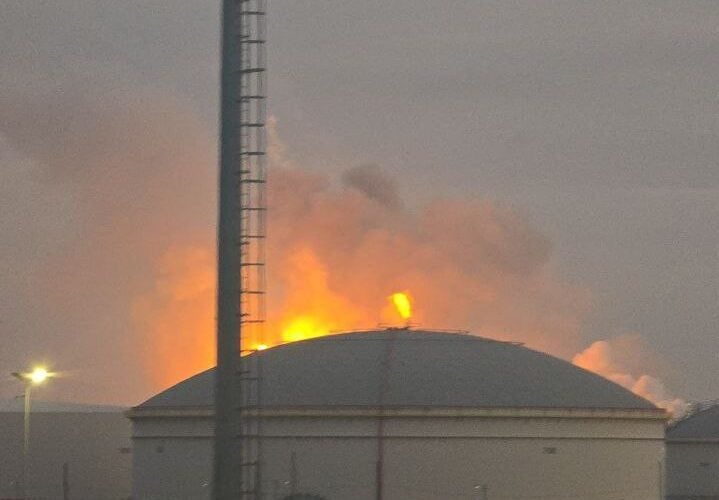
The wave of Iranian attacks in recent weeks on Bahrain, including strikes on American military sites, radar systems at Sheikh Isa and Riffa air bases, and oil tankers in the Strait of Hormuz, is putting the kingdom under pressure that goes beyond security—threatening its economic stability as well.

 2+
The escalation comes at a time when Bahrain is already struggling with heavy debts, high debt servicing costs, a budget deficit, and pressure on its credit rating. In this reality, any additional security development could drive up the country’s financing costs, damage investor confidence, and deepen the difficulty of meeting its financial obligations.
Meanwhile, yields on Bahrain’s ten-year bonds crossed the 8.3% threshold in secondary trading, while the estimated yield on the yield curve reached 9.726%. That means investors are demanding higher returns in exchange for investing in Bahraini debt.
 2+
Beyond the bonds, Bahrain is dealing with a heavy debt burden. The kingdom’s external debt reached about $43.25 billion at the end of the first quarter of 2026, compared to about $42.28 billion at the end of 2025. Total government debt reached about $60 billion in the same period.
The financial pressure is also reflected in the country’s credit rating: in February 2026, Fitch downgraded Bahrain from B+ to B, citing rising public debt and a widening budget deficit. The financial burden is evident in interest expenses as well—in 2025, interest payments on the debt totaled 1.052 billion Bahraini dinars, about $2.8 billion, representing 39% of government revenues, up from 31% in 2024, according to Bahrain’s State Audit Bureau. At the same time, the debt-to-GDP ratio was estimated at about 147% at the end of 2025, among the highest in the world, according to Moody’s.
 2+
The economic pressures are also showing up in growth figures. Bahrain’s real GDP contracted 3.8% in the first quarter of 2026 compared to the same period last year, following a 37.2% drop in oil activity. According to Bahrain’s Finance Ministry, the decline was mainly due to restrictions on shipping traffic in the Strait of Hormuz, alongside planned maintenance work in the sector.
The damage to shipping traffic isn’t limited to the Strait of Hormuz alone. According to the data, vessel traffic in the strait dropped 65%, while in the Bab al-Mandab strait there was a decline of about 25%. The disruptions in both passages are increasing uncertainty and hurting shipping companies’ ability to plan their routes. In cases where companies are forced to choose alternative routes to avoid risks, sailing times lengthen and fuel, insurance, and shipping costs can rise.