


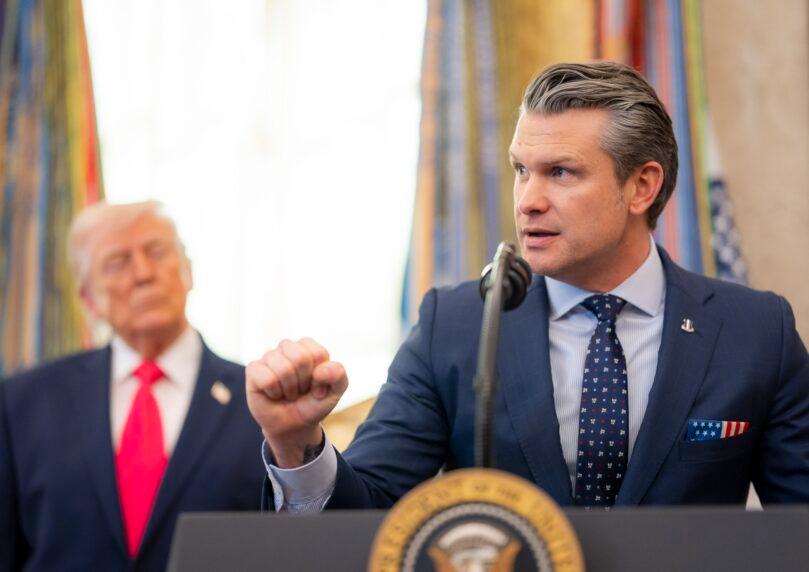

Venezuela and the United States signed a historic agreement yesterday in Caracas to restore military and intelligence ties between the two countries. War Secretary Pete Hegseth said Venezuela has transformed from America’s “regional foe” to a “respected partner” following the capture of former Venezuelan leader Nicolás Maduro by U.S. forces last January.

 2+
According to Hegseth, the agreement will include joint training exercises, intelligence sharing, transfer of defense equipment and capabilities, and closer ties between the two militaries. No additional details were provided about the scope of the agreement or the types of equipment to be transferred, but Hegseth emphasized the partnership will help Venezuela “reclaim its territory from narco-terror networks”—armed criminal organizations and drug cartels that control large swaths of the country.
Maduro, who led an authoritarian regime hostile to the U.S. for over a decade, was captured in January in a U.S. military operation that Hegseth called “the most sophisticated military operation in Latin American history,” which he claimed lasted just 48 minutes. After his capture, Delcy Rodríguez, who served as his vice president and is considered a close Maduro ally, replaced him as de facto head of state and continues to serve in the role even after her legal term ended in July.
Hegseth’s visit follows a broader deal in which the United States will take control of part of Venezuela’s oil fields—the country holds the world’s largest oil reserves—according to Trump’s August announcement. Hegseth said the agreement makes the Strait of Hormuz irrelevant for the Western Hemisphere, referring to the strategic shipping route off Iran’s coast through which about one-fifth of global oil supply passes and which has become a flashpoint for tensions and threats from Tehran during regional fighting.
 2+
The move comes amid political uncertainty in Venezuela, after opposition leader and the leading figure in the struggle to topple Maduro’s rule, María Corina Machado, returned to the country following seven failed attempts. Secretary of State Marco Rubio said her safe return was the result of U.S.-backed “reconciliation talks” and called it Venezuela’s “best opportunity” in thirty years to achieve free elections and stable democracy.
 2+
Still, the fact that no date has been set for the next presidential elections has left many Venezuelan citizens divided in their attitude toward Trump. While many are pleased that Maduro is no longer in power, others believe the White House’s prioritization of reviving Venezuela’s oil industry and arrangements with figures from the previous regime over immediate democratic steps was the wrong approach for meaningful change in the country.