


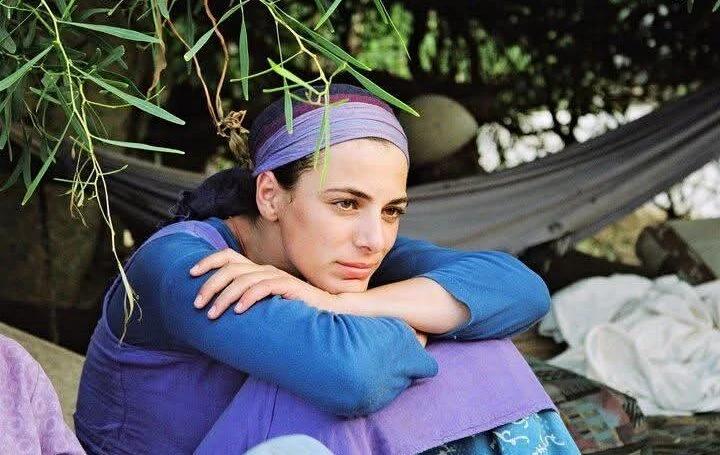

Simcha Cohen opened her eyes again and again, praying that the terrible night would finally end. She was lying inside a grave, and every minute felt like an eternity. Hours earlier, she had dared to defy Daniel Ambash, the cult leader who controlled her life, after he demanded that she swear she was giving up her little daughter. “The thought of running away never crossed my mind. I was scared to death,” she recalls.

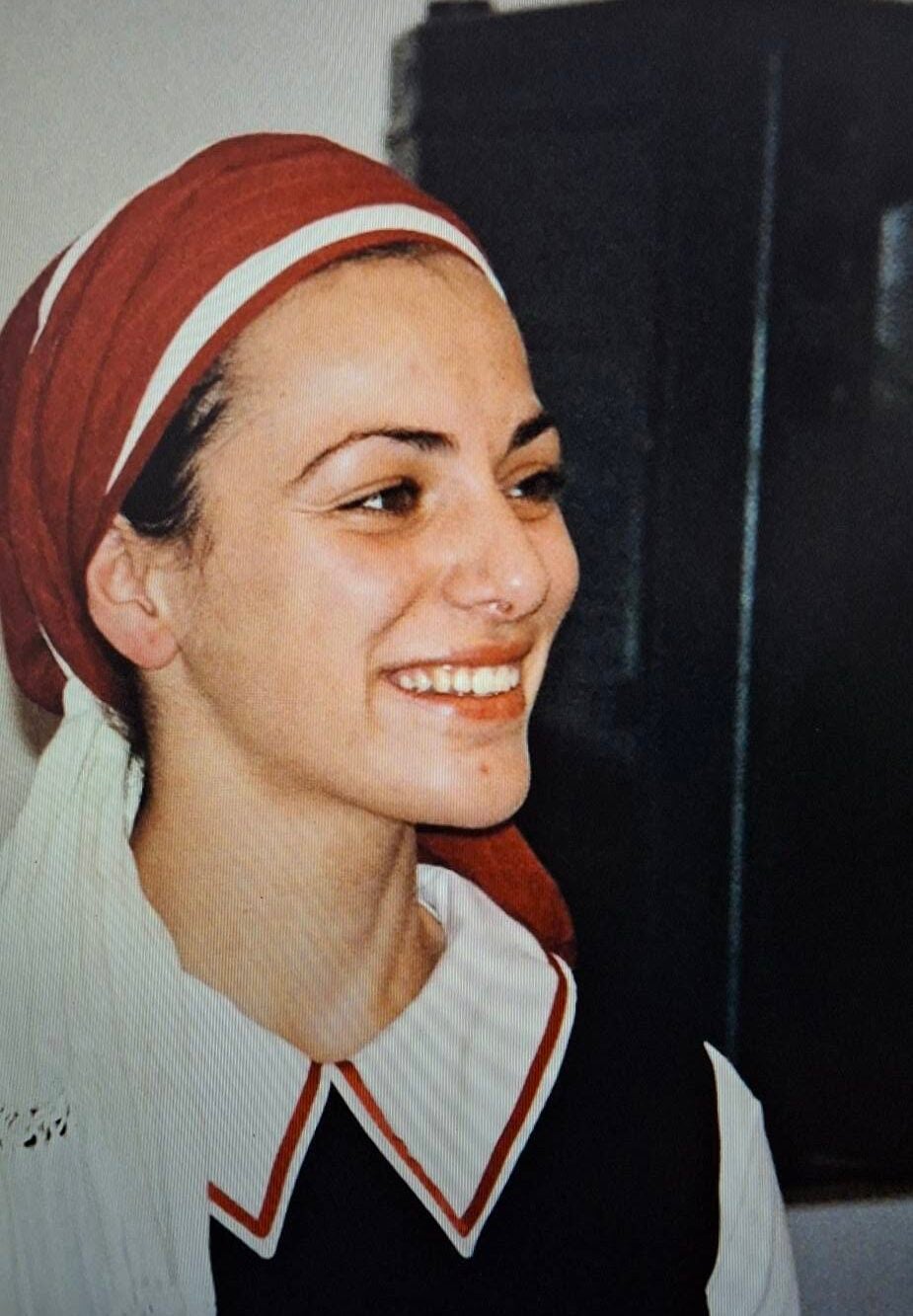
Anyone who meets Simcha Cohen today would find it hard to imagine what she went through. She is a mother of four, a lecturer, a screenwriter and an athlete, an impressive and articulate woman, yet for eight years she lived under Daniel Ambash’s control. Today she lives in Jerusalem, raises her children, and speaks bravely about the years in which her freedom was taken from her, she was separated from her daughter, and she had to fight to survive. Ahead of the International Day for the Elimination of Violence Against Women, she returns to those painful memories in a special interview with C14. She hopes her story will give strength to other women living in fear, and remind them that even after years of violence and control, it is possible to find the way to freedom.
Until the age of 21, Simcha Cohen’s life was not very different from that of other young Israeli women. She grew up in a family of six children, was surrounded by friends, and served in the army. During her service, however, she went through a personal crisis that shook her world. After her discharge, she entered a period of soul-searching. She became more religious and tried to find answers to the questions that troubled her. She never imagined that her search for meaning would lead her into hell.

“He looked at me and said he wanted to marry me”
Let’s go back to the beginning. How does an ordinary 21-year-old end up in Daniel Ambash’s cult?
“At 21, I went to a hillula (memorial celebration) at the Tomb of Samuel the Prophet in Jerusalem, and there I met one of his wives. She handed me a note and said, ‘Here, it’s a blessing note, a prayer note,’ and asked me if I was single. She asked me to give her my number, because she said they hold parties and all kinds of events for single women.”
What was your first encounter with the cult members like?
“On Purim, a friend and I dressed up, me as Little Red Riding Hood and her as Goldilocks, and we decided to go looking for needy families to give them mishloach manot (Purim gift packages). Right then, the same woman who had taken my number called and asked if I remembered her. I said no. She said they were having a Purim party with lots of kids. She asked what I was doing, and I told her I was looking for needy families.
She said, ‘I don’t believe it, there’s a gathering here right now of lots of needy families and lots of children.’ I had no idea. That was actually the first time I entered the cult. I walked in and saw the cult leader standing there, lots of women, lots of children. It didn’t seem out of the ordinary to me. They looked like a lot of families and a lot of kids. I gave them the gift packages, and they gave me a big book of pictures and prayers.”
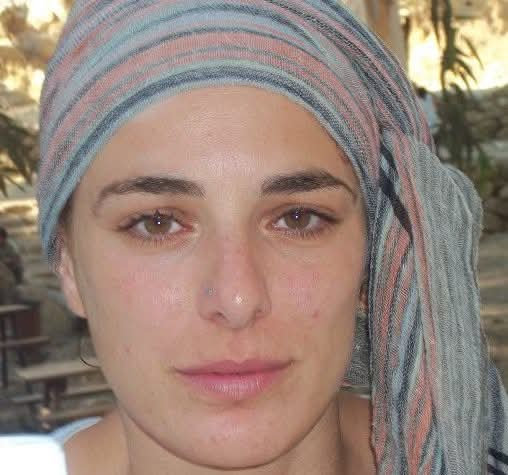
What happened after your first visit to the cult?
“He (Daniel Ambash) decided that he wanted me, that I would join the cult, and he sent all four of his wives to follow me, find out where I lived, and come persuade me. The second time I came, it was really to ask him for a blessing for my life, for finding a partner, for my path forward. He told me to go pray at the grave of the tzaddik (righteous sage) he believed in. One of the women took me there to pray. She stood behind me and said, ‘Pray for your true soulmate, pray for your true soulmate.’ That night I had a dream. In the dream, I saw him standing and playing an organ, with four women standing in front of him.”
And how did that dream affect you?
“When I woke up in the morning, I saw an insane number of calls from that woman. I said to her, ‘What’s so urgent? What happened?’ and told her about the dream. She said, ‘I’m coming to get you now. You have to tell this dream to Abba (Ambash).’ In no time she showed up below my building in a taxi with two more women, and they took me toward Lifta, where the cult was in Jerusalem.
When I walked in, a woman in a head covering started dancing as if she’d just won the lottery, and I didn’t understand what was going on. I saw lots of children coming in and out, and then I noticed him standing in a studio playing an organ. The reality and the dream came together. Without them telling me, I understood that these were all his wives and all his children.”
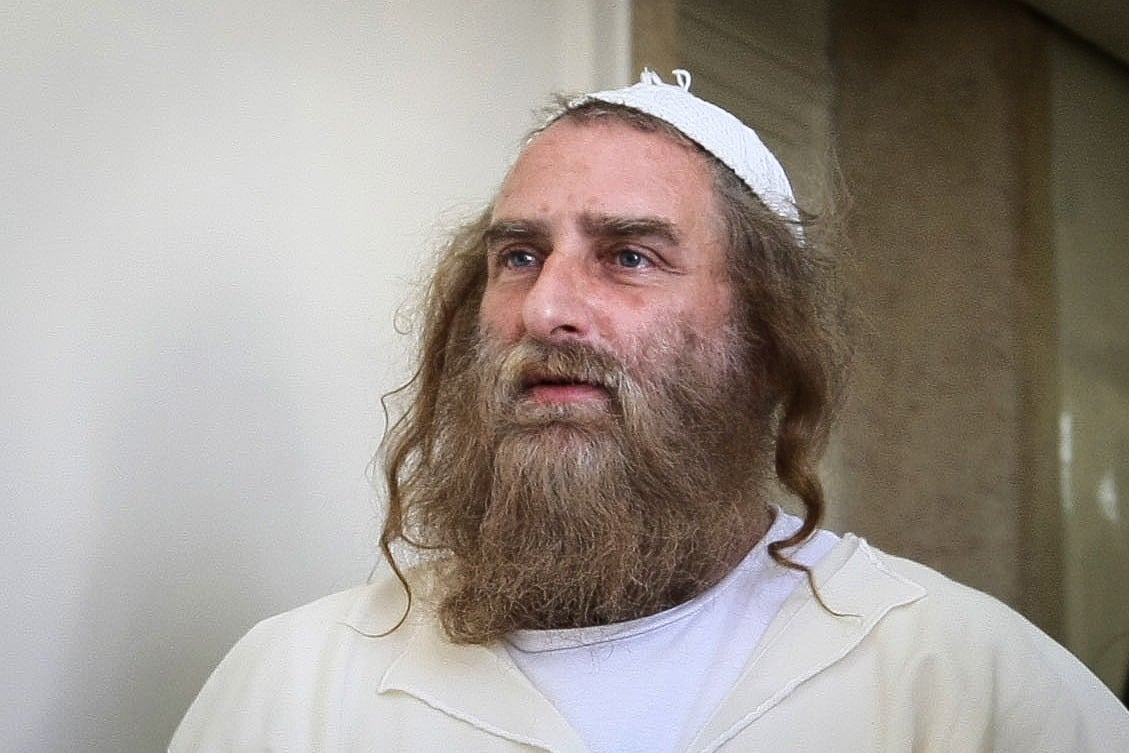
And what happened when you approached him?
“At that moment, out of sheer fear, I went up to him and said, ‘What do you want from me?’ He had these big blue eyes, and he looked at me without hesitating. He said to me, ‘To marry you. You are my fifth wife.’”
How did you react when he told you that?
“At that moment my knees buckled. I understood that I had walked into something much bigger than me. He began to lay out his whole life story and to explain how much he suffered from all the women there, that they all abused the children, that he needed my help, and that they lived in total secrecy and no one could know.
This is where the process of my entry into the cult began. He started placing responsibility on my shoulders, explaining how important it was that I come and save the children. He put the responsibility on me and seemed to give me a choice, but in fact he took the choice away. On the one hand, he told me, ‘Help me save the children,’ and on the other, ‘You must keep this a secret.’
Simcha returned to her parents’ home but told them nothing about what she had seen and heard at Ambash’s. As far as they knew, she had become more religious and started studying at a midrasha (women’s Torah seminary). Meanwhile, the women around Ambash kept trying to convince her she hadn’t come to them by chance. They found meaning in dates and small details from her life and explained that all of this proved she had been chosen to redeem the people of Israel. Simcha, who only wanted to find her way, began to believe that perhaps she had really found the place she was looking for.
“I would hear terrible screams, but when I got there, everything looked normal”
When did you start to understand what was really happening inside the cult?
“You have to understand, entering a cult is a process, and during that process, of course, they hide all the horrors from you. For example, there were two houses. I’d be sitting in one house and hear screams, terrible screams. I’d go to the other house to see what was going on, and I’d see absolutely nothing: dancing, children singing. Again I’d hear shouting, hear things, and again I’d go over, and suddenly they were sitting and studying.
Until one day I woke up and saw one of the men hitting one of the women. They were fighting, and Daniel Ambash was standing next to them. At that point they could no longer hide the violence going on there, and I demanded to know what was happening.”

What was your life like as you went deeper into the cult?
“In the first months everything seemed rosy. There was a feeling that Simcha had arrived and redemption had come with her. Even the children pinned their hopes on me. They hoped that finally someone would come and save them from the terrible reality they had been living in for years before I arrived. I’m talking about imprisonment, starvation, exploitation, and very terrible things, some of which can’t even be broadcast.”
What kind of violence was there inside the cult?
“We went through horrible things there, including severe sexual violence. Anyone who wants to understand the scale of the horror can read the shocking verdict. We were held in conditions of slavery, literally. We were forced to beg in the streets and bring in a fixed amount of money every day. A woman who didn’t reach the required amount was punished and forced to sleep in the storeroom with no clothes.”
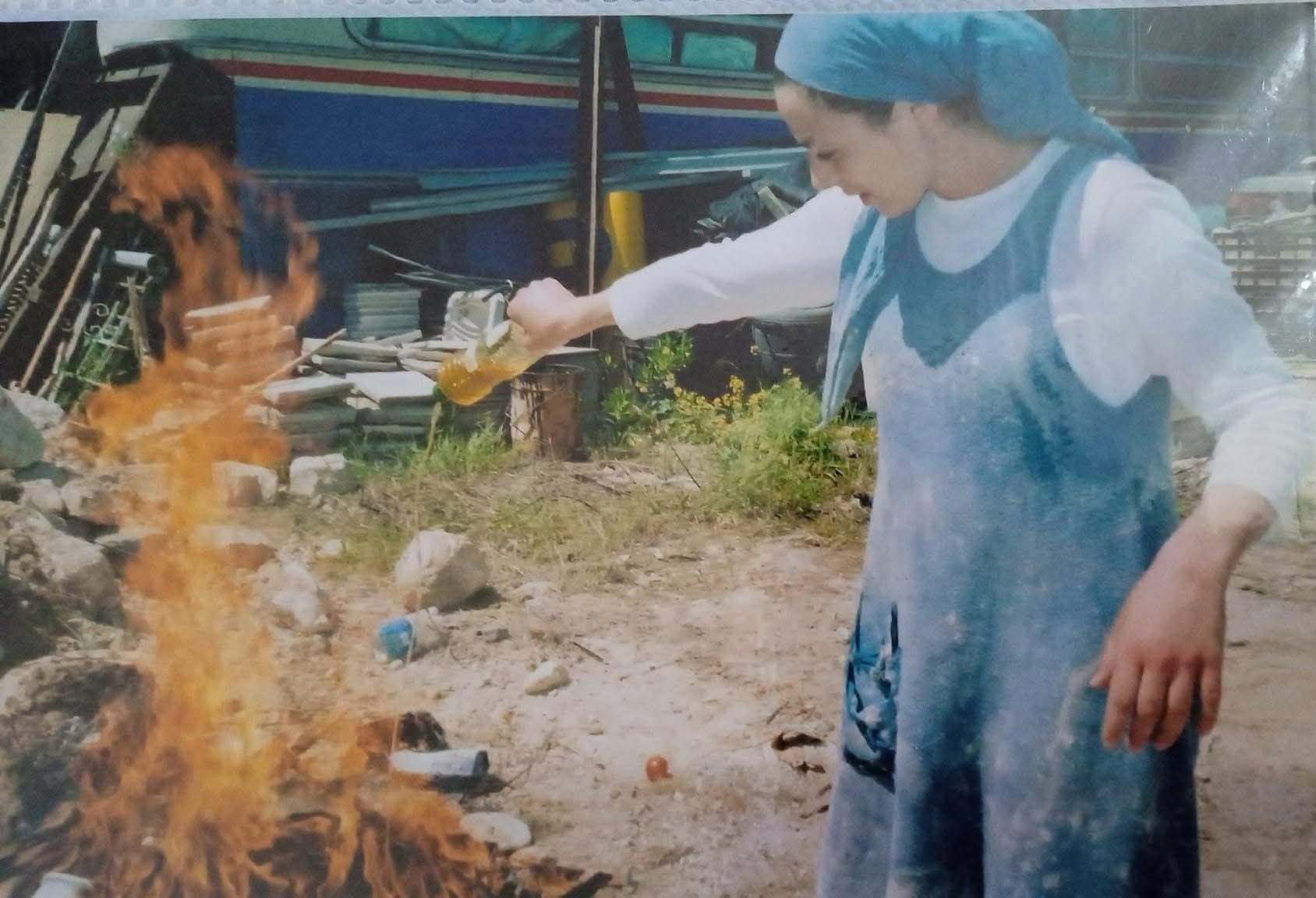
Simcha’s wedding to Daniel Ambash took place at three in the morning, in a cemetery, far from anything she had imagined when she thought about her wedding day. By then, she says, Ambash had already managed to distance her from the other women and children in the cult. He had labeled her a “concubine” and forbidden her to go near them. The isolation and constant pressure eventually led her to agree to the terrible ceremony.
Were there women who dared to refuse his orders?
“There were some who said no, but for that we got it even worse. When someone had to be punished, he would enlist the whole family, including the children, and force everyone to take part in the punishment. Mothers would beat children; children would beat mothers. I remember one time when all the women and children threw themselves at me and beat me together. I couldn’t hit back; I couldn’t resist. Woe to any woman who tried to run away or refuse him. He would stop at nothing.”
How did he manage to control you so completely?
“It’s impossible to explain to someone on the outside what it’s like to live inside a cult, because only someone who was there can truly understand. It’s important to understand the methods of intimidation and exploitation. It doesn’t happen in a day; it’s a gradual process. He had charisma, he had financial means, and all kinds of methods through which he managed to hold seven women and nineteen children, right under the authorities’ noses, at the entrance to Jerusalem. No one heard our cry. No one. And we cried out, we cried out.”
But you could leave the houses. Why didn’t you run away?
“The captivity is mental. You reach a point where you think he controls your thoughts, that he knows where you are at every given moment. You don’t even think about escaping. I didn’t even think about running away.”
“My daughter was born on a mattress, with no doctors and no checkups”
In the midst of this terrible reality, you became pregnant. What was that like?
“Throughout the pregnancy, I was kept completely secret, because he was afraid my parents would find out I was having a baby, and also afraid people would find out there were several of us women. So the whole pregnancy I was in hiding, in difficult conditions. The birth itself took place at home, with no doctors, no checkups, on a mattress on the floor. At the birth, there were two girls, aged nine and eleven, and two women who delivered the baby.
My daughter was born with a problem in her leg, and he refused to take her to doctors. No one inside the cult received medical treatment. At six months old, she had to undergo complex surgeries because they realized she had been born with a dislocated hip that kept getting worse. The birth was a miracle. I could have died giving birth, and the baby could have died too.”
What happened after your daughter was born?
“From the moment I gave birth to my daughter, the hell of my life began. He wanted me to give him a healthy son who would be his successor, the redeemer, so he could prove to everyone that the problem was the women and not him. He was always searching for a healthy woman who would give him a healthy son, and when my daughter was born with a problem in her leg, as far as he was concerned, I had failed the mission. He saw me as the one who had ruined his plan, and he started looking for another woman to replace me.”
How did he treat your daughter?
“He could treat her very nicely, and he could also put her in isolation and have everyone shun her. He’d tell everyone that now she was Simcha’s daughter, so now everyone had to hate her. You have to understand how things work inside a cult.”
What was your motherhood like inside the cult?
“There were times when I wasn’t even allowed to look at my daughter. I’d walk into the house while she was in the yard, and I was forbidden to look at her. But somehow I always managed to signal to her that I was here, that I was her mother. No matter how much he humiliated me in front of her. We went through a lot of humiliation together. There were also times when we were locked up together in the storeroom, but I always let her know that I was her mother.
He would take Torah scrolls, press them against us by force, and demand that we swear in front of everyone. In my case, he demanded that I swear that my daughter wasn’t mine, that I was giving her up. I refused, and he buried me in a grave in the Poria Forest for an entire night.”
Why did he want you to give her up?
“To frighten, to control. He used the children a great deal to exploit the mothers. If you don’t do this or that right now, your daughter will suffer. If you don’t do what I’m asking right now, the children will be punished instead of you.”
“I took my daughter and another child and ran”

Do you remember the day the police raided the cult?
“I was at Kings of Israel Square, begging, because I had to reach a certain amount that day. Suddenly one of the women called me, completely panicked, and said that people from the Electric Company had come into the house and something seemed suspicious to her. She asked me to come quickly. I called Daniel to ask what to do, and he told me to go to the house.
“When I got there, I saw a few people in orange coveralls checking the electrical wires. They explained they were doing routine inspections, and I didn’t suspect anything. After they left, one of the women told me she still wasn’t calm: ‘Listen, they went into the room and wouldn’t let me in. I have a feeling something’s wrong. Call the boys.’ Of course, with us everything needed approval, so we called Daniel and the boys came.
“One of them started checking the house and found a transmitter hidden on the wall behind the door. He disconnected it, and at that moment about ten or fifteen members of the security forces and welfare services came into the house, including detectives, Border Police officers and social workers.”

What did you do when the police came into the house?
“At that moment I took my daughter, even though I wasn’t allowed to touch her or even go near her. I took her and another child and ran. Those were the first moments I ever had with my daughter. I took her to the supermarket and bought her grapes, until an investigator called and told me I had to bring the children back.”
That short trip to the supermarket, which seemed almost ordinary, was a rare moment of closeness with her daughter for Simcha. But when she returned with the children, she discovered that the police could not leave the girl in her custody until she proved they were related.
How did you feel when they took her from you?
“I felt death. Because it’s not like I was inside the cult, but at least I knew where my daughter was. They took her and I didn’t know where she was. I had to cooperate, and I fought with everything I had until they agreed to let me see her.”

For Simcha, the 2011 police raid was a turning point, even if she still struggled to grasp what it meant at the time. She remembers one of the officers asking her to gather her belongings because she might never return to the house where she had lived: “That was my day of redemption. The day I was born again. It was a very painful birth, but here I am, alive.”
Even from prison, Ambash tried to reach her.
Physical distance from Ambash was not enough to free her from his influence. Even after his arrest, Simcha says, he tried to contact her and persuade her not to testify against him. At the time, she struggled to cope with the pressure coming at her from different directions.

Later, during one of her scheduled visits with her daughter, Simcha noticed one of the cult women waiting at the entrance to the shelter. “I called the investigator and said, ‘Listen, do you want it live? One of the women is at the entrance to the shelter right now, and I’m afraid she came to kidnap my daughter.’ They arrested her. And do you know what they found? They found a villa in Yavne’el that they had rented, and they had planned to kidnap me and another woman who was part of the case.”
After several of the women were arrested on suspicion of obstructing the investigation, Simcha says, she finally had room to begin processing what she had been through. She stopped protecting Ambash and began giving her testimony to investigators. Her testimony was part of the criminal case that ended in his conviction and a 26-year prison sentence.
Returning to life outside the cult meant that Simcha and her daughter had to get to know each other all over again. The girl, who left the cult at six, came back to live with her mother only more than a year later, when she was seven years and two months old. “We started a process of building a narrative, explaining to her that I am her mother, not seven mothers. We went through a long and exhausting process,” Simcha says.

Today her daughter is almost 22. She is doing national service and copes with special needs and a rare syndrome. “This girl is someone to admire, a role model. She’s a symbol of strength and courage. To see how she fights for life, how she struggles. And it isn’t easy for her. I’m proud to have the privilege of being the mother of such an amazing girl. Thanks to her, I’m alive,” Simcha says with a smile.
Do the memories of those years still stay with you?
“There isn’t a day that it doesn’t stay with me. There isn’t. People ask me, where does it hit you? There isn’t a day that it doesn’t stay with me. It starts with the fact that I’m free and I’m allowed to eat and drink and use the bathroom and get dressed, and to have choices, and to choose what color nail polish I want, to have nail polish at all. Everything. I can see the sun. I’m free. I was in captivity.”
And if 21-year-old Simcha were standing in front of you today, what would you tell her?
“I would hug her. I’d tell her that I love her, and that she’s good to herself. That she doesn’t need approval from outside, that she doesn’t need to fix anything, that she’s perfect just as she is. I would pass on to her all the experience I have from this hard life.”