




The State Attorney’s Office filed an indictment on Tuesday at the Jerusalem District Court against Muhammad al-Aza, a 19-year-old resident of Beit Hanina in eastern Jerusalem, charging him with planning a combined terrorist attack in the area of Lions’ Gate and the Temple Mount. According to the indictment, al-Aza formulated a plan to detonate an explosive device remotely, enter the Temple Mount compound armed, and open fire on Jews and police officers to murder as many people as possible before fleeing the scene.

For roughly two years, al-Aza worked to advance the plot—collecting materials to manufacture explosive devices, studying security force deployments, and even training in martial arts so he could attack people with his bare hands if he failed to carry out the assault using weapons.
The indictment, submitted by the Jerusalem District Attorney’s Office, states that approximately two years ago al-Aza began devising a murderous attack targeting Jewish civilians and police officers in one of the capital’s most sensitive areas. Under the blueprint attributed to him, he intended to conceal a firearm in the cemetery located along the approach to Lions’ Gate and plant a bag containing an explosive device inside the gate compound. After placing the bomb, he planned to return to the cemetery, retrieve the hidden weapon, and detonate the explosive remotely.

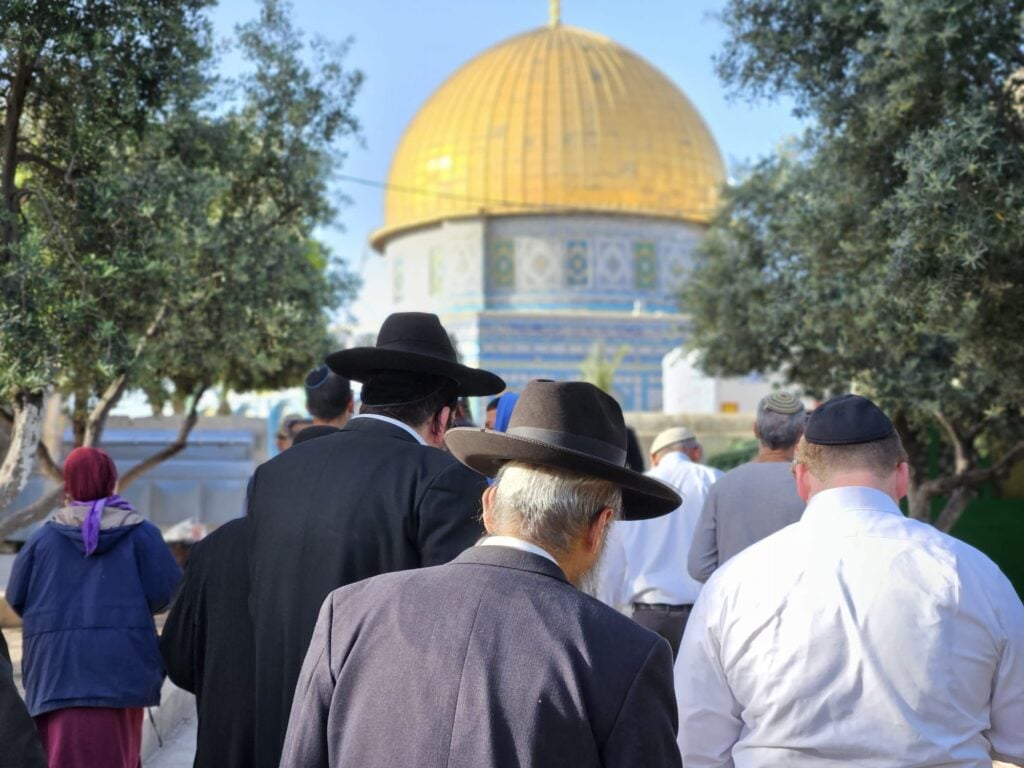
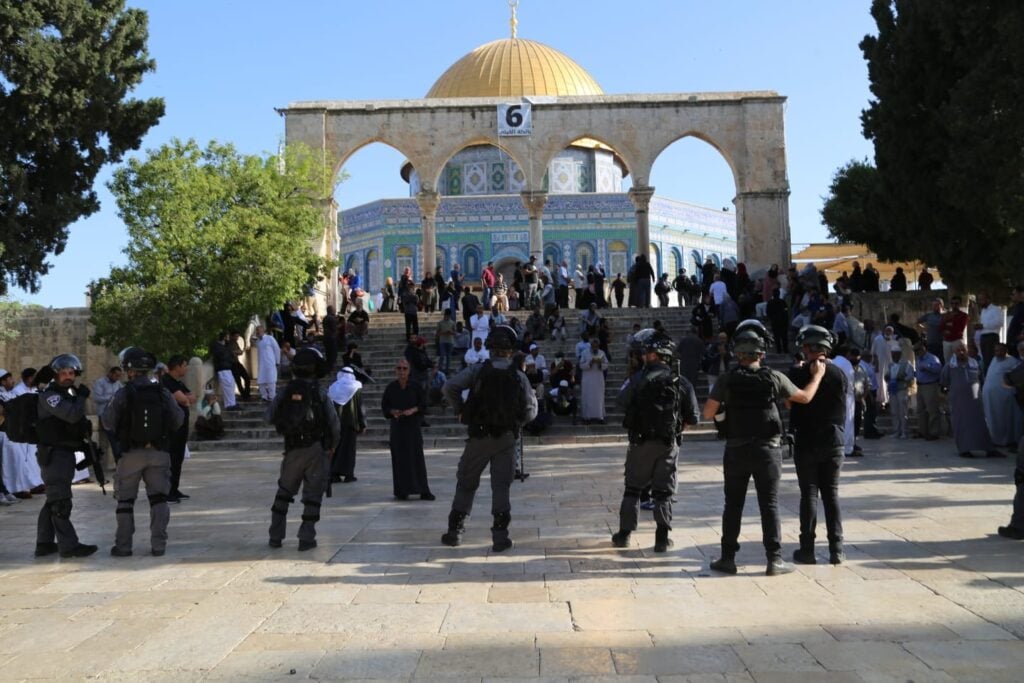
Yet the explosion was intended to be only the first stage. According to prosecutors, immediately after triggering the bomb, al-Aza planned to enter the Temple Mount compound armed, open fire on Jews and police forces to murder as many as possible, and then escape. The indictment notes that the defendant selected the Lions’ Gate area after scouting the site and its proximity to the Al-Aqsa Mosque, taking advantage of his familiarity from attending Friday prayers on the Temple Mount via the gate.
According to the charges, his preparations went far beyond conceptual planning. Over that period, al-Aza systematically surveyed the locations of security cameras along the route to Lions’ Gate, monitored the operational routines of security forces, and tracked the number of police officers stationed at the site. His goal, prosecutors allege, was to pinpoint the optimal location to inflict mass casualties and ensure his getaway.

A central component of the indictment details al-Aza’s efforts to acquire the means to execute the attack. Roughly two years ago, the defendant found two spent tear-gas grenades in the Beit Hanina area, collected them, and hid them at his home with plans to convert them into explosive devices. For about a year and a half before his arrest, he searched the internet for instructions on carrying out attacks and manufacturing explosives—including downloading instructional files from a website called “Al-Ra’ud,” which hosts content belonging to the ISIS terrorist organization.
According to the indictment, the website features videos documenting murders, beheadings, and executions, alongside inciting material calling for attacks on Jews, including a video titled “Plans for an Attack to Kill Jews.” Al-Aza did not merely view the content; he downloaded bomb-making manuals, searched for ways to purchase firearms and hazardous materials, and identified potential sellers. Prosecutors assert that based on the information he gathered, al-Aza planned to turn the spent gas grenades into remote-detonated bombs.
The indictment also recounts how al-Aza sought technical details regarding chemicals he believed were necessary to construct the explosive. On March 24, 2025, he contacted Abdullah Jamjoum, an acquaintance who had studied pharmacy, asking whether he could supply a chemical substance al-Aza was seeking for his preparations. He later directed additional questions to Jamjoum and to Muhammad Hassan Shalabi, who also studied pharmacy, regarding substances mentioned in the online manuals he had downloaded. Prosecutors cite these inquiries as part of their efforts to advance bomb production, while noting the indictment does not allege that those acquaintances knew of or participated in the terror plot.
One of the most unusual details in the case involves the physical conditioning al-Aza undertook ahead of the attack. Roughly two months before his arrest, he began training in martial arts at an MMA club in Issawiya alongside two acquaintances. According to prosecutors, the sessions were not merely for general fitness, but formed part of his operational preparations.

The defendant sought to build physical strength so he could continue attacking people even if the bombing and shooting failed to unfold as planned—intending to use his bare hands to keep harming victims if he could not reach his desired death toll with firearms and explosives.
The indictment further traces the ideological radicalization al-Aza underwent following the outbreak of the Swords of Iron war in October 2023. Initially, prosecutors say, he developed a growing interest in ISIS, gradually coming to identify with its actions, values, and goals, before later viewing himself as affiliated with Hamas. During this period, he regularly watched videos documenting Hamas terrorists infiltrating Israel and carrying out the October 7 massacres.

Additionally, the indictment notes that al-Aza attended religious classes at the Al-Da’wah Mosque in Beit Hanina with several acquaintances. Taught by an individual named Malik Nashashibi, the lessons instructed participants, among other things, that they bore a religious duty to fight and defend the land through military action and the murder of Jews.
Prosecutors assert that driven by his identification with terrorist organizations, exposure to violent content, and participation in those classes, al-Aza resolved to carry out a murderous attack against Jews and police officers.
The amended indictment filed with the Jerusalem District Court charges al-Aza with two offenses under the Counter-Terrorism Law: preparation to commit a terrorist act constituting murder under aggravated circumstances, and training or instruction for terrorist purposes. The State Attorney’s Office has requested that the court order his detention until the conclusion of legal proceedings against him.