


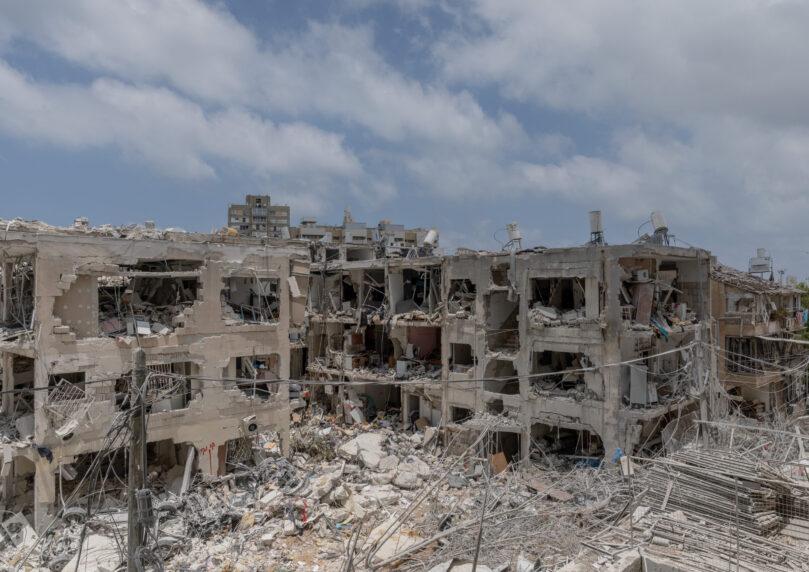

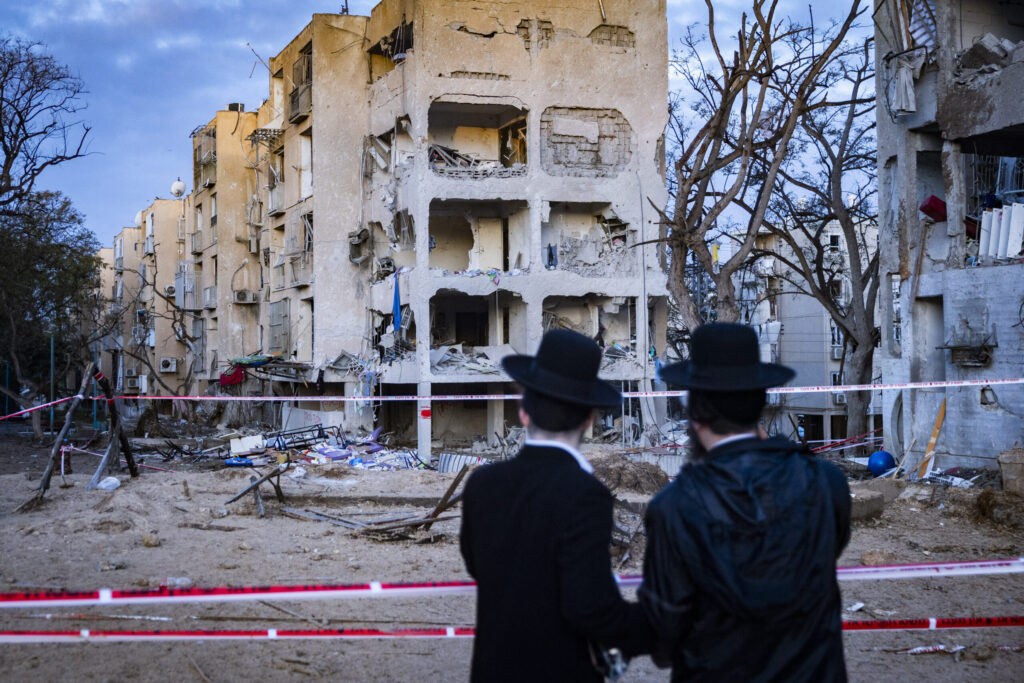
The city of Bat Yam filed a lawsuit in Jerusalem District Court seeking 250 million shekels (roughly $70 million) from the Islamic Republic of Iran, following heavy damage inflicted on the city during Operation Rising Lion in June 2025. The move, dubbed “Open Account,” included an unusual street operation in New York, where the lawsuit was delivered to an Iranian representative at the UN mission. The lawsuit was filed at the initiative of Mayor Zvi Brot, after the Iranian missile attack on Bat Yam killed nine residents, injured 178 people, and damaged 160 buildings. Of the damaged structures, 22 required immediate demolition, leaving thousands of residents homeless and in need of alternative housing.

 2+
An international legal team led by Shurat HaDin and headed by attorney Nitsana Darshan-Leitner drafted and filed the lawsuit. The document was written in Hebrew and translated into Farsi for delivery to an official Iranian representative.
Four Months of Preparation and a Meeting with an Iranian Diplomat
To advance the legal proceedings, the municipality needed to show that an official Iranian representative could receive and review the lawsuit. To that end, Brot and his team traveled to New York, coordinating with officials in the Israeli government, the U.S. administration, and the security establishment.
The operation was planned over roughly four months and included gathering intelligence on the movements of Iranian diplomats, preparing disguises, and positioning lookouts near UN headquarters in Manhattan.
 2+
When the first secretary of the Iranian mission was spotted leaving an office building, Brot and his team approached him. The diplomat made clear that, because of his status, he was not permitted to contact them and tried to distance himself. The team followed him for several minutes until they read the lawsuit aloud.
City officials view the move as a significant step toward advancing the lawsuit, though the legal outcome and ability to collect the money remain uncertain.
Where Will the $70 Million Come From?
According to the report, Iran now has 60 days to respond to the lawsuit. If it files no response, the municipality can ask the court for a default judgment. Even if the lawsuit succeeds, however, the municipality will need to find a way to collect the sum. One option being examined is using money Israel was previously ordered to pay Iran in a legal dispute involving the Eilat-Ashkelon Pipeline Company (EAPC).
The debt amounts to roughly $1.1 billion, determined through international arbitration stemming from a partnership between Israel and Iran during the Shah’s rule, before the Islamic Revolution. Israel has not transferred the funds because of the prohibition on commerce with an enemy state. Bat Yam officials hope that if the lawsuit is accepted, they can transfer part of the funds to rehabilitate the city and assist affected residents. However, this remains a legal possibility that has not yet been decided.
“Iran’s Terror Regime Will Pay a Heavy Price”
Mayor Zvi Brot addressed the move on his Facebook account, writing: “This is a very important and extraordinary morning in the history of our city.” According to him, on the very night of the missile attack, he decided to act to bring compensation to the city and its residents. “Already that night I knew that, like in every matter, this time too, Bat Yam would act differently. Stronger, smarter, and further,” he wrote.
 2+
Brot explained that the goal of the move is to create a legal precedent that will enable collecting compensation from Iran for the attack on the city. According to him, the lawsuit is intended “to create a historic precedent that will force Iran’s terror regime to pay a heavy price: not only on the military level, but also through the wallet.”
The mayor added that he sees the lawsuit as a personal mission for the memory of those killed, rehabilitation of the injured, and obtaining compensation for residents. “We are holding our heads high, embracing the residents who were hurt, rehabilitating the area—and proving that the Bat Yam spirit cannot be broken,” he concluded.