


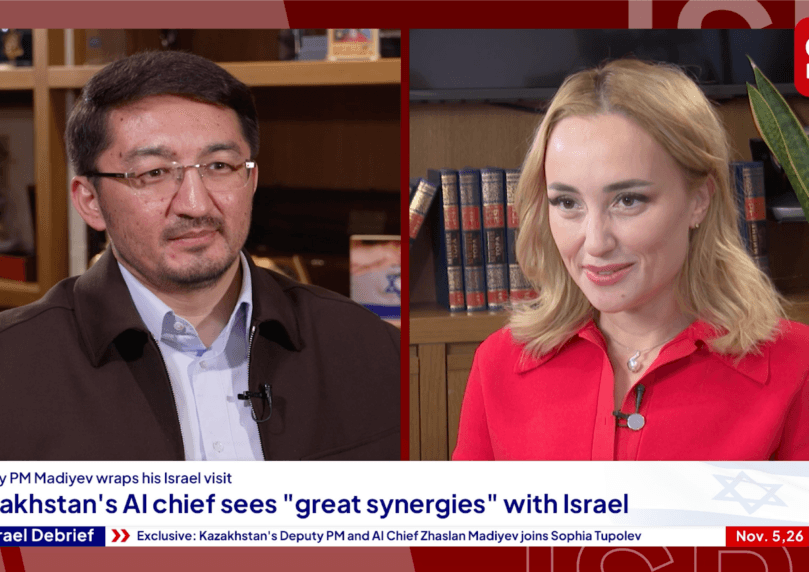

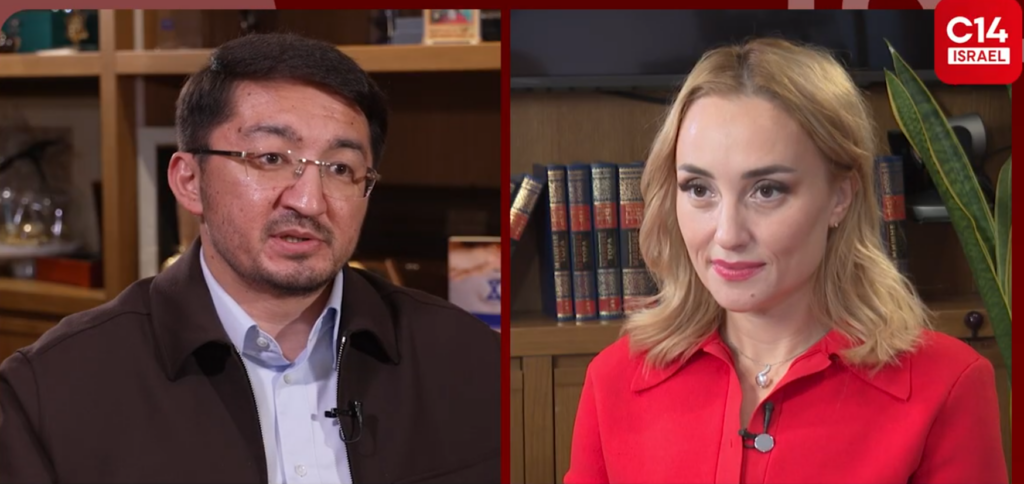
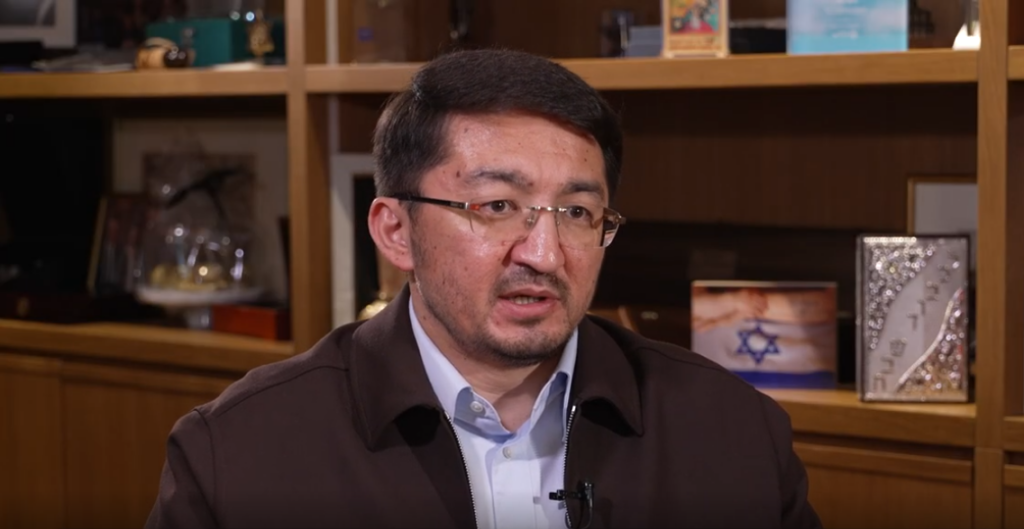
Kazakhstan’s Deputy Prime Minister and Minister of Artificial Intelligence and Digital Development, Zhaslan Madiyev, told C14’s Sophia Tupolev that Israel sits at the center of his country’s push into what he calls the “new economy.” Speaking on the C14 Israel Debrief as he wrapped up his historic visit to Israel, Madiyev, who also heads the Kazakhstan-Israel intergovernmental commission from the Kazakh side, laid out his country’s strategy spanning rare earths, AI compute, space, cybersecurity and a newly signed tax treaty.
Rare earths for Israel’s tech industry
Asked about the greatest opportunity for economic collaboration, Madiyev pointed first to critical minerals. Kazakhstan is rich in rare earth materials, he said, and through the Pax Silica platform shared with Israel, the two countries can build refining and processing capacity in Kazakhstan.
The goal, he said, is to move from upstream to midstream and “prepare the products which are consumed by the tech industry from Israel,” creating “secure supplies” based on Kazakh minerals. “It’s a win-win where we can increase the value added for Kazakhstan as well as providing long-term security on those products for Israel,” he said.

 1+
“All the five layers” of the AI stack
Madiyev said Kazakhstan is investing across the full AI economy stack: energy, chips, data centers, models and applications. Asked how he prioritizes those layers, he said there is a comprehensive approach across all of them. The global AI market, he claimed, already “exceeds 50 trillion US dollars,” and it is too early to know where the highest value will be captured.
From a sovereignty perspective, he said, countries have to build “the whole five-layer cake.” “We are pursuing developing all these five layers,” he said, adding that Kazakhstan is approaching the work “to develop and to build all the five layers to secure the sort of sovereignty on the full AI economy stack.”
On energy, he said Kazakhstan plans to double generation capacity from the current 27 gigawatts by 2035, and to add more than 13 gigawatts by 2030. On models, he said the country knows how to collect Kazakh tokens, has “our own tokenizer,” and is training and fine-tuning models for use “in the closed environment and secure environment on premise.”
45,000 GPUs secured, “another 65,000” requested
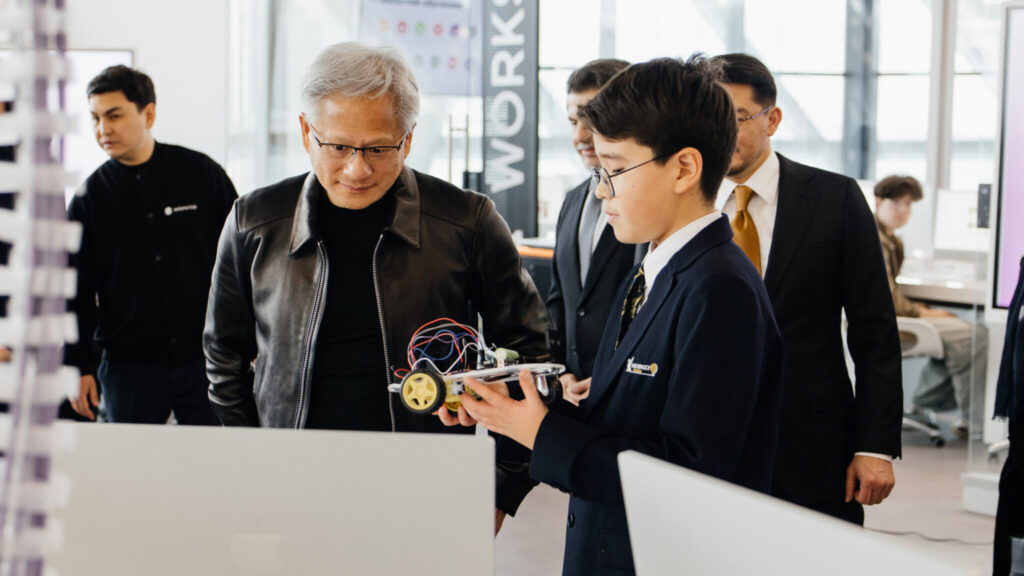
On advanced chips, Madiyev said Kazakhstan is building an “AI data center valley” flagship project targeting “at least a 1 gigawatt of AI data center factory.” He then disclosed the scale of its GPU push: “We applied for the export license, we secured more than 45,000 GB300 GPUs and applied for another 65,000 Vera Rubins.” There will be “tens of thousands of GPUs,” he said, and Kazakhstan is ready to comply with the security standards and export-control limits attached to the technology. Nvidia, he added, is also partnering on the project.
 1+
Where does Israel plug in?
Sovereignty, Madiyev said, does not mean a country should “be closed from outside of the world.” “You just need to create trustworthy partnerships,” he said, and build models together that can run in a “sovereign format, on-premise format.”
Kazakhstan has large volumes of industrial data in mining, transport, logistics, and agriculture, he said, and “together with Israeli professionals and AI specialists, we can train the models for the industries.” The AI data center valley, he added, “can also be used by big Israeli companies and as a backup,” as an “AI tokens factory” to train models, because energy is cheap. Kazakhstan is offering power to the valley “currently at 2.5 cents per kilowatt hour.”
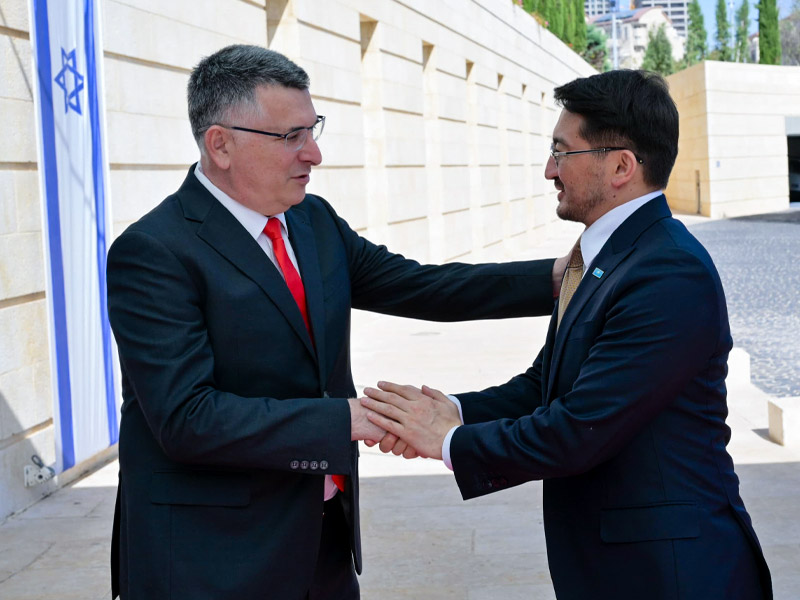
He also flagged space, cybersecurity and preparation for “the post-quantum world” as areas for joint work, noting that Israel is investing substantial resources in quantum computing.
A “historical” tax treaty, and half the talks on the new economy
Madiyev said the intergovernmental commission the day before had covered around 14 to 15 areas of the economy and produced memorandums and agreements. “There is a historical agreement on avoiding double taxation,” he said. Host Sophia Tupolev noted that the deal took 10 years to negotiate; Madiyev agreed it was a “10-year negotiation,” but said the last year had brought “quite a good push.”
The treaty matters, he said, because “it makes Kazakhstan more attractive in doing business,” and delivers “fair treatment of business from the tax and fiscal authorities.” Asked about startups specifically, he said the easier, fairer tax treatment would apply to “all types of companies.”
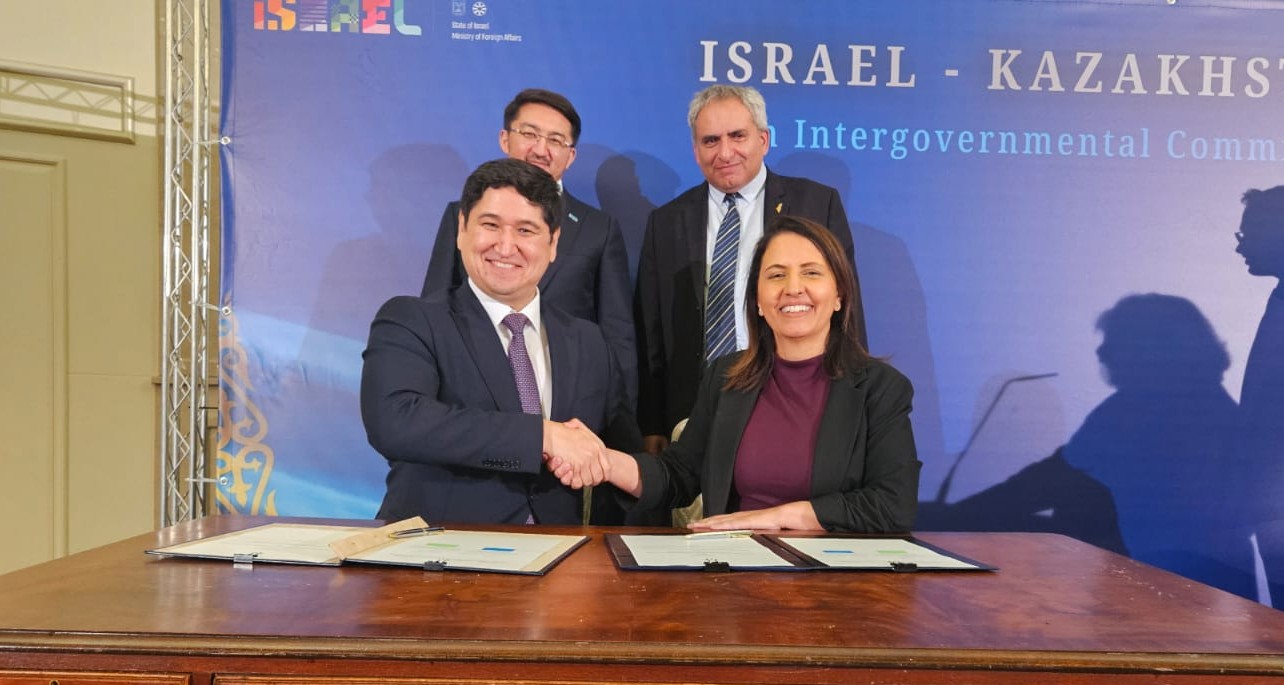
Of the 14 to 15 areas discussed, he said, half focused on the new economy. “I haven’t seen any other intergovernmental commission with other countries that dedicated that much attention to the new economy,” Madiyev said.
A Tel Aviv Astana tech hub? Madiyev: “I think it’s a very good idea”
On startups, Madiyev said Kazakhstan is expanding Astana Hub, which he described as the largest IT hub in the region, already present across Kazakhstan and in Silicon Valley, Dubai and Shanghai, with a UK opening planned. Asked whether Israel could see one in Tel Aviv, he answered: “I think it’s a very good idea given the experience and quite developed ecosystem that we have in Israel.”
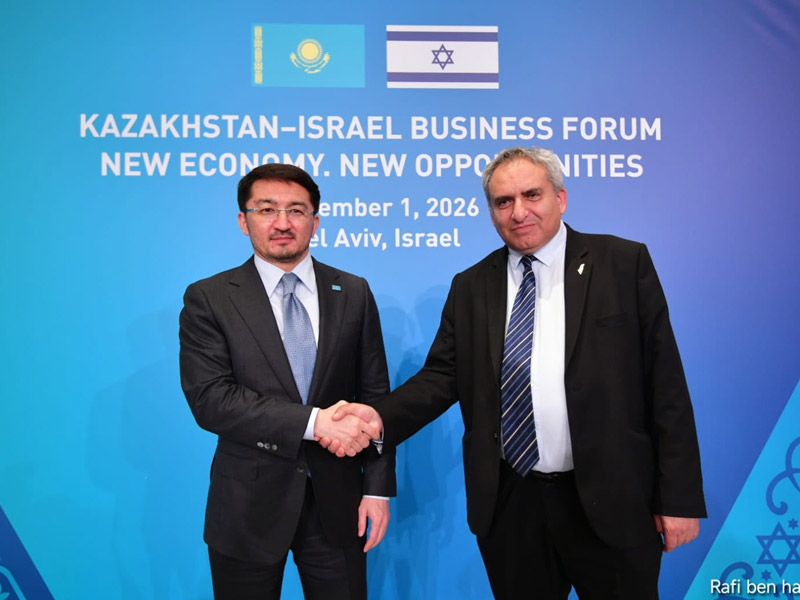
Turning energy into intelligence
Host Sophia Tupolev closed by citing Nvidia CEO Jensen Huang, who said in October that Kazakhstan could transform energy into intelligence and export intelligence. Madiyev agreed. Kazakhstan, he said, should use its rich energy resources to “create intelligence in the form of AI tokens,” export it as a “highest value added product,” and “diversify the economy.”
Alongside the AI pitch, he also noted that Kazakhstan is “running the largest cosmodrome in the world,” with its own satellite production and an international constellation under construction, another area he said could pair with Israeli companies.