


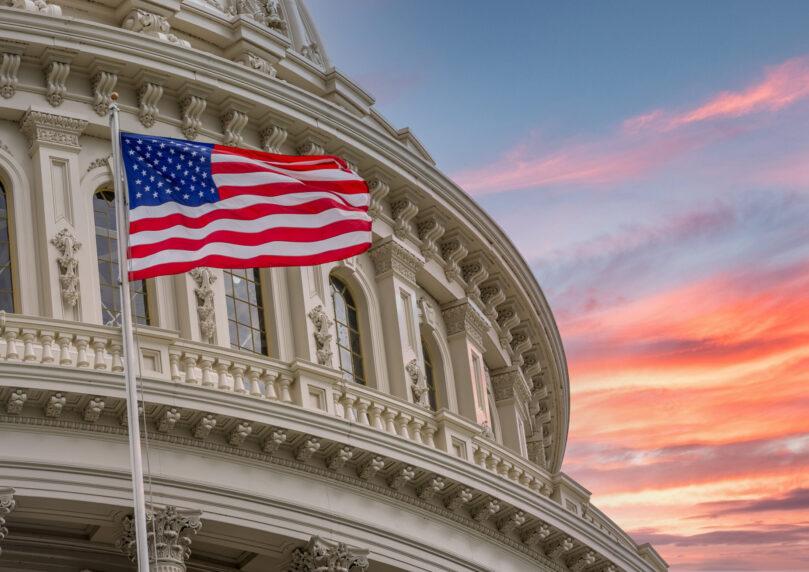

A massive political blow for President Donald Trump and the Republicans: The Democratic Party secured a victory in today’s (Wednesday) midterm elections, gaining control of both chambers of Congress. The Democrats won 51 seats in the Senate and 255 in the House of Representatives, thereby ending Republican control of the legislative branch. This shift is expected to make it difficult for Trump to advance his agenda during the remaining two years of his term, while granting the opposition significant authority over legislation, the budget, the confirmation of appointments, and oversight of the White House. Meanwhile, following an exceptionally tight Senate race in Michigan, Islamist Abdul El-Sayed defeated the Republican candidate, Mike Rogers.
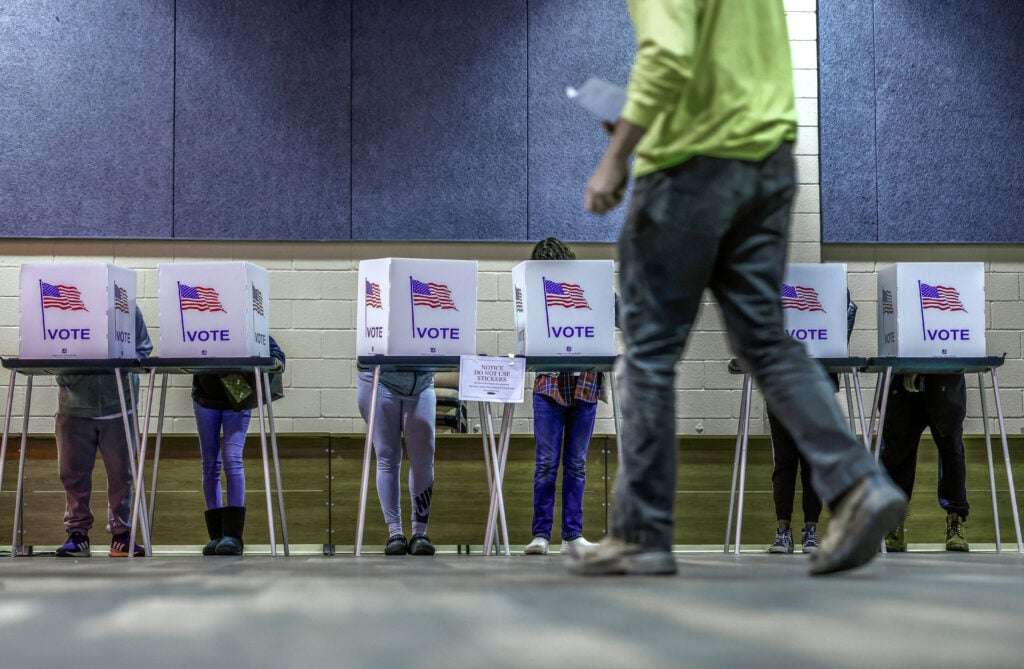
The Democrats surpassed the 51-seat threshold in the Senate—securing an independent, exclusive majority in the upper chamber—and reached 255 seats in the House of Representatives. These results bring an end to a two-year period during which President Donald Trump enjoyed absolute Republican control over the legislative branch, ushering in an era of divided government and institutional power struggles at the highest levels of power in Washington. The outcome in the Senate grants the Democratic Party full control of the upper chamber of Congress, which comprises 100 seats. According to the official tally, the Democrats have secured 51 seats, compared to only 39 for the Republicans, with 10 additional seats yet to be factored into the final projections.
This is highly significant; even in a worst-case scenario—where all 10 remaining seats were to go to Republican candidates—the Democrats would still hold a solid majority of 51 votes, ensuring their full control of the chamber.
This represents an extraordinary political achievement, especially given that the Democrats had to flip a number of seats previously held by their opponents to reach this threshold. This control grants them the exclusive power to set the agenda for Senate committees, lead the legislative process, and determine the confirmation of senior appointments within the executive and judicial branches. Unlike a scenario of numerical parity—where Republican Vice President James David Vance could have cast a tie-breaking vote in favor of his party—a majority of 51 seats grants the Democrats independent room to maneuver, free from reliance on the administration’s leadership.
An Overwhelming Advantage in the House of Representatives: A Margin of 37 Seats Beyond the Majority
Alongside their victory in the Senate, the Democrats have secured a broad and decisive takeover of the House of Representatives. According to data from NBC, the Democratic caucus has surged to 255 seats, compared to just 180 seats for the Republican Party.

Given that the House consists of 435 members and the threshold for a majority is 218 seats, this result provides the Democrats with a substantial margin—37 seats beyond the minimum required for control.
This dominance grants the Democrats the authority to appoint the Speaker of the House, exercise exclusive control over the chamber’s legislative agenda, dictate federal budget legislation, and hold the chairmanship of all investigative committees. The House’s extensive oversight powers will enable Democratic lawmakers to issue subpoenas, demand internal documents from the White House, and summon Cabinet secretaries and close presidential aides to provide public testimony under oath.
The Races That Shaped the Senate Map: Texas, the Carolinas, and Ohio
Among the string of victories that secured a Senate majority, several pivotal races stood out, flipping long-standing conservative strongholds. In Texas, Democratic candidate James Talarico achieved an unprecedented, historic milestone by defeating Republican Attorney General Ken Paxton. He became the first Democrat elected to the Senate from Texas since 1988, capturing a key seat in one of the most influential states in the Union.
In South Carolina, Democratic candidate Annie Andrews caused an upset by defeating Republican Senator Darlene Graham—sister of the late Senator Lindsey Graham—thereby breaching a long-held right-wing bastion. Meanwhile, in North Carolina, former Governor Roy Cooper defeated his Republican opponent, Michael Whatley—who had received a personal endorsement from Trump—delivering yet another crucial seat to the Democratic camp. In Ohio, Democrat Sherrod Brown achieved a personal and partisan turnaround by reclaiming the Senate seat he had lost in the previous election—a contribution that proved decisive in reaching the 51-seat threshold.

A Double Political Earthquake in Texas: The Governorship Also Captured
Beyond their gains in Congress, the Democratic Party secured a resounding victory at the state level in Texas. Democratic candidate Gina Hinojosa defeated the incumbent Republican Governor, Greg Abbott—who had held the office for three consecutive terms and was regarded as a key figurehead for conservative policy, as well as one of President Trump’s closest allies.
Hinojosa’s victory brings an end to more than three decades of uninterrupted Republican rule in the Governor’s office in Austin. Together with Talarico’s win in the Senate, these results signal the collapse of one of the American Right’s most stable and entrenched strongholds.

Public Sentiment: Protests Over the Cost of Living and the Standoff with Iran
The election campaign unfolded against a backdrop of intense public anger regarding the economic situation and the conduct of the federal administration. According to exit poll data reported by the Reuters news agency, approximately three-quarters of all voters expressed anger or deep dissatisfaction with the direction in which the United States is heading.
The polls further indicated that about half of the respondents characterized their vote as a vote of personal and direct criticism of President Donald Trump and his policies, with approximately 70 percent of the electorate indicating that Congress should exercise much tighter and more robust oversight of the White House’s actions.
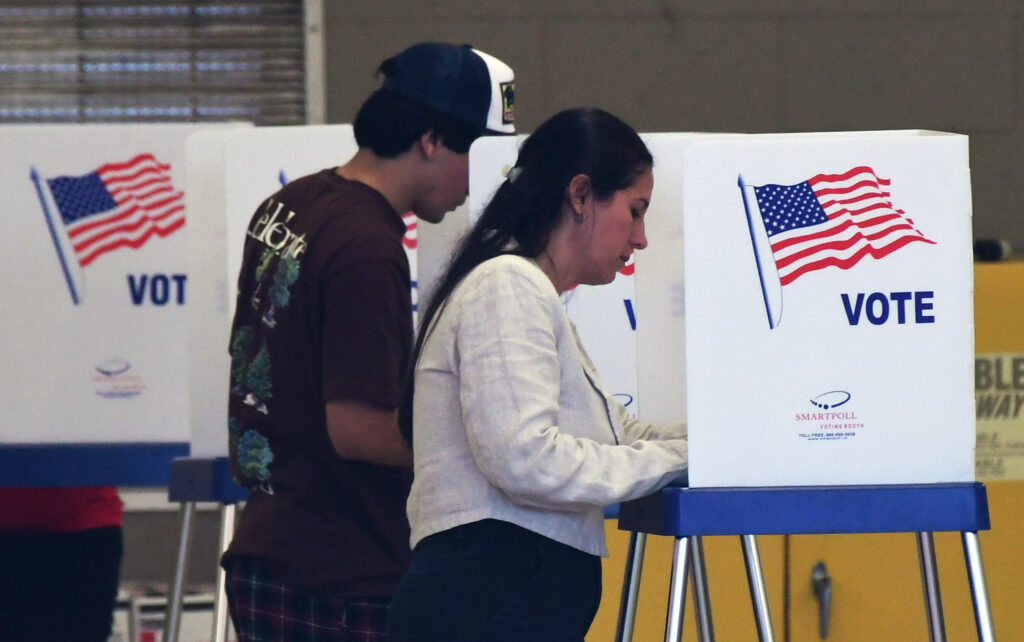
Soaring inflation, high fuel prices, the rising daily cost of living, and a military entanglement in a war with Iran topped the citizens’ list of priorities; the Democrats successfully positioned themselves as a managerial and political alternative to the administration’s approach.
Implications for the Trump Administration Over the Next Two Years
Democratic control of both chambers of Congress places President Trump at a structural disadvantage heading into the final two years of his term, leading up to the 2028 presidential election. In the House of Representatives, Democrats will be able to set the legislative agenda, block the administration’s economic reforms and legislative initiatives, drive a hard bargain on budget negotiations, and conduct extensive congressional investigations that will complicate the operations of the executive branch.
In the Senate, the party will hold a de facto veto over the confirmation of senior appointments—including judges to federal courts and the Supreme Court, ambassadors, and high-ranking officials within the Departments of Defense, State, and Justice. However, this control does not grant the Democrats unlimited legislative power, as the President of the United States retains the constitutional authority to veto legislation he opposes—a veto that Congress can only override with a two-thirds supermajority. Furthermore, the Senate rule requiring sixty votes to overcome a filibuster on ordinary legislation remains in effect.

Faced with a stinging defeat for his party, President Trump adopted a two-pronged response: acknowledging the reality of the situation while deflecting personal responsibility. In an interview with The New York Times, the President publicly expressed a willingness to accept the voters’ verdict and cooperate with the new Democratic leadership on Capitol Hill, noting that he looked forward to working with them to reach practical agreements.
Conversely, in a post on the social media platform Truth Social, Trump argued that the party’s failure stemmed from the fact that his own name did not appear directly on the ballot, asserting that had he been a candidate himself, the Republicans would have secured a landslide victory. These results place the White House in a reality vastly different from that of the first two years of the term; the President will now be compelled to abandon unilateral actions and engage in tough negotiations with his political rivals over every budgetary and legislative item.
Timeline: The Swearing-in of the 120th Congress
The 120th United States Congress is set to convene and be sworn in on January 3, 2027. On this date, administrative authority, the gavels, and the leadership of congressional committees will officially pass to representatives of the Democratic Party, reflecting the new balance of power determined at the ballot box.

This outcome ushers in a new, friction-filled phase in American politics, centered on battles over the federal budget, foreign policy and national security issues, and the definition of the power dynamic between the legislative branch and the incumbent President.
The midterm elections took place following two years in which President Donald Trump enjoyed a full Republican majority in both chambers of Congress—a position that enabled him to advance a series of economic reforms and conservative appointments. On the eve of the election, the Republicans held a precarious lead of 219 seats in the House of Representatives and a majority of 53 seats in the Senate. The election campaign was directly influenced by the cost-of-living crisis, persistent inflation, and the direct military conflict between the United States and Iran. On election day itself, Trump ignited an international firestorm by announcing his intention to end the annual direct financial aid to Israel—amounting to nearly four billion dollars—starting at the end of the year. This issue became a focal point of debate in key races, such as in Michigan.
The Democratic Party’s capture of both chambers of Congress represents a tectonic shift in the structure of U.S. governance, dramatically curtailing the power of the White House. For the administration, the loss of the Senate and the House of Representatives means an end to the ability to pass key legislation without making far-reaching compromises; it also exposes senior officials to an aggressive and potentially paralyzing series of investigations.
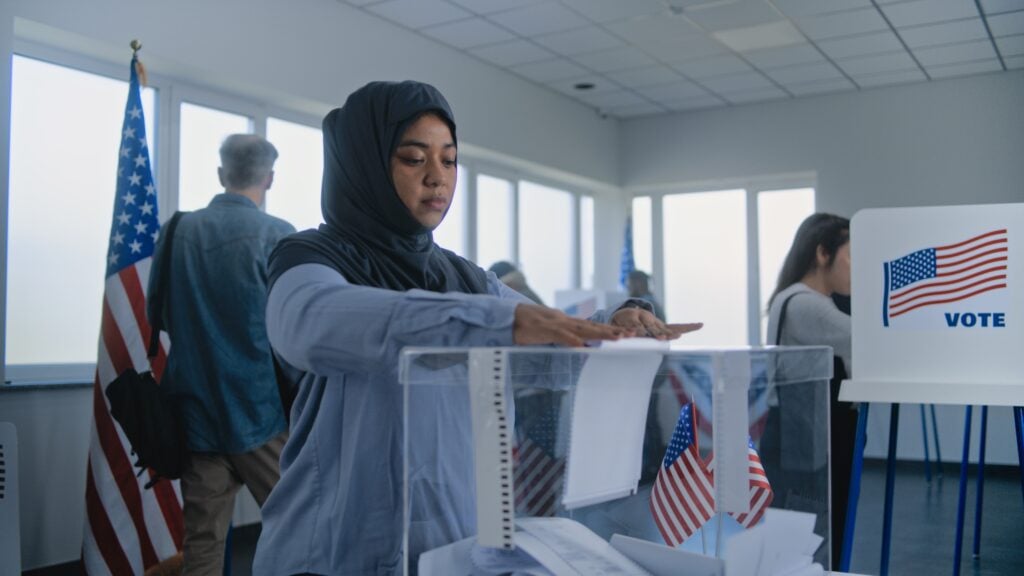
For the State of Israel, a Democratic-controlled Congress carries direct and immediate implications. Committees overseeing foreign affairs, defense, and appropriations will be led by Democratic lawmakers, who are expected to exercise strict, rigorous oversight of arms deals and weapons shipments. They are also likely to oppose Trump’s initiative to halt aid—which lacks a structured mechanism—and to demand restraint regarding the use of U.S. military force against Iran. The new balance of power on Capitol Hill will force Jerusalem to navigate between two opposing power centers in Washington over the next two critical years.