


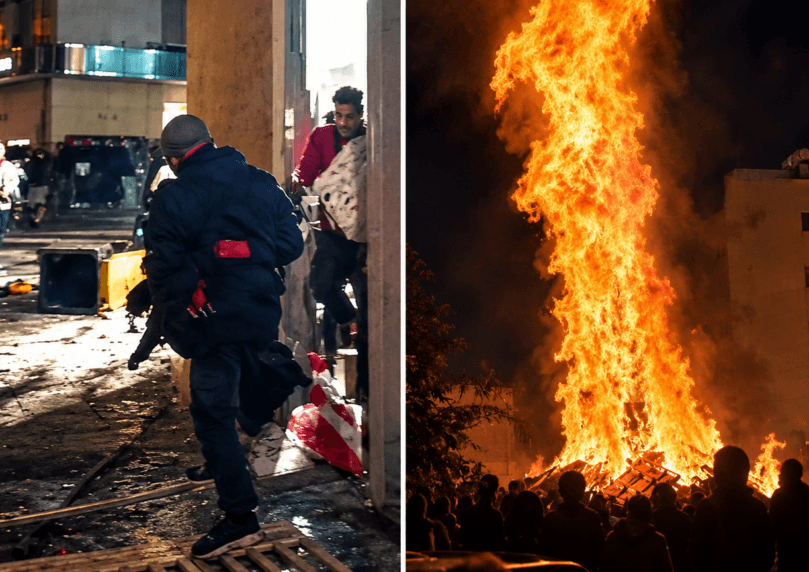

Germany experienced a turbulent weekend of civil unrest as violent demonstrations spread across the federal republic,
drawing an estimated 160,000 participants onto the streets in more than eight metropolitan centers. The disturbances mark the expansion of the protest movement into German territory, after it originated in France and spread across Spain and Italy in recent weeks. While demonstrations began peacefully on Saturday afternoon, the atmosphere deteriorated into urban unrest by nightfall.
In Frankfurt, groups of rioters targeted the commercial core, smashing retail storefronts and looting shops, prompting federal and municipal police to deploy water cannon units to disperse crowds and secure downtown sectors. Simultaneously, severe confrontations erupted in Berlin, Cologne, and Hamburg, where demonstrators confronted police lines with barrages of Molotov cocktails, heavy pyrotechnics, and glass bottles. Law enforcement agencies carried out sweeping detentions across eight cities to re-establish public order. The protests were organized by a digital youth movement operating under the name “Gen Z Rules.” In official statements, organizers stated that their goals were grounded in peaceful civic mobilization and publicly condemned the property destruction and assaults on officers.
However, radical elements operating on the fringes of the marches defended the escalation, arguing that direct action was necessary to command the attention of state authorities. As the marches gained momentum, the core youth contingent was joined by older demographics, coalescing around anti-war messaging, economic grievances, and opposition to the national political leadership. The escalation has raised security concerns across Western Europe as domestic intelligence and police agencies manage coordinated, youth-led street unrest crossing national borders.