


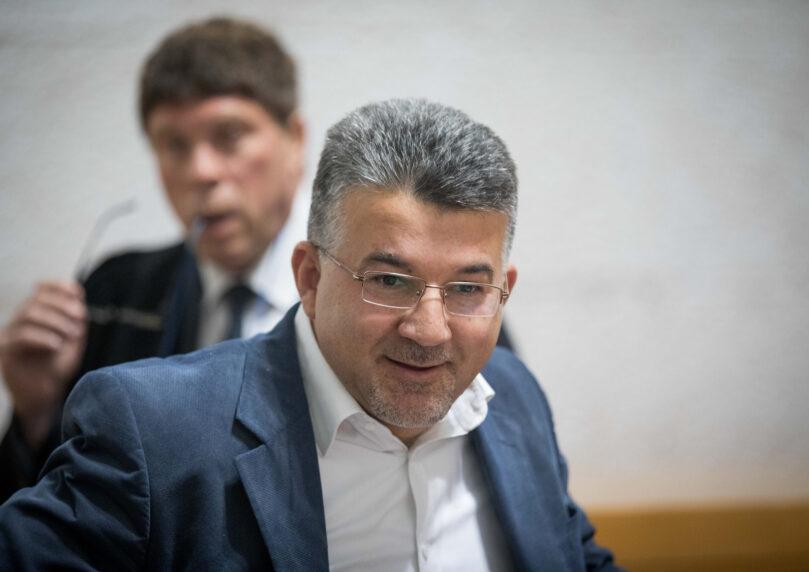

Joint List Chairman Yousef Jabareen delivered an array of hardline statements targeting Israeli state policies,
the defensive war in Gaza, and the constitutional role of Arab parliamentarians in an interview published on Wednesday by the Saudi magazine Al-Majalla.

 2+
The disclosure comes at a volatile political juncture, as figures on the Israeli center-left continue exploring avenues to build a governing alternative anchored by Arab parties. In the interview, Jabareen presented the Joint List’s recent electoral showing—which captured 12 seats in the 26th Knesset—as the fulfillment of an exclusively ‘Palestinian’ collective will. “Our people demanded national unity, and we realized it for them through the establishment of the Joint List,” Jabareen told Al-Majalla, describing the electoral turnout as “a great badge of pride in our path and stances, and a source of strength for us.“
The Knesset as a ‘Palestinian’ Tool
Jabareen went on to present the Joint List’s entry into the Knesset as part of a ‘Palestinian’ national struggle. “The ‘Palestinians’ decided to use their political power as parliamentary power and as a tool for steadfast resistance and to preserve our existence,” he said. One of the article’s sharpest statements addressed the war in Gaza. According to Al-Majalla, Jabareen called it “a war of extermination in Gaza.” The site also attributed to him the phrase “settler terror,” alongside claims about the demolition of Arab homes and villages in the Negev and the escalation of organized crime in Arab society.
 2+
The publication further cited him decrying what he described as “settler terrorism,” alongside protests over the demolition of illegal structures in Bedouin Negev villages and the proliferation of organized crime in Arab municipalities. Jabareen claimed that apprehension over Prime Minister Benjamin Netanyahu’s continuation in office drove Arab voters to the ballot box “to punish those who demonstrated hostility toward us through state policies.”
Outlining his legislative agenda, Jabareen declared: “Our primary, fundamental, and most important goal is to bring down the Netanyahu government.”
The Conditions for Opposition Leaders
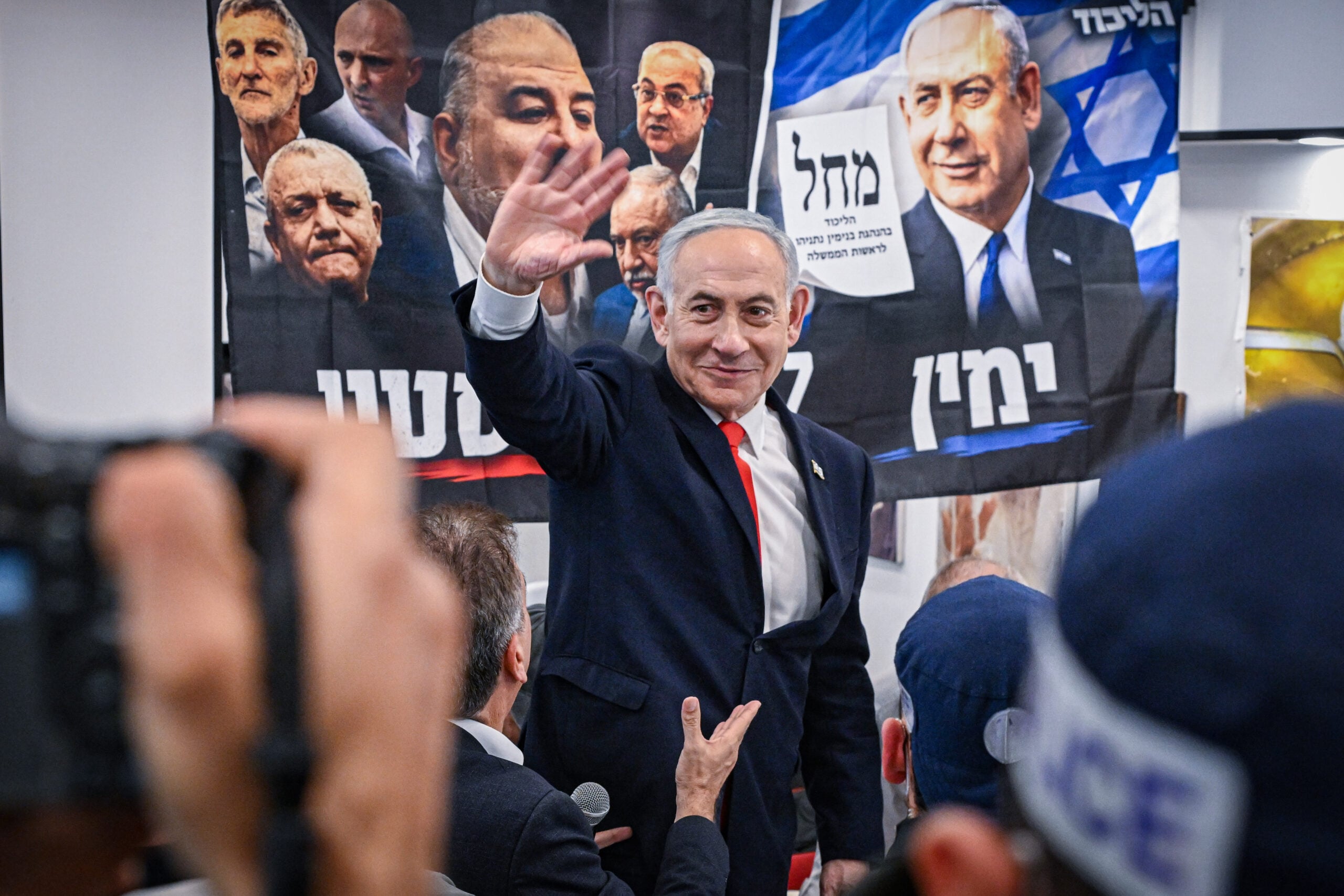
However, despite repeated overtures from the opposition—most notably from the Democrats’ chairman, Yair Golan, who declared following the election that “a vote in Tira equals a vote in Givat Shmuel” and suggested integrating Ra’am into a coalition with outside backing from the Joint List—Jabareen insisted that his party would not serve as a rubber stamp.
 2+
“Given the positions we currently hear from the leaders of the opposition, we do not see an opportunity to establish a government coalition,” Jabareen stated. “Our next move depends on what we hear from the opposition parties, and whether they possess the genuine will to change the policy of the government.”
According to Al-Majalla, Jabareen conditioned any potential parliamentary cooperation on the wholesale rollback of Israeli security operations and civilian presence, explicitly tying his party’s support to an end to what he termed the “continuation of the occupation, settlements, and Israeli military deployment” throughout Judea and Samaria, the Gaza Strip, Syria, and Lebanon. His remarks highlight the profound ideological gulf separating the Zionist opposition from the Arab factions whose support is mathematically required to mount a challenge against the national camp.