


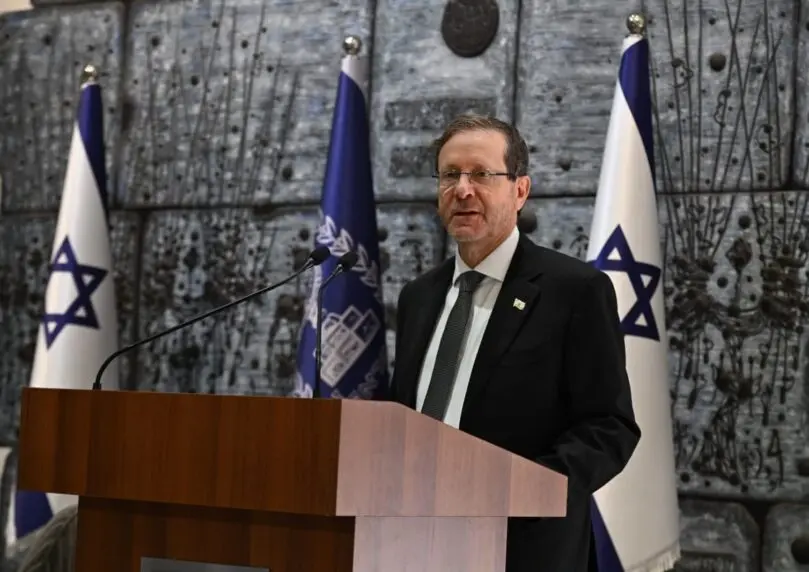

President Isaac Herzog delivered a direct appeal to Israel’s political leadership on Sunday morning, urging the heads of all incoming Knesset factions to drop rigid campaign posturing, accept the arithmetic reality of the election results, and work constructively to prevent the country from descending into another snap election.
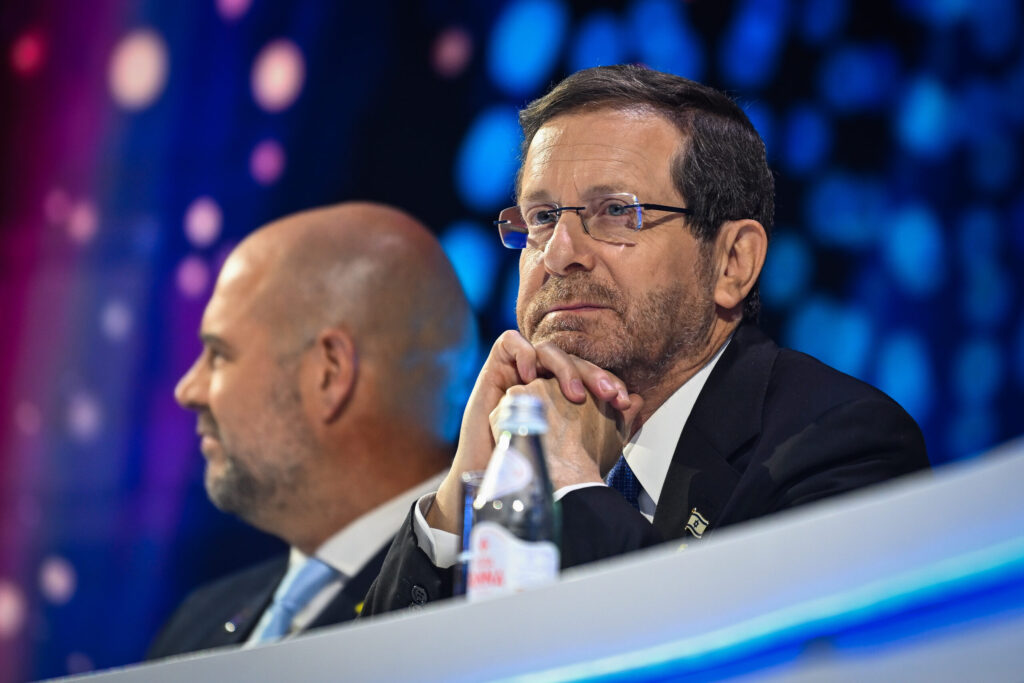

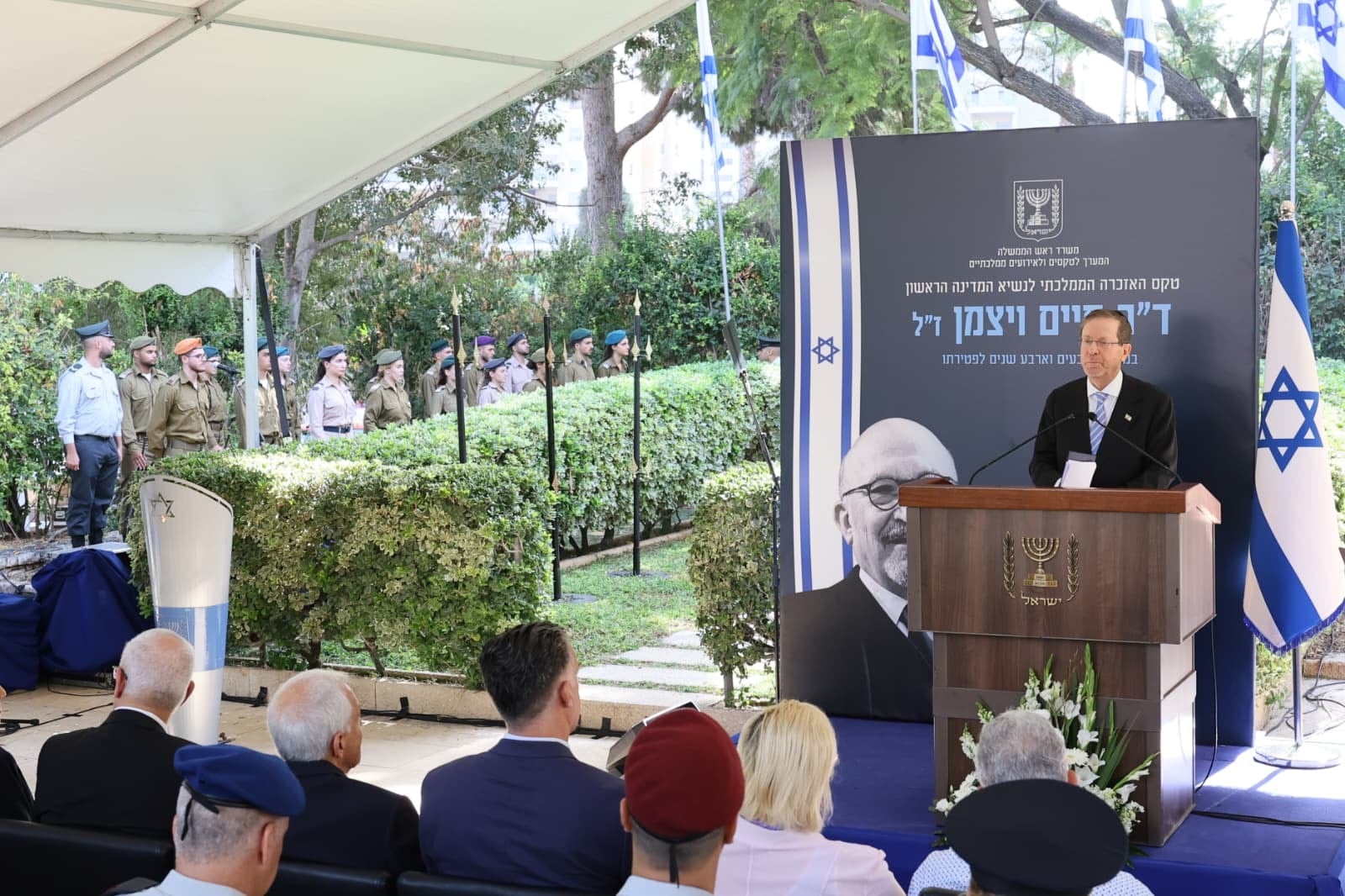
Speaking during a memorial gathering at the Weizmann Institute of Science in Rehovot, Herzog framed the looming coalition consultations not merely as a technical constitutional duty, but as an urgent test of national responsibility. “Naturally and predictably, competitors climb high trees during an election campaign,” Herzog observed. “But the elections are over, the election results are an existing fact—they are reality. And this is the time to tell all leaders: ‘Stop climbing the trees and place yourselves in front of this reality.’ This week at the President’s Residence, we will try to place ladders to allow leaders to position themselves before this reality, prudently and carefully.”
Herzog confirmed that the constitutional process will accelerate sharply in the coming days. On Wednesday, Central Elections Committee Chairman and Supreme Court Deputy President Justice Noam Solberg will formally present the verified returns of the 26th Knesset elections at the President’s Residence. Following the presentation, Herzog will open the residence’s doors to all elected slates to receive their formal recommendations regarding which lawmaker should be tasked with forming the next government.

“I have already said that I hope the representatives will come with an open mind, and I add today, with an open heart: to hear and voice ideas and to find creative solutions to prevent additional elections,” Herzog stated. To illustrate his appeal for pragmatism, the president drew extensive parallels between political statecraft and the scientific discipline embodied by Israel’s first president, Dr. Chaim Weizmann. Herzog recounted how Weizmann successfully wedded high diplomacy with scientific empiricism, advancing the Zionist enterprise through original thinking, innovative perspectives, and a refusal to treat prevailing circumstances as immutable.
“Weizmann, the great scientist and polymath who laid the foundations for the Science Corps—the infrastructure of Israel’s qualitative edge—and who held dozens of patents, knew how to take these capabilities into statecraft to break new ground,” Herzog remarked. He recalled Weizmann’s central role in the Balfour Declaration, the founding of the Jewish Agency and the Jewish Brigade, and the pioneering 1919 Weizmann-Faisal Agreement.

“Unlike the scientific world, Dr. Weizmann’s path as a statesman brought him many opponents and rivals, requiring bitter arguments to convince partners,” Herzog continued. “Yet Weizmann always believed that disputes possess the power to destroy, but lack the energy required to build. Moderation, in Weizmann’s view, did not mean compromise of principles—he held firm stances and stood by them forcefully. But as a scientist, he believed in measured, substantive action that engages the other rather than dismissing them entirely. How much we need this Weizmann approach today.”
Addressing the venue itself, Herzog referenced the extensive reconstruction underway across the Weizmann Institute campus, which suffered direct structural damage from an Iranian missile barrage eighteen months ago, citing its resilience as a metaphor for national renewal.
With the political map evenly balanced and the Knesset facing deep ideological divisions, Herzog’s address sets the stage for an intensive round of consultations aimed at forcing leaders down from entrenched positions before statutory timetables expire.