


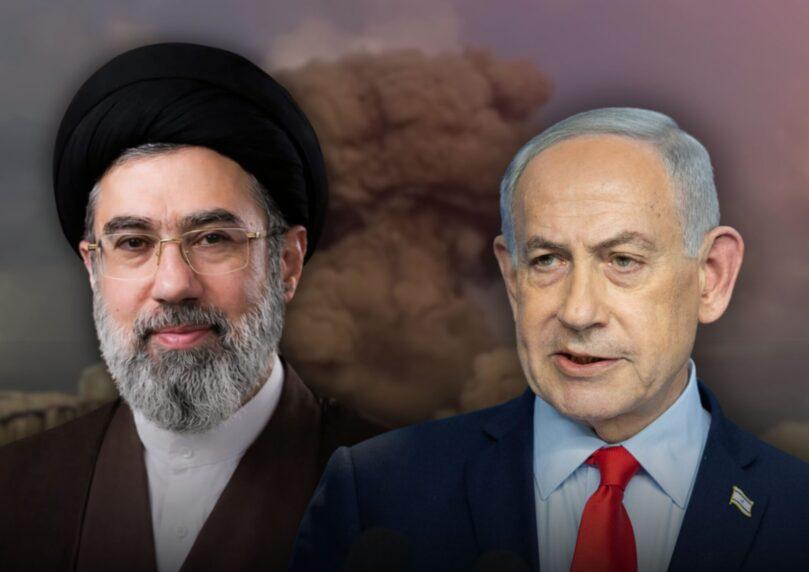

Winds of war are sweeping across the Middle East amid unprecedented joint operational preparations between the U.S. Armed Forces and the Israel Defense Forces to renew direct military strikes against the Islamic Republic of Iran.
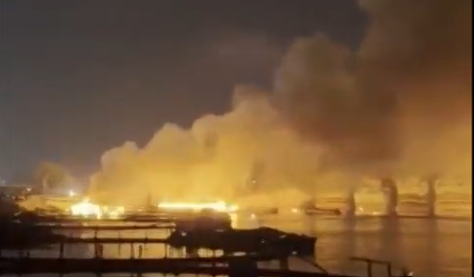
After The Wall Street Journal published revelations that a combined, multi-tiered military campaign is being actively prepared for the period immediately following the U.S. midterm elections, strategic attention has focused on the precise timing for when U.S. President Donald Trump and Israeli Prime Minister Benjamin Netanyahu will issue the order to initiate offensive operations.
First Hurdle: Israel’s Election Is Behind Us
Operational planners have had to navigate three distinct political and security hurdles: Israel’s parliamentary election, the forthcoming U.S. congressional elections on November 3, and the immediate threat of an Iranian military provocation before the end of October.
The first hurdle was cleared on Tuesday with the closing of polling stations in Israel’s 26th Knesset elections. While the finalized allocation of parliamentary mandates remains pending the tallying of external double envelopes and formal coalition negotiations have yet to commence, the national camp led by Netanyahu remains the central axis in the Knesset.
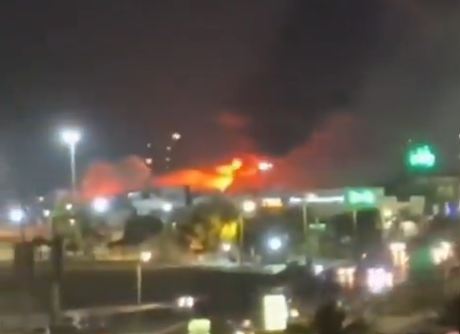
Operationally, the conclusion of balloting removes a primary domestic constraint: an offensive launched before the vote would have faced intense criticism as partisan interference in domestic democratic procedures. With the polls closed, high-level defense decisions can proceed strictly on their strategic merits, even as political maneuvering to form a government continues in Jerusalem.
The second and most critical milestone is set for Tuesday, November 3, 2026, when tens of millions of American citizens head to the polls for the U.S. midterm elections.
Second Hurdle: U.S. Midterm Congressional Elections
While President Trump is not personally on the ballot, the outcome will dictate the scope of executive authority and legislative backing he commands throughout the final two years of his second term in the White House. The Republican Party is engaged in an intense nationwide struggle to retain majorities in the House of Representatives and the Senate, while Democrats are directing massive resources toward flipping congressional control.

Although Trump regularly highlights past strikes on Iranian nuclear and ballistic missile infrastructure as signature achievements during his mass campaign rallies, defense analysts in Washington confirm that the White House has deliberately avoided kinetic escalation before American polls close.
A major regional confrontation in the final stretch of the congressional race would risk causing severe turbulence across international energy markets, driving up crude oil and gasoline prices, and shifting voter focus away from domestic economic messaging—endangering Republican candidates in hyper-competitive districts.

Sustaining control of Capitol Hill is an existential priority for the administration: a House majority secures budgetary authority and defense appropriations, while retaining the Senate guarantees unobstructed confirmation of judicial nominees and executive leadership. Conversely, losing both chambers would constrain executive initiatives and subject the administration to hostile congressional oversight. For these reasons, Washington has strictly prioritized military restraint through November 3.
Third Hurdle: Fear of an ‘October Surprise’ from Tehran
The third hurdle centers on the acute operational concern over an Iranian “October surprise.” In American political terminology, the phrase denotes a sudden external crisis deliberately manufactured in the closing days of an election cycle to disrupt voting dynamics.

Defense establishments in Washington and Jerusalem have maintained elevated alert levels over the prospect that the regime in Tehran might orchestrate a major ballistic salvo, target Western assets, or conduct asymmetrical terror operations before the end of October. Intelligence assessments suggest Iranian hardliners view the current pre-election days as a period of tactical vulnerability in which Washington’s political room for maneuver is constrained. With only days remaining in the month, intelligence arrays remain at their highest readiness to intercept potential provocations.
These calculations unfold against the backdrop of reporting by The Wall Street Journal, which revealed extensive U.S. warnings conveyed to Gulf partner nations, advising them to finalize readiness protocols for a sharp regional escalation and heavy exchanges of fire immediately following the midterms.

The joint posture includes forward deployment of strike assets capable of penetrating strategic targets deep within Iranian territory, coupled with reinforced air and missile defense batteries surrounding U.S. bases and partner infrastructure. The U.S. military has replenished forward-deployed strategic munitions reserves throughout the Middle East, deployed carrier strike groups and advanced fighter wings, and implemented hardened defensive measures across regional installations.
Meanwhile, the Israeli defense establishment remains at peak operational readiness. Detailed target banks assembled over recent months—encompassing regime governance symbols, energy distribution nodes, and hardened nuclear development facilities—stand fully prepared for execution.

While Israeli planners weighed action earlier in October, they synchronized operational timing with the White House to align with the strategic window opening immediately after American voters deliver their midterm verdict.