




When the government took office in late December 2022, Finance Minister Bezalel Smotrich sparked widespread media and political turbulence in an interview with the religious newspaper Mishpacha. In that discussion, Smotrich said that alongside rigorous macroeconomic labor, the Israeli economy relies on divine providence, invoking biblical passages that link adherence to traditional commandments with material prosperity.


 3+
“They’ve tested many economic theories, right? They tried capitalism, they tried socialism, but there is one thing that has never been tried—an economic doctrine called ‘Vehaya Im Shamoa,'” Smotrich said at the time, referencing the Shema prayer and verses from Leviticus promising timely rains and fruitful yields. Yet the incoming finance minister was equally careful to add an operational caveat: “I do not remain at 30,000 feet. As finance minister, believe me, I will dive into the macro, the micro, the data, and the most rigorous professional terminology in the world. But right before descending into details, we are believing Jews.”
Left-wing factions and financial commentators launched fierce attacks against the remarks, repeatedly weaponizing the quote during subsequent fiscal headwinds. In February 2024, four months after the October 7 massacre, when Moody’s downgraded Israel’s sovereign credit rating, a headline in Haaretz declared: “Even in the Economics of ‘If You Walk in My Statues,’ Smotrich Has Failed.” Now, marking four years in office and navigating the longest multi-front war in Israel’s history, the audited macroeconomic metrics demonstrate a definitive, counter-intuitive reality.
Powerful Stock Market, Strong Shekel
Now, summing up four years in office, it’s time to check what the numbers say.
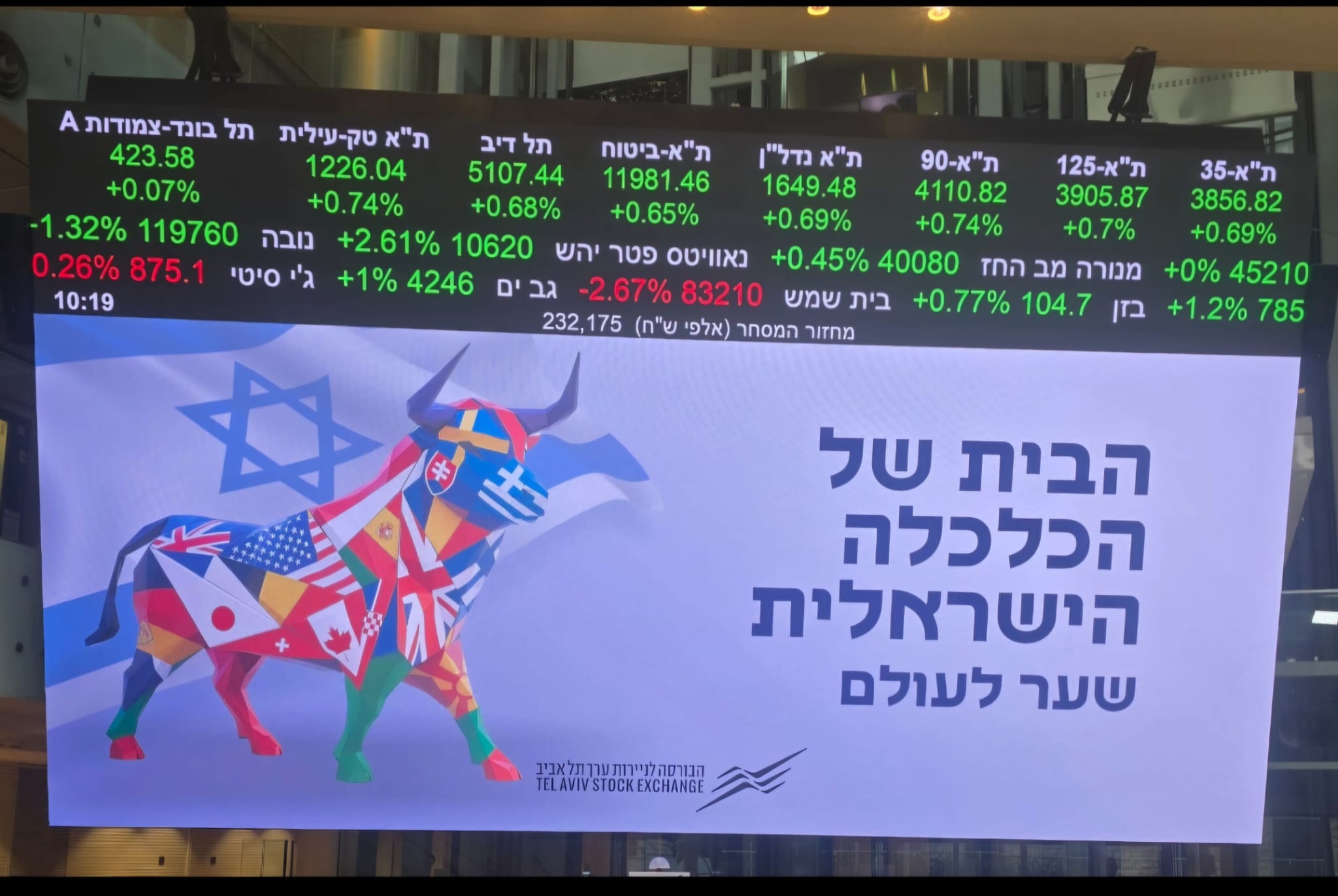
Defying the immense logistical, fiscal, and operational burdens of protracted conflict, the Tel Aviv Stock Exchange fundamentally outperformed global exchanges. Between the government’s swearing-in in late December 2022 and today, the benchmark TA-125 index surged by 124%. Over that same four-year timeframe, the American S&P 500 rose 88%, while Europe’s STOXX Europe 600 rose just 40%. Because the Israeli currency strengthened concurrently, international investors calculating returns in U.S. dollars enjoyed an even wider outperformance margin.
 3+
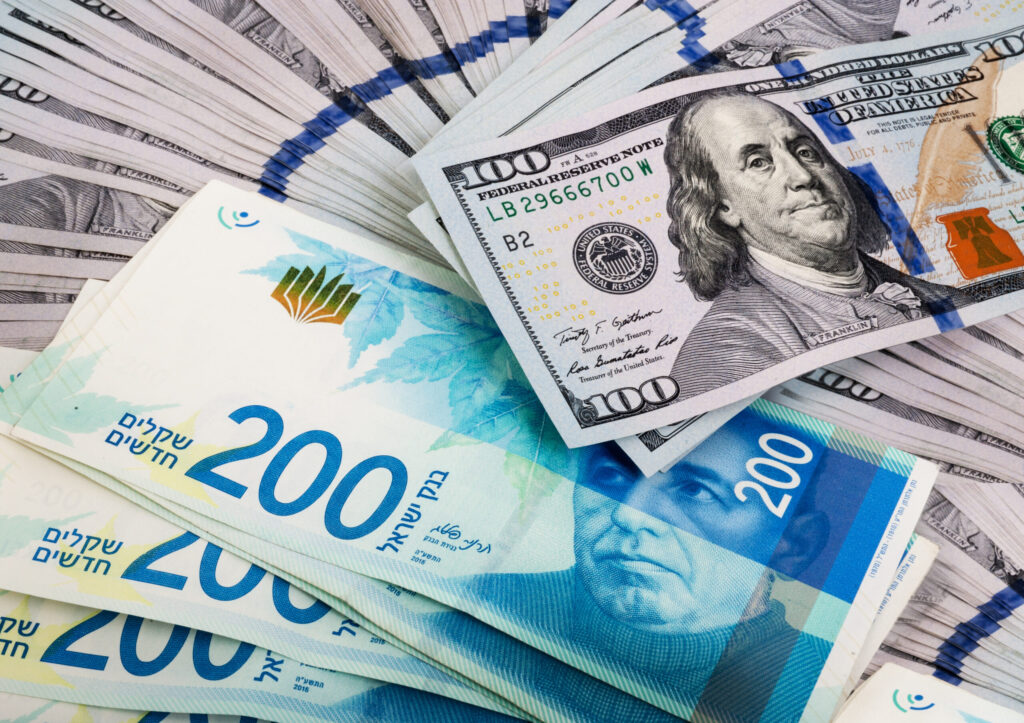
The shekel: strong against the dollar and euro. Despite episodic bouts of wartime volatility, the shekel appreciated by more than 11% against the U.S. dollar and over 7% against the euro across Smotrich’s four-year tenure. The currency’s sustained resilience signals ongoing global market confidence in the Israeli economy’s structural durability relative to Western peers.
Inflation and interest rates: Israel against the trend. While central banks across the West continue to battle stubborn inflation—with U.S. headline inflation running at 3.7% and the Eurozone at 3.8%—Israel’s inflation rate slowed to just 1.6%, less than half that of its primary trade partners. This decisive cooling has translated directly into monetary easing. While the Federal Reserve recently pushed benchmark borrowing costs back up to 4% and the European Central Bank enacted two interest rate increases this year, the Bank of Israel cut its benchmark interest rate three times in a row, lowering it to 3.25%.
 3+
Real Decline in Housing Prices
Foreign investment: all-time high. Contrary to narratives predicting catastrophic capital flight, foreign direct investment into Israel achieved a record of over $26 billion in 2025. This historic milestone is 14% higher than the previous record set during the 2021 global tech boom, and 78% above the wartime levels recorded in 2024. The acceleration has carried forward into 2026, with the first quarter logging the highest volume of foreign investment in state history.
Growth: strongest among OECD countries. In October, the International Monetary Fund elevated its 2026 growth forecast for Israel to 4.5%—the fastest projected rate among all 38 member countries of the OECD, outpacing developed economies by a significant margin. The Bank of Israel maintains an even more robust forecast, projecting real GDP to expand by 5.6% this year and 7.5% next year. Under a domestic metrics model that excludes the overseas manufacturing output of Israeli multinational firms, growth is still projected at a commanding 3.4% this year, accelerating to 5.1% next year.
Housing prices: the rise has been halted.
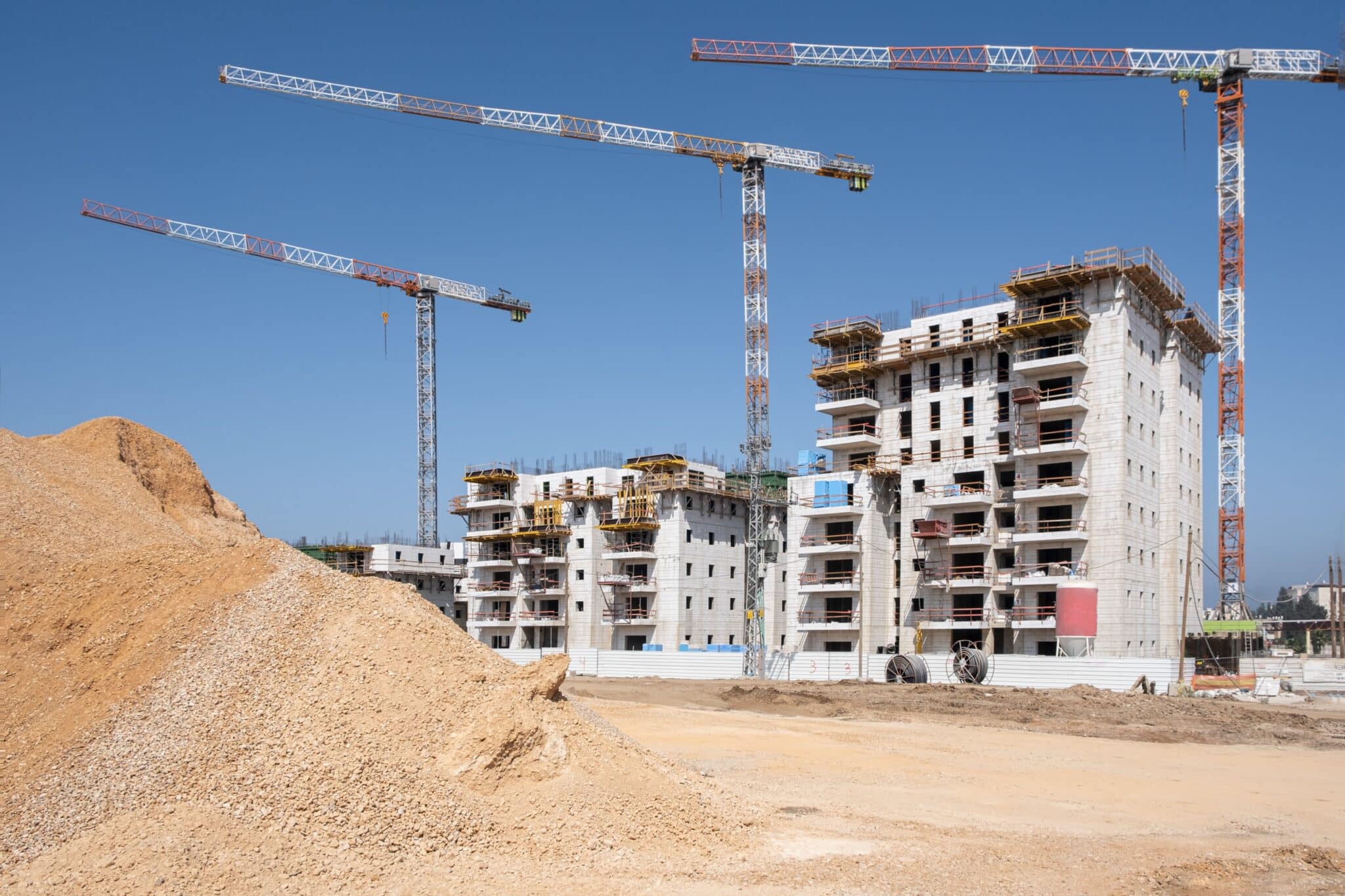
Under the previous Bennett-Lapid administration, annual home price inflation escalated to nearly 20%. Since early 2023, however, cumulative housing price growth has been curbed to about 3%, with prices contracting by 1.8% over the past twelve months. Adjusted for inflation, housing costs across Israel have dropped in real terms.
 3+
Credit rating: the trend has reversed. After all three major credit rating agencies downgraded Israel’s sovereign rating during the initial shock of the multi-front conflict, that downward trajectory has stabilized. S&P and Moody’s have revised Israel’s sovereign credit outlook from “Negative” to “Stable,” while Israel’s sovereign risk premium among institutional debt buyers has contracted nearly back to its pre-war baseline.
Significant Divine Assistance
Responding to the multi-year figures, Finance Minister Bezalel Smotrich told Channel 14 that he remains proud of his administration’s support for Torah study, pioneer settlement throughout Judea and Samaria, and preserving Jewish national identity.
Smotrich affirmed that blending spiritual purpose with disciplined macroeconomic policies laid the foundation for these historic milestones.
Those who forecasted catastrophic collapse have been met with record stock valuations, cooling inflation, a robust shekel, and historic levels of foreign investment.