


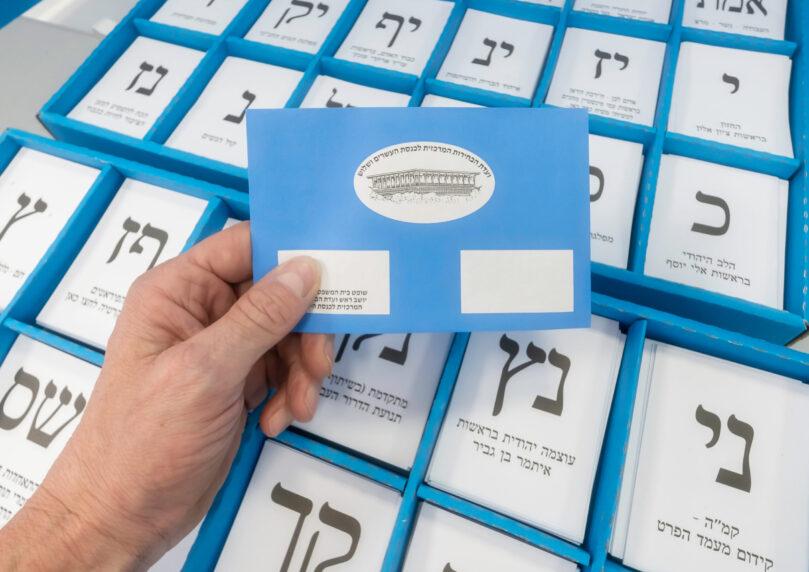

A deceptive message offering to update citizens on their designated polling station could lead to a fraudulent destination: a malicious website designed to harvest personal information. Cybersecurity researchers at Check Point issued an urgent warning on Sunday, cautioning against an ongoing impersonation campaign presenting itself as a “voter information system” amid efforts to exploit public attention ahead of Tuesday’s national election.

 1+
According to data compiled by the security firm, more than 1,200 web addresses directly associated with the Israeli elections were registered throughout September and October. Notably, one out of every 47 registered sites was determined to be suspicious or overtly malicious. Analysts emphasized that including Hebrew terms such as “elections” or “voter info” in a domain name does not indicate official affiliation with the Central Elections Committee or any state authority. The deceptive method relies on traditional phishing vectors: messages or landing pages designed to closely mimic legitimate government interfaces and prompt unsuspecting users to enter sensitive credentials. Consequently, Check Point strongly advises voters to verify polling stations, operating hours, and voter eligibility strictly through official government platforms, navigating directly to established portals rather than clicking links transmitted via unsolicited SMS messages or chat groups.
Beyond data-theft vectors, researchers highlighted preparations by hostile threat groups to disrupt website availability on election day. Continuous tracking revealed that distributed hacking cells are actively discussing operational attempts to mount distributed denial-of-service (DDoS) attacks against high-profile institutional targets, including the official portals of the Knesset, the Israel Police, and the Bank of Israel. Security analysts clarified that these findings reflect intercepted planning and forum discourse, not successful disruptions or confirmed outages of the targeted systems. Check Point noted an abrupt 110% increase in election-related chatter across darknet channels and specialized Telegram monitoring groups from the beginning of October compared to September volumes. The findings were derived from a synthesis of active threat intelligence telemetry, server registrations, and underground forum tracking.
 1+
To protect personal security on the eve of the vote, the public is advised to avoid entering personal passwords, authentication codes, or financial details on third-party links. Security experts emphasized that messages forwarded within large community groups carry no inherent credibility simply because they are repeatedly shared, and any purported notifications about shifts in polling venues or voting schedules must be independently corroborated through direct government channels.