


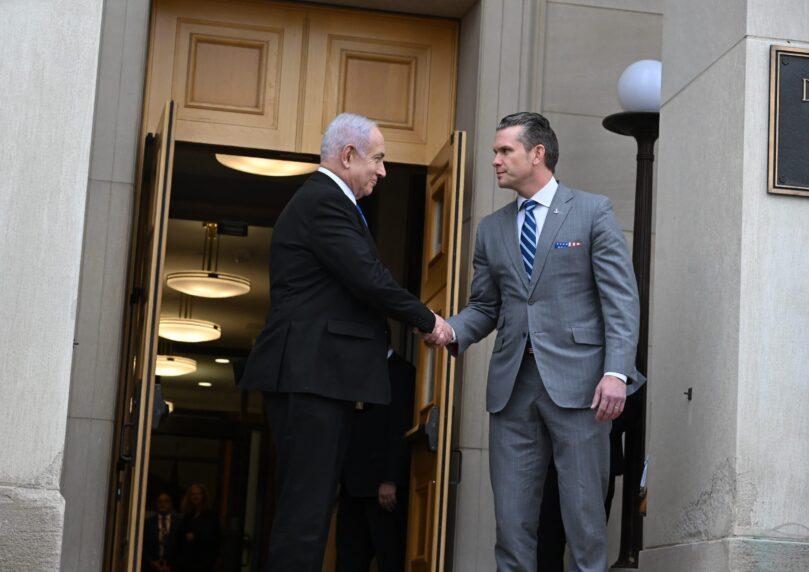

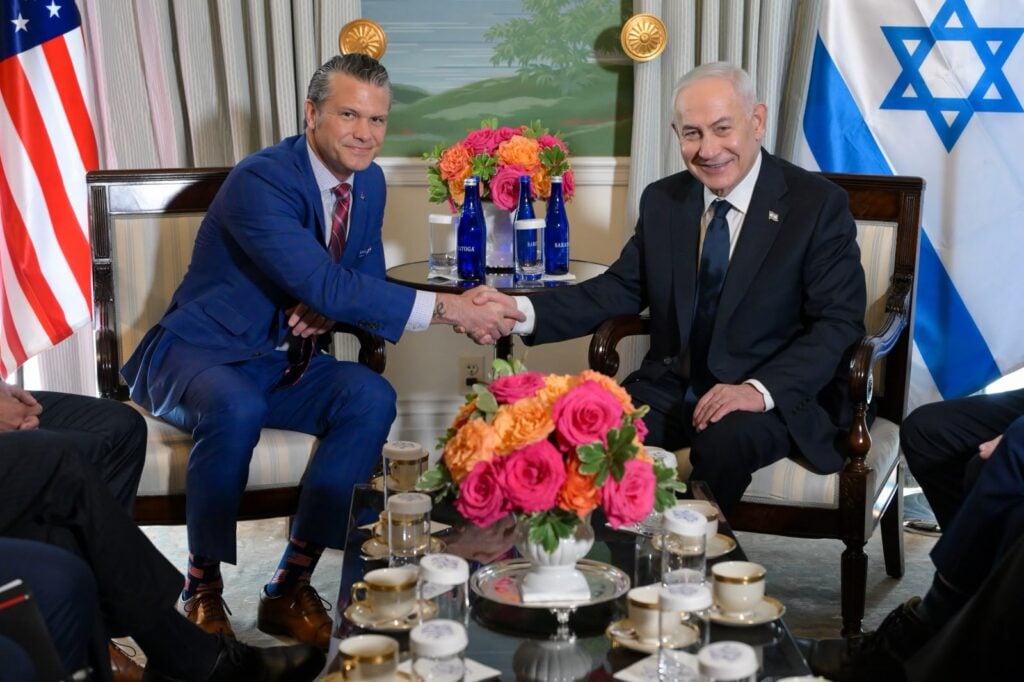
Prime Minister Benjamin Netanyahu and United States Secretary of Defense Pete Hegseth held a clandestine, extended meeting on Monday night at the Israeli Air Force’s Ovda Airbase in southern Israel, alongside several unidentified foreign officials. The unscheduled and highly sensitive summit took place at an installation hosting forward-deployed American fighter squadrons and aerial refueling tankers, where Hegseth also met with stationed U.S. military personnel. The sudden high-level engagement forced Prime Minister Netanyahu to cancel a long-scheduled public attendance at a soccer match in Jerusalem’s Teddy Stadium.

 2+
The summit’s operational urgency was underscored by Netanyahu’s travel arrangements: rather than using standard motorcade routes, the Prime Minister departed Ben Gurion Airport on an exceptional direct flight to the southern base. While official channels offered no details on the exact agenda or the specific foreign dignitaries present, the talks took place against the backdrop of ongoing operational discussions between Washington and Jerusalem about potentially resuming large-scale military strikes against Iran.
The meeting gained heightened strategic significance coming just 24 hours after U.S. President Donald Trump issued an explicit public endorsement of Netanyahu ahead of Israel’s Knesset elections on October 27.
 2+
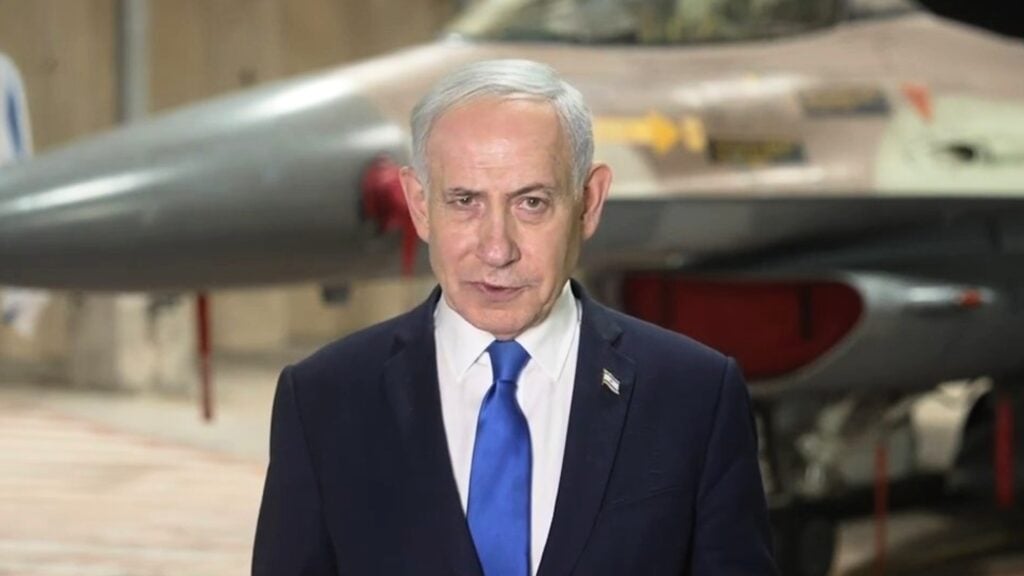
Following the consultations, Netanyahu delivered a stark deterrent warning directed at regional adversaries directly from the airbase tarmac: “We possess the readiness, determination, and operational capability to strike our enemies the moment it is required. Our adversaries will sustain far heavier blows than anything they have experienced to date. Do not test us.”
The clandestine summit also triggered a sharp domestic debate over the conduct of Israel’s military censorship apparatus. Channel 14 political correspondent Motti Kastel said he submitted full details of the encounter for security clearance early Monday evening, only to receive a categorical refusal under any proposed phrasing, because publication would endanger national security during a precarious operational period.
 2+
Despite Kastel repeatedly warning censorship officials throughout the night that the information had leaked and was about to be published abroad, the censor maintained its total prohibition. Ultimately, American news outlet Axios broke the story, after which Israeli mainstream media channels quickly received clearance to broadcast the development.
Kastel sharply criticized the censorship policy, pointing out that domestic publication bans consistently fail to prevent foreign leaks while systematically creating an information vacuum that harms the Israeli public. He noted that if the defense establishment’s severe warnings were valid, the eventual international disclosure compromised shared Israeli and American strategic interests, underscoring the severe operational risk that leaks pose to impending military maneuvers.