


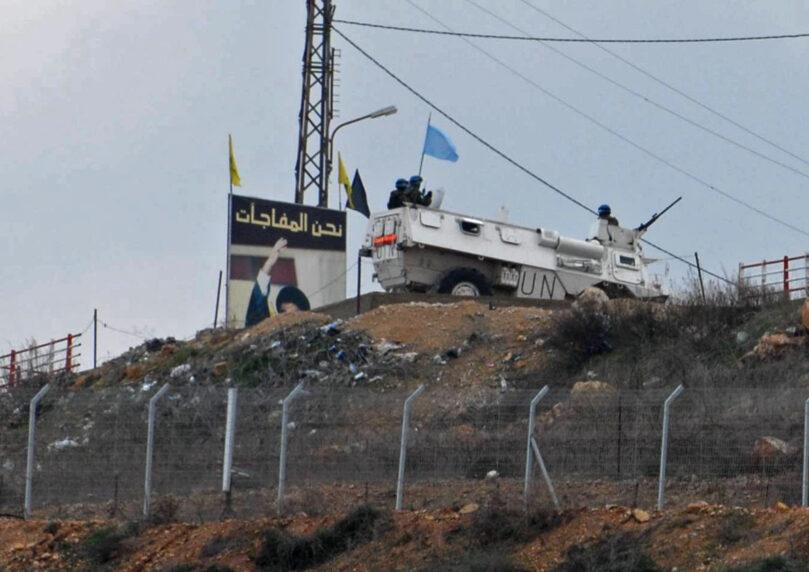

After 48 years on the job, it’s fair to say UNIFIL forces haven’t succeeded in their mission to prevent clashes on the border with Israel. Yet Lebanon appears desperate to keep the international force in place—even though its mandate is set to end in late 2026. Several factors may explain Lebanon’s insistence on preserving the failed force on its border with Israel.
The Lebanese government under President Joseph Aoun is doing everything it can to prevent UNIFIL forces from leaving Lebanese territory. Now the Arab League secretary-general has joined their side, declaring today (Monday) that he and the League’s member states believe “the continuation of its [UNIFIL’s] presence, under the official and political umbrella of the UN, is the best option.”


 2+
He added: “This guarantees the presence of the international community in southern Lebanon and holds it responsible for any attack on international forces. He noted a strong trend to end UNIFIL’s mandate, and emphasized that the League is working to block this trend while simultaneously proposing the deployment of forces from other countries in its place.”
The United States, with Israel’s backing, announced that UNIFIL forces will end their mission in Lebanon at the end of 2026—after 48 years in the region. This comes after the force (called in Hebrew the UN Interim Force in Lebanon) meant “to keep the peace” was present during three major wars between Israel and Hezbollah and several kidnapping incidents and escalations, which it failed to prevent. So why is Lebanon trying to stop it from leaving?
 2+
Shirking Responsibility
Under the agreement reached between Israel and Lebanon, the Lebanese army is supposed to take responsibility for southern Lebanon from Hezbollah and be the only entity holding weapons in the area. The move even began with a pilot program during the summer in which the IDF withdrew from two areas in the security zone so Lebanese army forces could enter them. However, our correspondent Noam Amir reported in real time that the Lebanese army is failing to control the territory as the sides expected.
It’s quite possible that given the difficulty, Lebanon understands that the mission to control southern Lebanon is simply too big for them and is trying to hand it back to international forces. President Aoun, a former military general, is essentially shattering with his words the illusion that the Lebanese army can take sole responsibility for weapons.
Not Forces
The history of the Lebanese army and UNIFIL has seen cooperation against Israel. In a well-known 2010 incident in which reserve Lt. Col. Dov Harari was killed, Lebanese army soldiers were the ones who fired on the force under his command. It was further claimed that to make it harder for the IDF force to return fire, the Lebanese army surrounded itself with UNIFIL soldiers—who constituted a “neutral” force that couldn’t be harmed.
Therefore, another option that could explain the Lebanese desire is that UNIFIL is a “game changer” in the balance of power. Lebanon understands that once the Lebanese army is alone in southern Lebanon, it’s at a significant disadvantage against the IDF’s superiority in any campaign that might develop—with the local army having no one (including Hezbollah) to hide behind.
 2+
The Hezbollah Connection
Beyond its relationship with the Lebanese army, UNIFIL has a relationship with the terror organization too—a relationship of silence. That “neutral” organization only criticized Israeli actions near the border, and remained silent on everything related to Hezbollah’s actions. In an article published in The Wall Street Journal in 2024, UNIFIL soldiers were even called “Hezbollah’s best friends.”
The article stated that “the peacekeeping force” allowed Hezbollah to establish itself in southern Lebanon over the years, to store weapons in many of the houses and to build a network of tunnels filled with weapons caches in preparation for an October 7-style attack on Israel. They added: “For 11 months (between October 8, 2023 and the article’s publication) Hezbollah fired more than 8,500 rockets and missiles at Israel, most from southern Lebanon, right under UNIFIL’s nose. UNIFIL soldiers fraternized with the armed terrorists.”
So instead of being a proper buffer on the border, UNIFIL forces became over the years an ally of the Lebanese side. Still, it appears it will be very difficult to change the decision that in just over two months UNIFIL will leave Lebanese territory. But will President Aoun succeed in forming a new force to handle a similar mission? That we’ll only know in the coming months.