


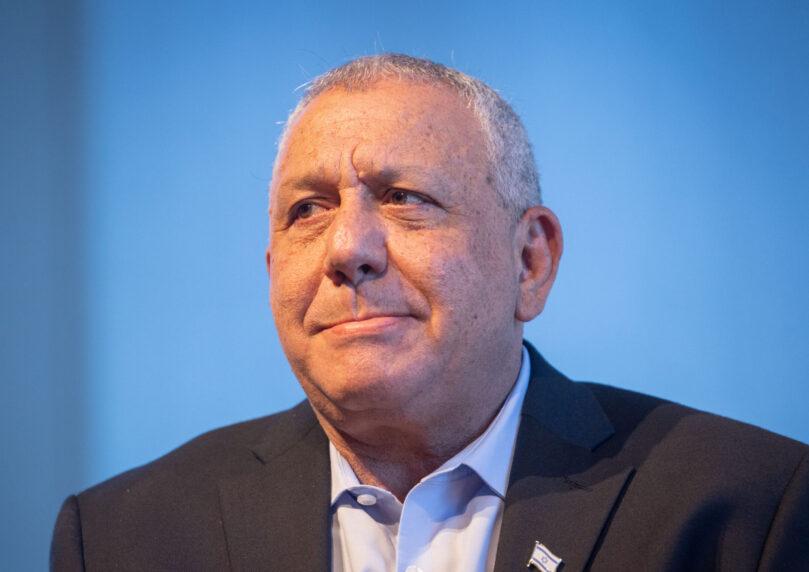

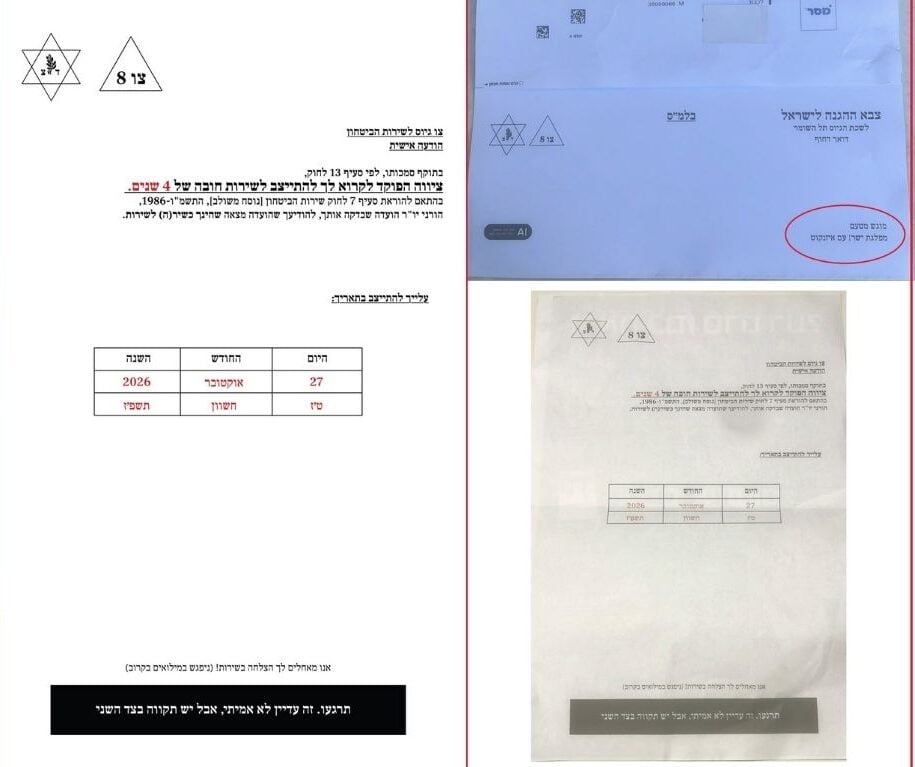
Gadi Eisenkot’s Yashar party triggered public fury in recent days after sending hundreds of thousands of letters to young voters as part of its election campaign. The letters were designed to resemble official military draft orders, telling recipients they must report for four years of mandatory service on election day. The campaign drew sharp criticism for using a tactic that caused panic among many young people.
מה זה הדבר הזה?!?!?!?! https://t.co/6KNrHAFlMC
— אחד האזרח🇮🇱דוד גבאי (@davidga6268) October 19, 2026
Eisenkot’s party explained the move was meant to illustrate the danger of continuing what they called “the draft-dodging government.” “Four years of mandatory service. Sounds like a bad movie? It will happen if the draft-dodging government is elected again,” the distributed message read. At the bottom of the letter, in small print, it clarified: “This isn’t real yet, but there’s hope on the other side,” in an attempt to frame the move as a wake-up call to the younger generation.
Reactions to the campaign came swiftly. Right-wing activist Yigal Malka sharply attacked the move, claiming many young people thought it was a real draft order and flooded recruitment offices with phone calls. “Sharp-eyed observers noticed that at the bottom right in small print, it mentions the order is submitted on behalf of former Chief of Staff Gadi Eisenkot,” Malka wrote, questioning whether the Elections Committee would impose sanctions on the party.

Beyond criticism of the marketing stunt itself, Malka raised a serious question about the source of the information. “Who provided the Yesh party with the details of reservists and soldiers?” he asked, hinting at the connections of party leaders—chief among them former IDF Chief of Staff Eisenkot and former IDF Spokesperson Ronen Manelis—to the security establishment. The question raises serious concerns about political use of military databases and violations of soldiers’ privacy.
The campaign comes as Eisenkot rises in Channel 14 polling. Gadi Eisenkot’s Yashar party gained two seats last night, reaching 22 mandates, while Likud remained at 29.