


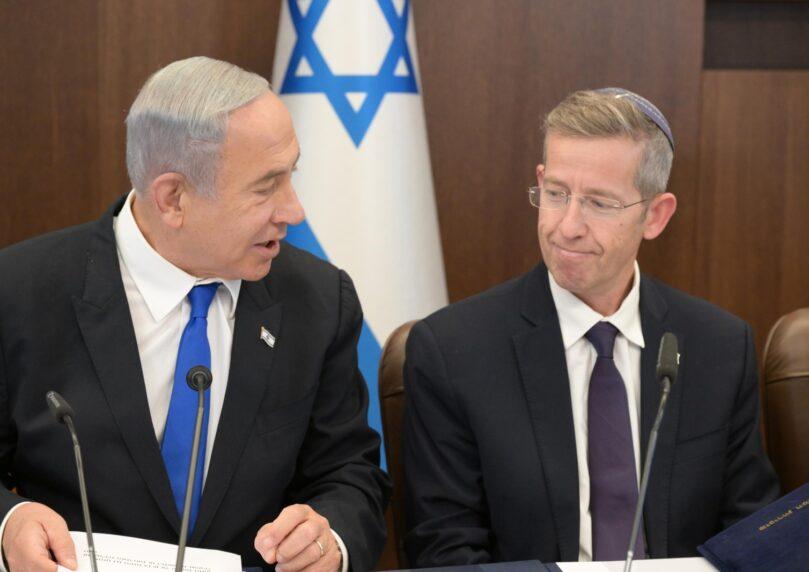

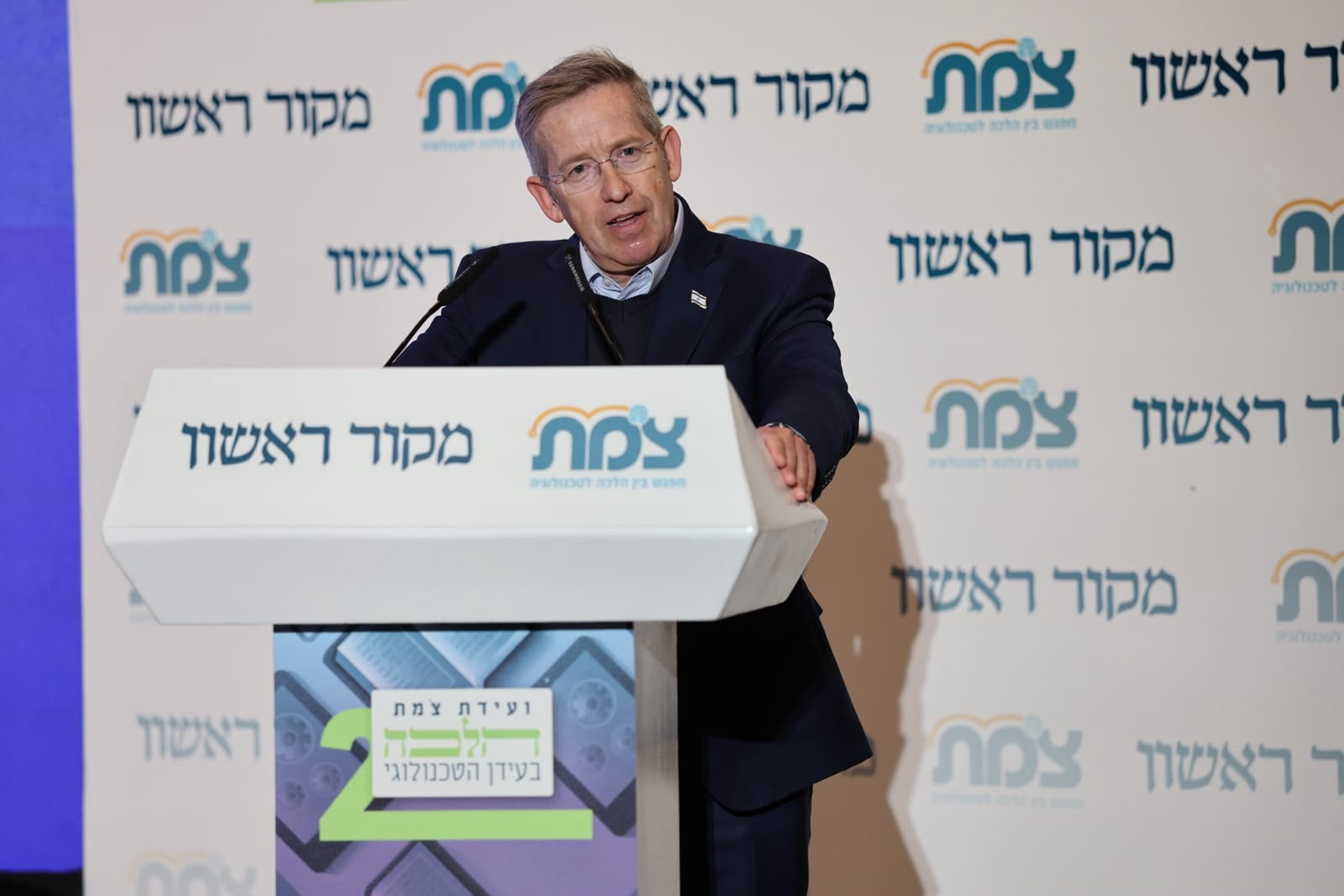
Cabinet Secretary Yossi Fuchs spoke on Sunday regarding the spiritual dimension accompanying the daily operations of the Prime Minister’s Office, particularly throughout the ongoing war. Delivering remarks at a joint conference hosted by the Zomet Institute and the Makor Rishon newspaper at the International Convention Center in Jerusalem, Fuchs outlined how he worked to introduce blessings and traditional prayers at moments when fateful defense decisions were being finalized, while detailing subtle shifts he incorporated into Prime Minister Benjamin Netanyahu’s formal addresses. “In my role, I saw immense importance in adding an element of faith to everything that took place during my tenure, especially during wartime,” Fuchs stated. “Reciting the Mi Sheberach prayer for IDF soldiers before approving dramatic operational maneuvers in the state’s history; handing out books of Psalms for colleagues to read; and inserting B’Siyata D’Shmaya [with the help of Heaven] into all of the Prime Minister’s speeches—I viewed this as fundamentally vital.”

 2+
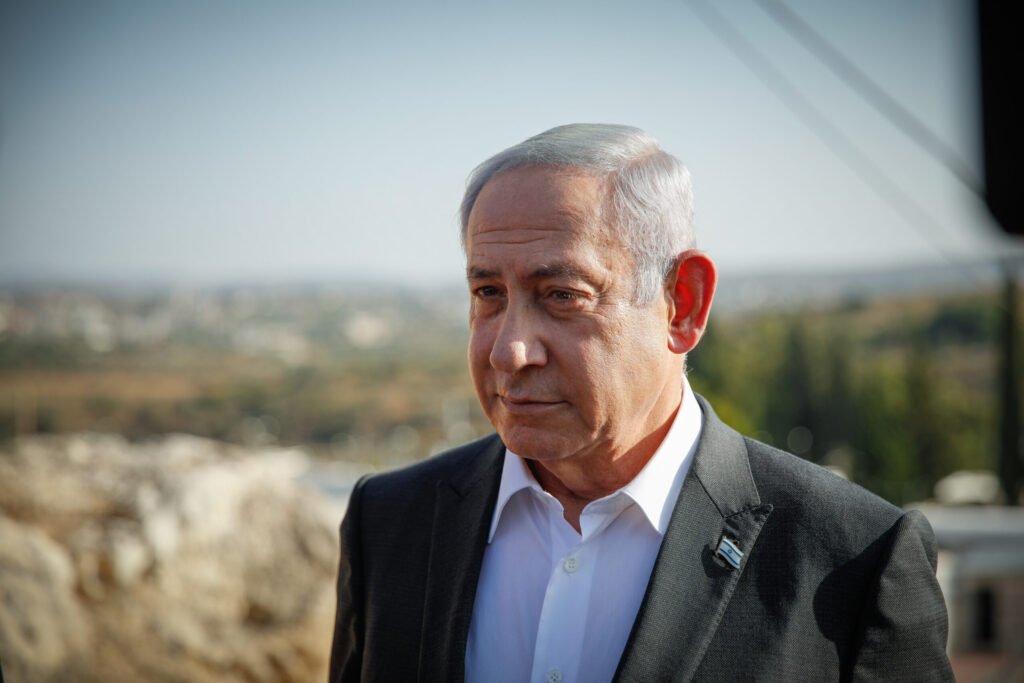
Fuchs later addressed Netanyahu’s personal relationship with Jewish heritage, noting that the Prime Minister has begun using traditional spiritual language without prompting. “I must say that while the Prime Minister is known not to be traditionally observant, it is extraordinary to see how deeply he lives the history of the Jewish people and views himself as a direct successor to the giants of our nation,” Fuchs remarked.
“He lives this reality every single day. I observe this in how he now includes B’Siyata D’Shmaya entirely independently, without me needing to mention it. I believe this is a positive attribute for the leader of the Jewish state.”
 2+
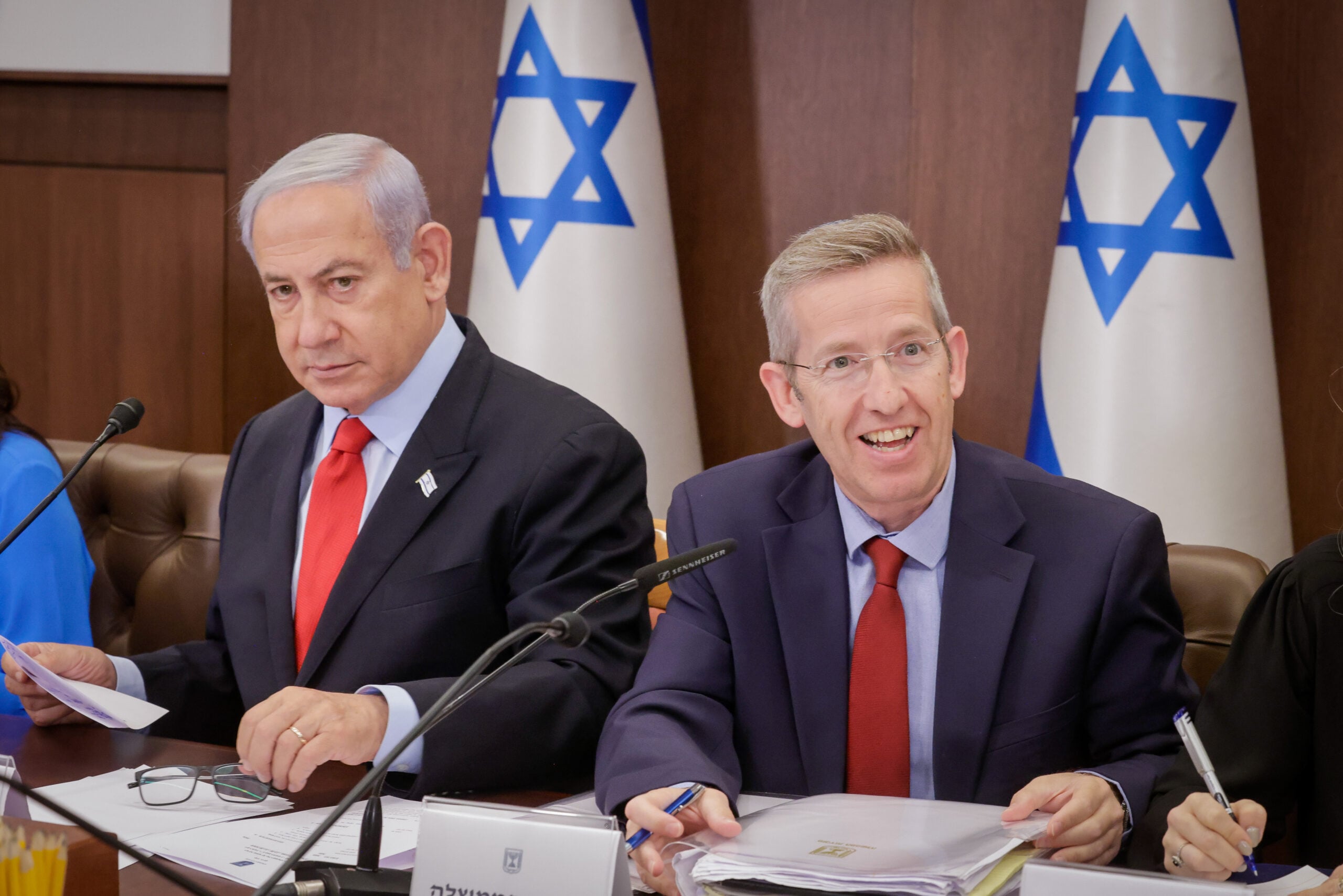
During his presentation, Fuchs also discussed the intricate halachic (Jewish legal) challenges inherent to his position, particularly on Shabbat, when he was required to participate in round-the-clock defense consultations at the Kirya military headquarters in Tel Aviv. “It is no simple challenge to remain an observant individual in an environment that is operating 24/7 for the people of Israel, where not every single technical action strictly qualifies as Pikuach Nefesh [the lifesaving mandate that supersedes Shabbat laws], requiring constant awareness,” he explained.
Recalling the opening weeks of the war, Fuchs described spending consecutive weekends inside the Kirya alongside the Prime Minister and senior security chiefs. “We were stationed in the Kirya Shabbat after Shabbat, and back then, there wasn’t even a minyan [prayer quorum] in the Prime Minister’s immediate circle,” he recounted. Over time, efforts brought more observant staff into the operational perimeter. “Today, that describes nearly the entire inner team: the Chief of Staff, the National Security Adviser, the Deputy National Security Adviser, and others.”
 2+
Fuchs elaborated on the granular religious considerations that arose during those intense shifts.
“Our presence there was indisputably justified by Pikuach Nefesh, without question,” he said, though he noted that specific secondary actions required careful judgment.
As an illustration, he cited deliberating whether to walk to a joint Mincha afternoon prayer service—which would require triggering electronic security doors—or whether it was legally preferable to pray in isolation inside his office.Fuchs delivered his remarks during a panel session entitled “Observant Professionals in Senior Roles: Dilemmas and Challenges,” reflecting on the continuous intersection of national security responsibilities, state governance, and personal Jewish faith.