


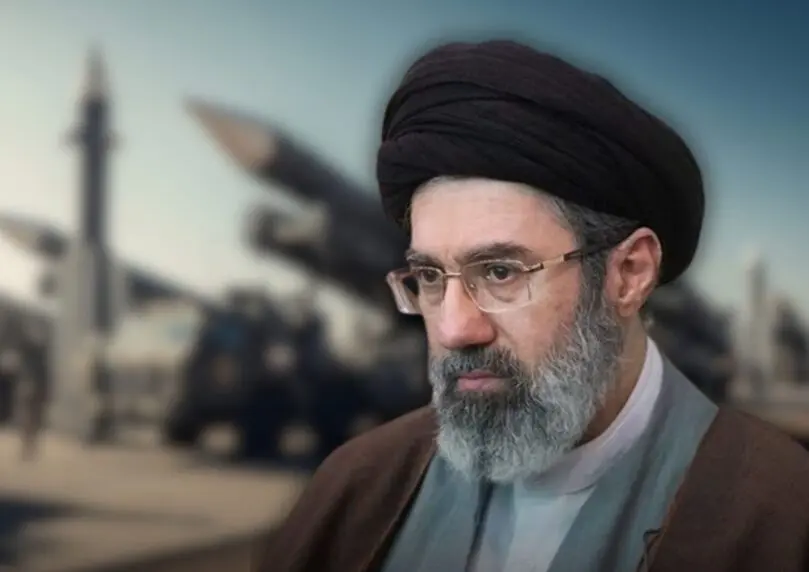

Iran is actively attempting to expand its operational reach against military targets within the United Kingdom, and the suspected attack plot directed against the U.S.-operated RAF Fairford airbase last month is not an isolated incident, the head of Britain’s Security Service (MI5), Ken McCallum, warned on Tuesday. In an annual address outlining the kingdom’s preeminent security challenges, McCallum revealed that Tehran is escalating its activities well beyond its traditional harassment of regime dissidents to endanger sovereign military installations directly. Concurrently, he sounded alarms over intensifying threats from Russia and China, while cautioning that advanced artificial intelligence could soon empower terrorist organizations to engineer novel biological weapons.

 4+
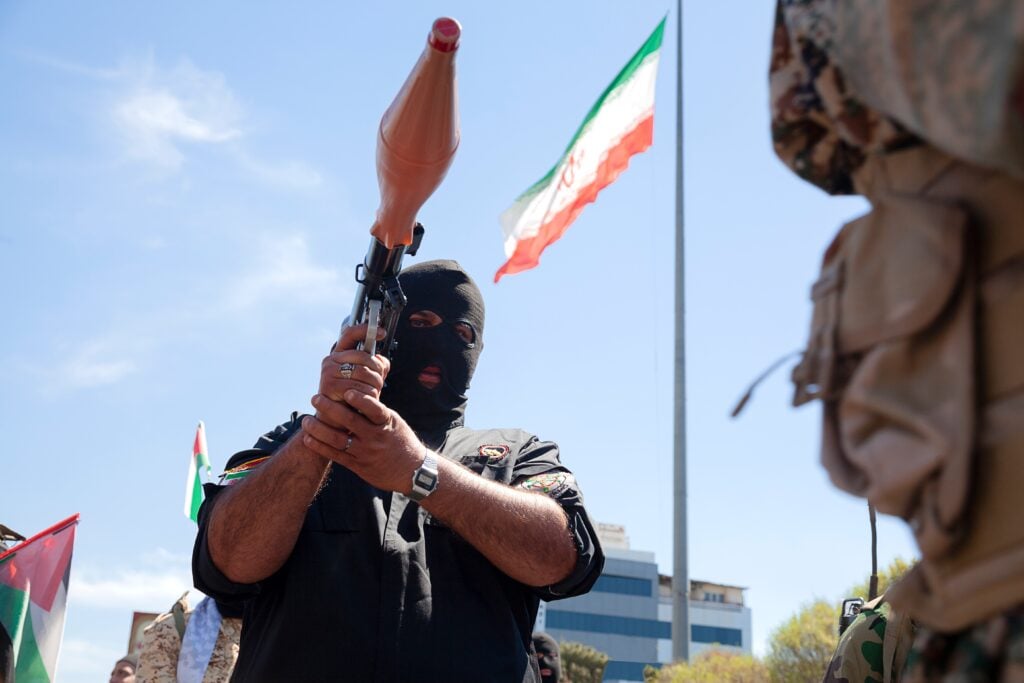
4+In his remarks, McCallum highlighted a pivotal shift in Iran’s operational doctrine, pointing out that Tehran is expanding its target portfolio within the British Isles. While previous operations attributed to Iranian intelligence focused primarily on regime critics and political dissidents, British authorities in recent years tied Iranian proxies to arson and sabotage campaigns aimed at Jewish and Israeli community targets across the country.
Now, according to the MI5 chief, another operational red line has been crossed: “A significant shift this year is the Iranian ambition to strike harder targets, such as military facilities.” McCallum emphasized that Britain has entered a new national security era that necessitates an operational realignment akin to the global intelligence overhaul triggered by the September 11 attacks 25 years ago. However, he clarified he was not equating the scale of the plots to 9/11 itself.
Addressing the suspected terror plot against Royal Air Force Fairford in western England, McCallum stressed that the occurrence was not an isolated event, citing comparable attempts both across the UK and internationally. However, he declined to specify the foreign locations involved.
 4+
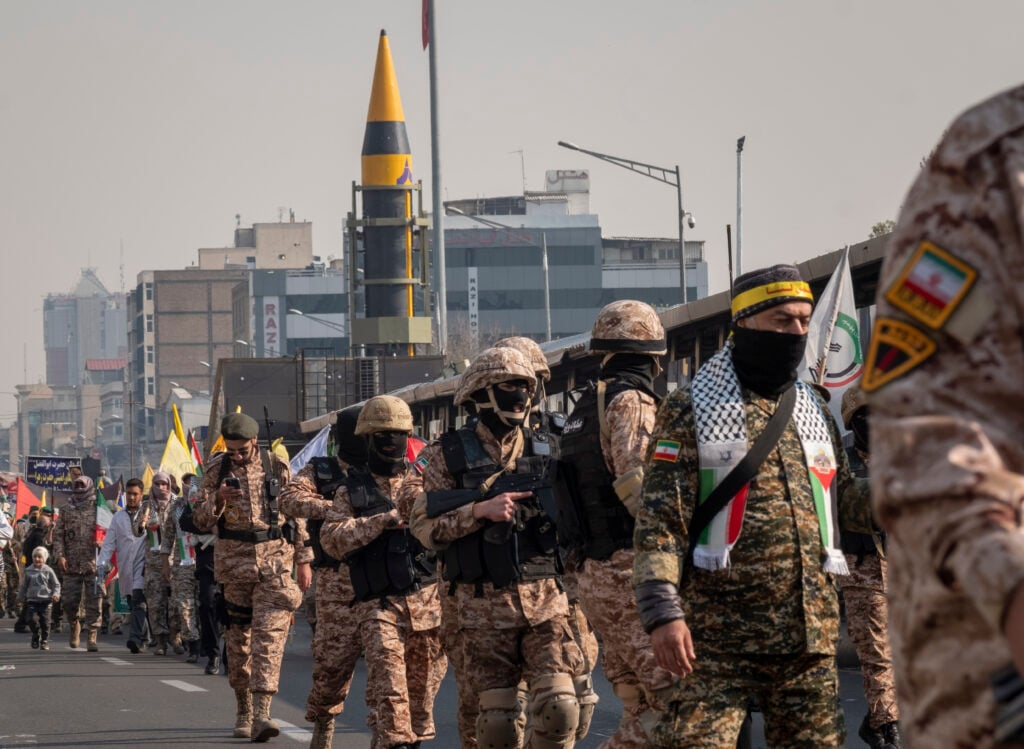
4+The warning arrives as British counter-terrorism police continue investigating the suspected plot against RAF Fairford, a facility utilized by the United States Air Force. The installation holds acute strategic significance amid the ongoing conflict with Iran, having hosted U.S. long-range heavy bombers deployed for offensive strikes against targets inside the Islamic Republic.
On September 27, emergency services deployed massive security cordons to the perimeter following an extraordinary incident, prompting the evacuation of dozens of nearby civilian residents alongside bomb disposal technicians and armed tactical units. Police subsequently confirmed that three commercial vans recovered on-site contained substantial quantities of gasoline—an accelerant suitable for arson—though no explosive payloads were detected.
 4+
4+Authorities detained seven men in their 20s after the incident. They were later released on bail pending investigation, with British authorities tying the plot directly to Iranian intelligence. This development prompted the temporary withdrawal of American strategic bombers from the facility. British Prime Minister Andy Burnham stated on Monday that the operation was “almost certainly” orchestrated under the direction of Iran’s Islamic Revolutionary Guard Corps (IRGC). While Tehran officially denied involvement, regime figures previously declared that any foreign airfield staging kinetic attacks against Iranian soil represents a legitimate military target.
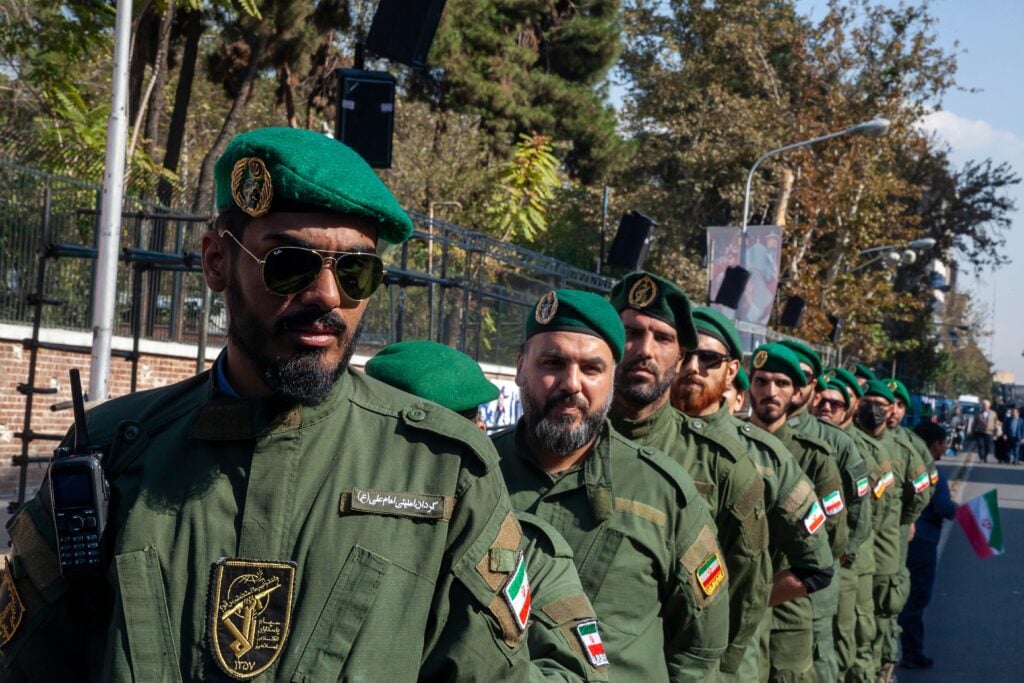
Beyond Iranian plotting, McCallum delivered a sweeping assessment of systemic challenges confronting Britain, stating that the nation has entered an era marked by a fourfold increase in state-threat investigations over the last decade. He identified Russia, Iran, and China as the primary adversaries driving this surge, emphasizing that Moscow and Tehran are aggressively widening hybrid warfare, deniable physical sabotage, cyber attacks, and clandestine espionage designed to obfuscate state attribution.
 4+
4+A major portion of the address focused on the emerging threat posed by artificial intelligence. McCallum explained that AI is radically shifting the offensive cyber equilibrium, noting that terrorist groups already deploy generative tools for tactical intelligence collection, attack planning, and drone navigation. However, he warned that the most catastrophic trajectory involves biological warfare.
While terror cells previously struggled to secure dangerous pathogen precursors and weaponization expertise, McCallum warned that “one risk is that AI will allow dangerous knowledge to fall into the hands of people we would all rather did not possess it.” At the same time, a second peril is “the prospect that AI could create novel pathogens never before encountered.”
 4+
4+To mitigate these emerging capabilities, McCallum announced that MI5 has established a dedicated AI Threat Evaluation Center designed to anticipate technical breakout vectors, warning against the unsupervised emergence of superhuman artificial intelligence: “Human history has not given us experience in confronting an entity that is smarter than we are… This is genuinely new.”