


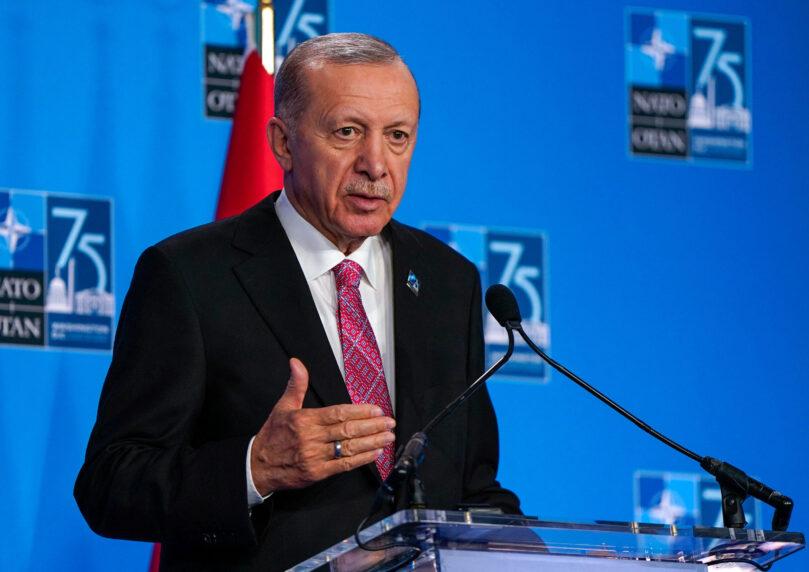

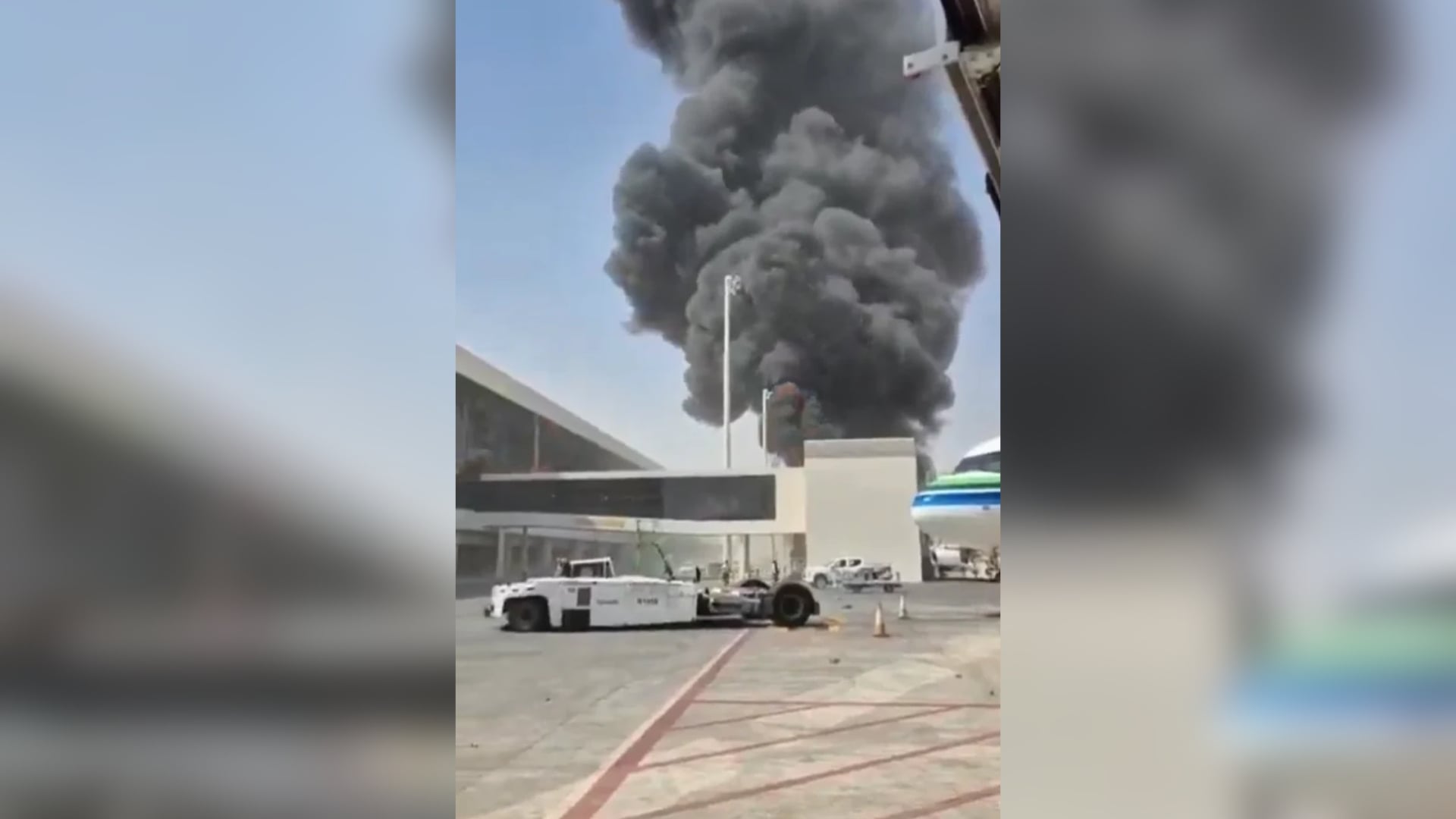
In an address delivered following a cabinet meeting he chaired in Ankara, Turkish President Recep Tayyip Erdogan condemned the Houthi terror organization’s attack against King Khalid International Airport in Riyadh. However, the president showed no urgency to trigger the recently signed Mecca Agreement, instead referring the decision to operationalize it to the Turkish parliament.
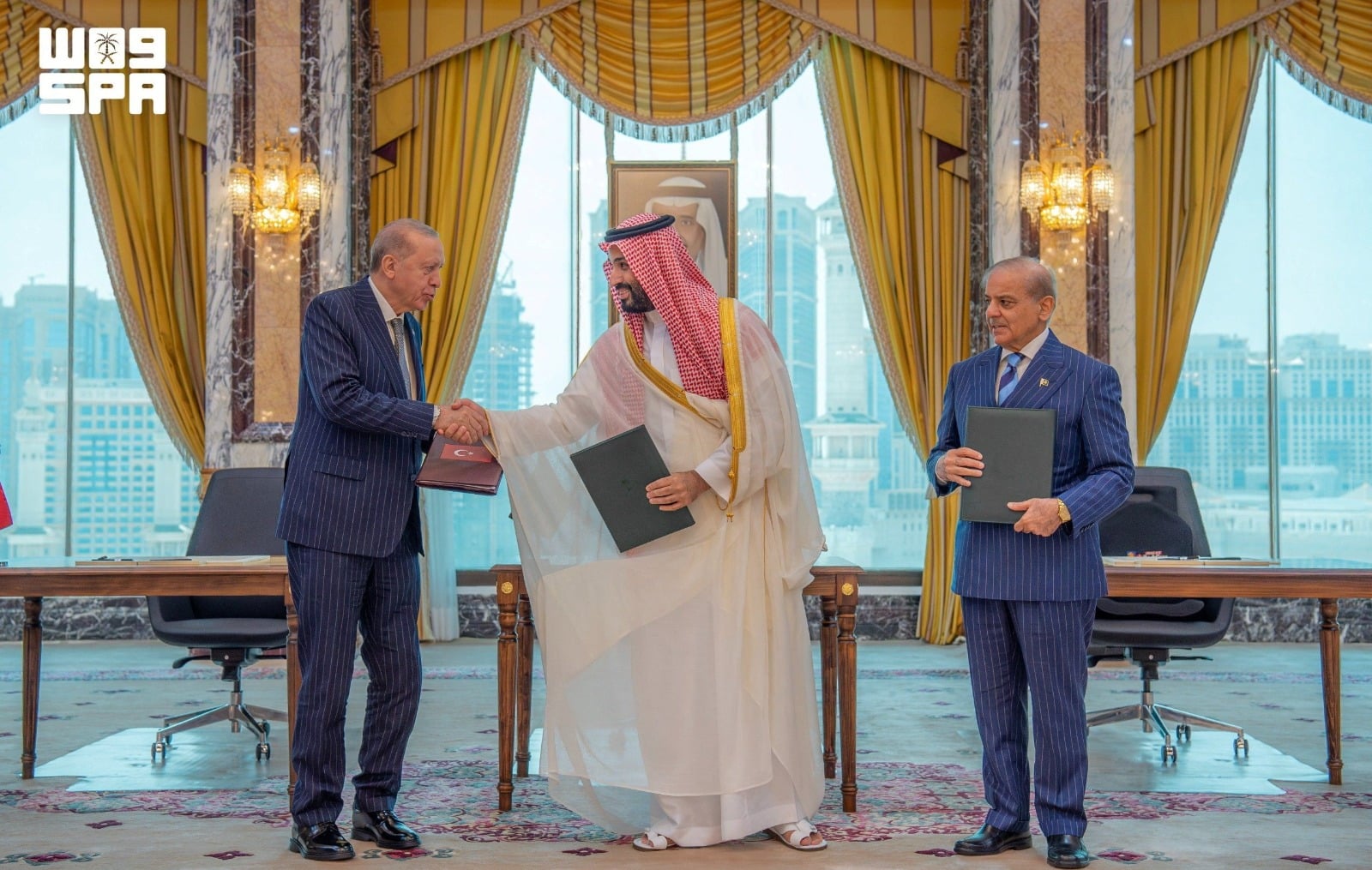
“We are continuing our efforts to establish the institutional framework of the joint defense agreement that we signed with Pakistan and Saudi Arabia on August 7,” Erdogan stated. “I would like to emphasize that just as in NATO, activities within the framework of the mutual defense agreement will be executed in accordance with national legislation. Through this pact, in which the three nations commit to mutual assistance in the event of an attack on one of them, they seek to establish a NATO-like structure for defensive deterrence.”
Despite Erdogan’s remarks, Arab media outlets highlighted that the three nations’ strategic vision treats any threat against a member state as an indivisible shared security concern. Diplomatic officials affiliated with the accord previously noted that “the goal is to create collective deterrence, and to achieve this, these nations will unify their capabilities under a defensive rather than offensive architecture.”
Erdogan continued his effort to avoid immediate military entanglement, adding: “We are persisting with our efforts to advance the agreement to parliament in the coming days to complete domestic ratification procedures. Turkey’s stance, sensitivities, and core principles are clear. We do not view events through an ethnic or sectarian lens.” Nevertheless, Erdogan stressed that “we call for resolving disputes through dialogue and diplomacy around the negotiating table, rather than on the battlefield.”
Throughout his remarks, Erdogan focused exclusively on Saudi Arabia, omitting any reference to the fact that another alliance partner is simultaneously grappling with a sharp domestic escalation. Pakistan recently experienced severe deterioration along its border with Afghanistan against the ruling Taliban terror regime, declaring a state of emergency in adjacent border regions. Observers remain skeptical about whether any measure submitted to the Turkish parliament will address that front either.