


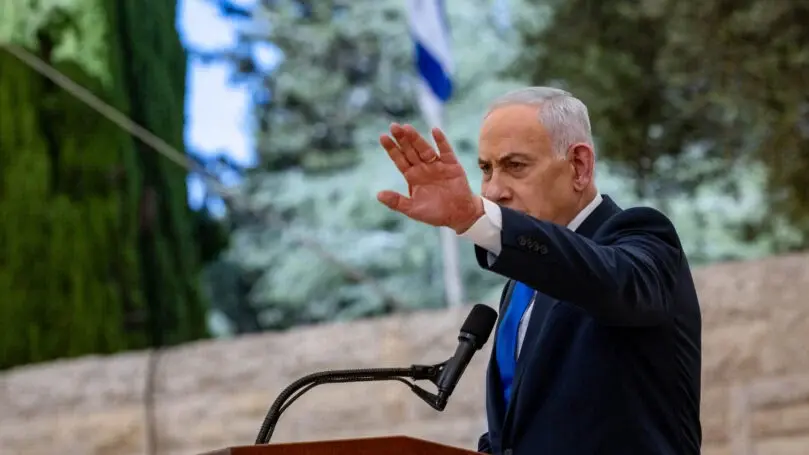

Prime Minister Benjamin Netanyahu addressed the political bloc landscape today (Sunday) during a Likud faction meeting in Petah Tikva, assessing that the camps are currently evenly matched. “There is currently a tie between the blocs, 60-60,” Netanyahu said, adding that increasing voter turnout in right-wing strongholds would be the deciding factor in the election.
According to Netanyahu, “If we don’t raise voter turnout in right-wing strongholds, we won’t win, and we’ll end up with a left-wing government led by Eisenkot, Yair Golan, Lieberman, Bennett, and the Arab parties.” He further stated that if the right-wing camp succeeds in boosting turnout and securing “three seats currently held by Winter and Zelekha”—as he put it—”we will win.”
During the meeting, Netanyahu asked candidates to emphasize to the public the danger—as he defined it—of forming a government that relies on the support of Arab factions. Additionally, he called for highlighting the budgetary demands presented by Arab parties as conditions for coalition cooperation, and for placing this issue at the center of the election campaign. Netanyahu’s remarks also come against the backdrop of a News 14 poll published last week, which indicates a narrowing gap between him and Yashar party chairman Gadi Eisenkot regarding suitability for the premiership. According to the poll, Netanyahu holds 52% support compared to Eisenkot’s 48%, whereas the previous poll showed a split of 54% to 46%.
This trend is also evident when compared to a poll published on September 17, in which Netanyahu garnered 57% support against Eisenkot’s 43%. In less than three weeks, the gap has narrowed by five percentage points—a figure that may explain the emphasis the Prime Minister placed during the Likud faction meeting on boosting voter turnout in right-wing strongholds and on the importance of securing votes from parties not expected, according to the polls, to cross the electoral threshold.