


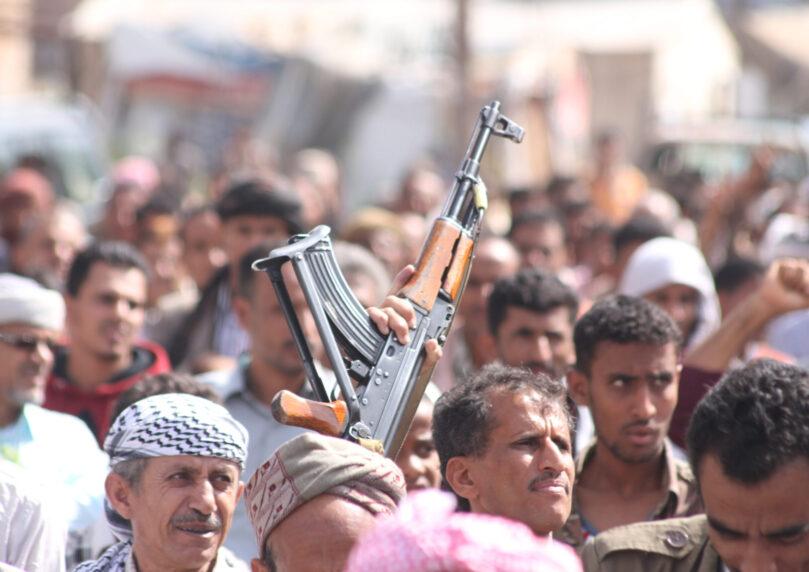

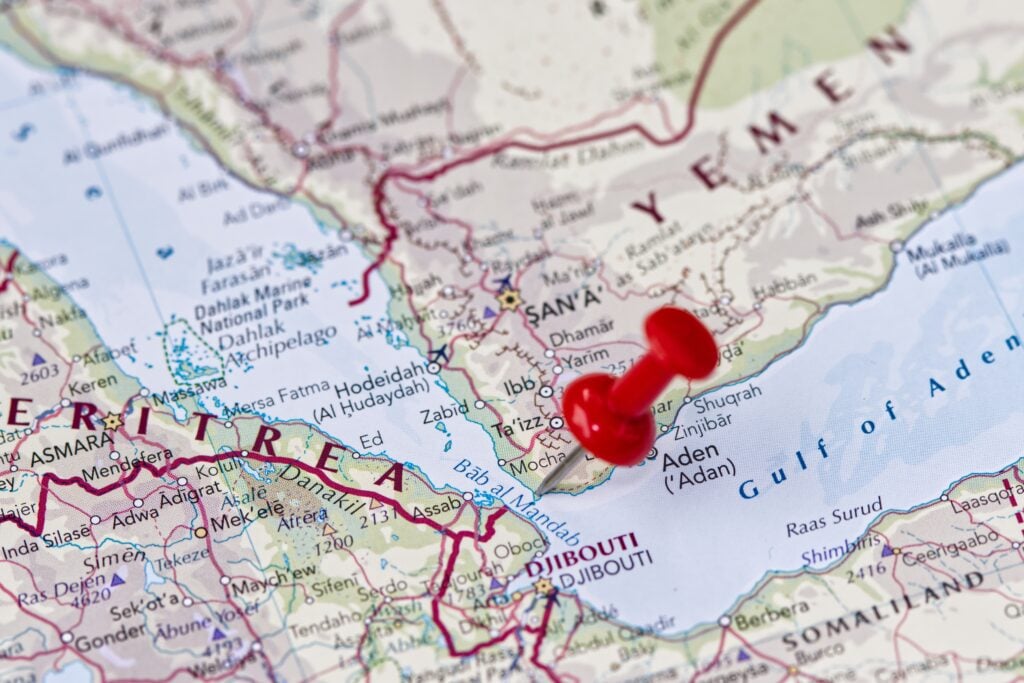
A comprehensive investigative report published Wednesday by The New York Times, based on the testimonies of more than 15 frontline participants and briefed defense officials, exposes how the Houthis managed to capture a critically strategic foothold along the Bab el-Mandeb Strait in recent weeks—despite a drumbeat of urgent warnings delivered well in advance to Washington and Riyadh.

 6+
The writing had been on the wall for months. Yemeni commander Tareq Saleh, whose forces held the pivotal hub city of Mokha, said the Houthis were amassing forces to overrun the area and break through directly to the Bab el-Mandeb Strait, through which roughly 10% of global maritime commerce passes. Saleh turned directly to his international partners for urgent assistance—pleading with Saudi Arabia to provide dedicated close air support and pressing the United States to disrupt Houthi command-and-control communications through electronic warfare. The allied response, however, was negligible.
While Washington provided select intelligence and planning assistance, it categorically ruled out direct kinetic airstrikes. Meanwhile, the Saudis—who maintain a formidable air force armed with advanced U.S.-supplied munitions—inexplicably chose not to intervene in force, leaving defense officials puzzled.
 6+
Beyond Saleh’s direct appeals, American intelligence agencies had spent months sounding the alarm to the Saudi leadership regarding the steady Houthi buildup, while simultaneously urging Riyadh to mediate poisonous rivalries and unify the fractious factions nominally aligned with the Yemeni government.
Tensions on the ground reached a boiling point long before the main offensive began. Against the backdrop of the conflict that erupted in February, pitting Iran against the United States and Israel, the Houthis initially attempted to project business as usual. Yet beneath the surface, the tentative ceasefire in Yemen was rapidly disintegrating. Political negotiations stalled completely, culminating in July when the Houthis accused Saudi Arabia of bombing Sanaa’s airport to block an incoming Iranian flight. Immediately following that incident, the Houthis declared a naval blockade against Saudi shipping, fired ballistic missiles into the kingdom, and triggered reciprocal Saudi strikes.
 6+
On August 9, those threats materialized into direct military action: the Houthis unleashed barrages of precision missiles and attack drones targeting the Port of Mokha to sever maritime resupply lines. The decisive moment arrived on September 3 with the launch of the Houthi ground assault. Saleh’s command reported that the enemy threw no fewer than 80,000 fighters into the battle, supported by Iranian technical advisors—figures not independently verified. At the same time,e a senior Houthi official denied direct Tehran involvement. Houthi units breached the mountain passes of Kadaha—a sector jointly defended by Saleh’s troops and a rival anti-Houthi faction whose operational coordination rapidly disintegrated amid mutual suspicion.
Despite punishing pressure, government forces held off the advance in the mountains for five days, enduring relentless barrages of artillery, missile strikes, and loitering munitions with virtually nonexistent Saudi air cover.
 6+
Then, on the evening of September 9, complete collapse ensued. A soldier deployed on the frontline recounted that while receiving reports of Houthi fighters materializing from every direction, communications with surrounding units abruptly went dead. Seconds later, panicked cries that defined the collapse swept through the lines: “Retreat! Retreat! Retreat! The Houthis are already here!” In the catastrophic night between September 9 and 10, government forces lost control of a central military installation in the heights east of Mokha, leaving their positions totally exposed.
Instead of falling back in an orderly fashion, the armed forces splintered. Government troops fled southward in a chaotic, mass stampede toward Aden. Within a single night, 1,800 square miles of territory evaporated, and the entire coastal belt—including a strategic island anchoring the center of the Bab el-Mandeb Strait—fell as prize booty into Houthi hands. According to Saleh’s commanders, at least 500 government fighters were killed and over 1,500 wounded.
 6+
The chaotic flight presented surreal scenes: retreating soldiers threw their rifles into ravines and stripped off military insignia to evade execution. One soldier raced back to his home, giving his family an ultimatum of 15 minutes to flee, later describing government armored vehicles rocketing past him on the escape route “like speeding bullets.”
The humiliating fall of Mokha reignited full-scale conflict across Yemen, plunging the country back into the trajectory of a major regional conflagration. This week, Saudi Arabia initiated an intense air bombardment campaign aimed at assisting government forces in clearing occupied territory, supported by precise American intelligence feeds. By Tuesday, government forces claimed to have stabilized the front line and encircled isolated Houthi pockets within the strait corridor.
 6+
Nevertheless, regional defense analysts caution that the prospect of operational success remains deeply uncertain, as does the strategy for the day after. Riyadh has vowed this time to “eradicate” the Houthis—rhetoric that evokes the shadows of the kingdom’s costly and protracted military intervention a decade ago.
The investigation traces the Houthis’ broader evolution: starting as a revivalist religious movement in the 1990s rooted in the Zaydi branch of Shia Islam, expanding through bloody insurgency, and culminating in the 2014 takeover of Sanaa that drove the internationally recognized government into exile. Despite direct military intervention by Saudi Arabia and the UAE, the Houthis survived, modernized their arsenal during the 2022 truce, and faced a fractured and paralyzed opposition. As Yemen scholar Gregory Johnsen framed it: “The Yemeni government is basically a fiction at this point. They spend more time fighting each other than they do fighting the Houthis.”
 6+
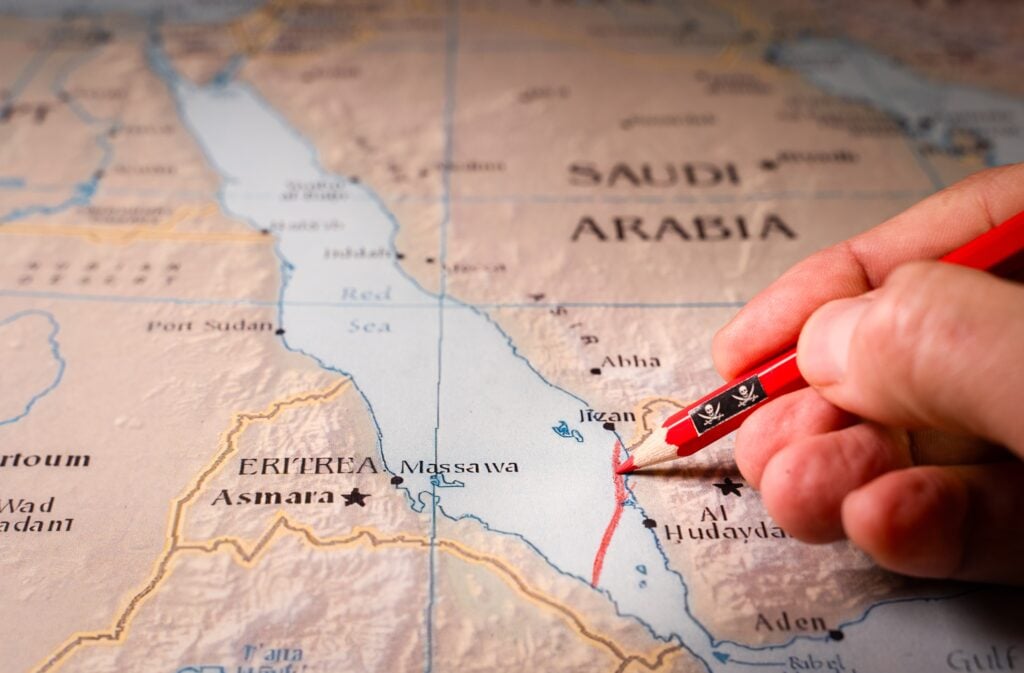
Now, the geopolitical peril is magnified exponentially. Control over Bab el-Mandeb—a chokepoint through which one-tenth of global seaborne commerce flows—hands the militia enormous strategic leverage, eclipsing the missile and drone launches targeting Red Sea shipping routes during the Gaza war. While the Houthis publicly attempt to reassure the international community by claiming their offensive is directed exclusively against Saudi Arabia, global crude prices soaring past $100 per barrel offer them powerful incentives to entrench their hold.
Amid the military upheaval, the humanitarian catastrophe is spiraling rapidly. Over 180,000 civilians have been displaced from their homes in recent weeks alone, fleeing under harrowing conditions packed into pickup trucks and on motorbikes. Hassan Sugayer, a resident who escaped a town near Mokha, captured the terror when speaking with The New York Times: “It felt like judgment day, where every person was thinking only of themselves. We didn’t even have time to say goodbye to our neighbors, and we have no idea what became of them.”