


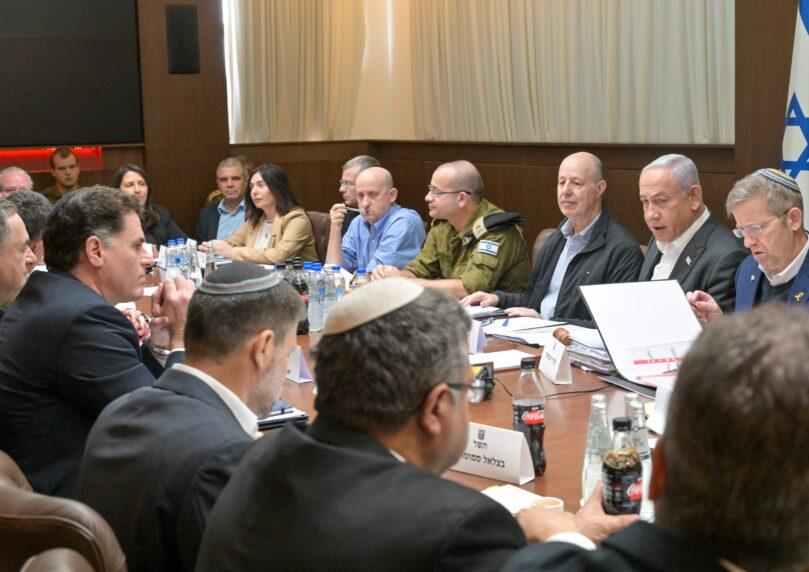

Israel’s Political-Security Cabinet is scheduled to convene on Sunday evening to deliberate on a wide spectrum of national security challenges, prominently featuring the attempted hijacking aboard flydubai Flight FZ1073, operational developments across various combat theaters, and ongoing dynamics regarding Iran, as reported by Channel 14 diplomatic correspondent Tamir Morag.


 3+
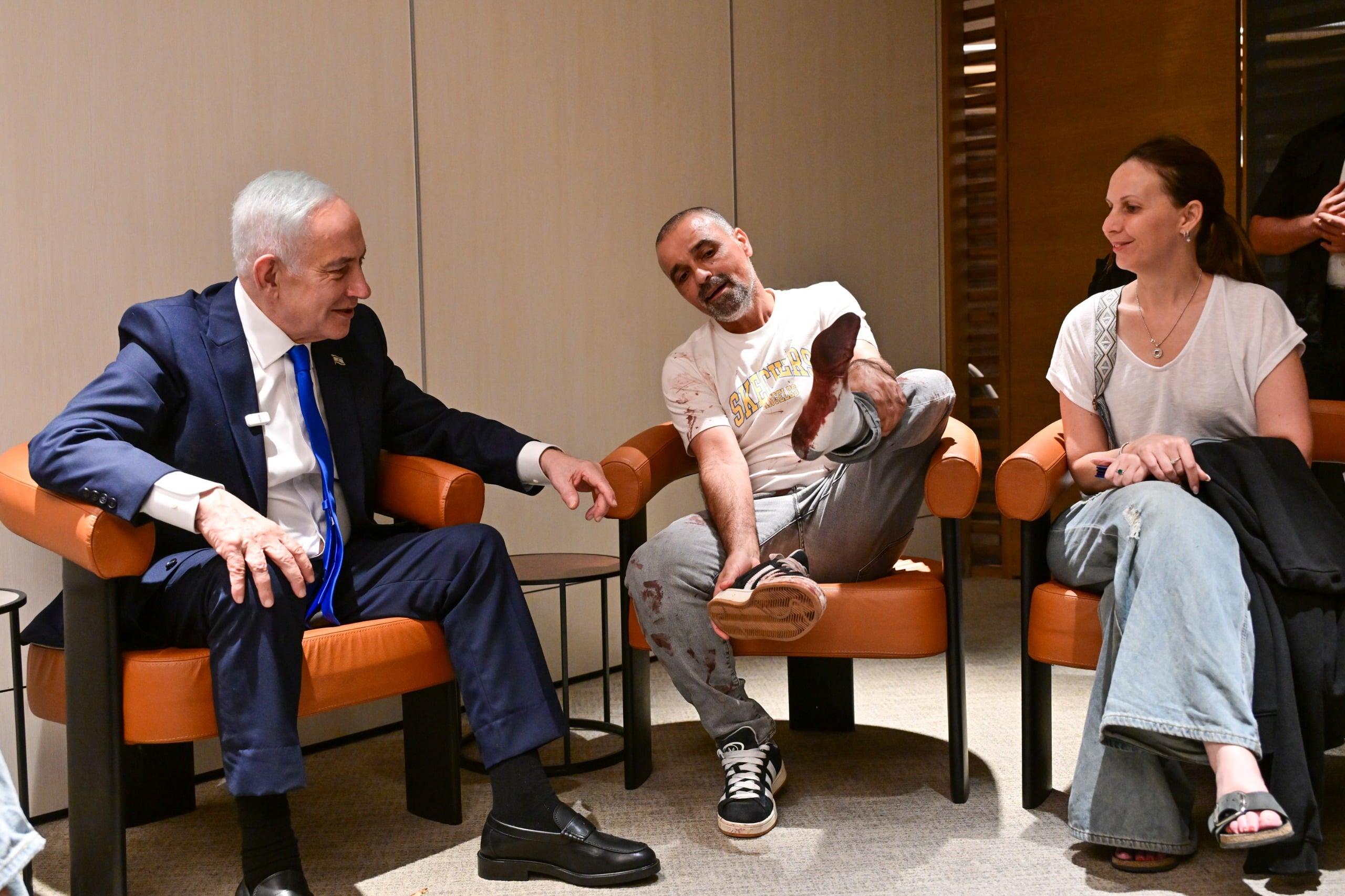
3+During the meeting, Prime Minister Benjamin Netanyahu will provide ministers with a diplomatic debrief on his brief visit to New York and the series of bilateral meetings he held with foreign leaders on the sidelines of the UN General Assembly. Alongside the diplomatic review, ministers will receive comprehensive intelligence briefings spanning various active fronts, with a sharp focus on Iran, as well as operational developments in the Gaza Strip and Lebanon.
At the center of discussions will be the attempted suicide hijacking aboard the flydubai airliner bound for Tel Aviv. According to current operational intelligence, evidence suggests the suspect conceived and executed the plot alone as a self-radicalized lone actor, with no validated intelligence indicating he was directly tasked or directed by Iranian agencies. This assessment stands despite public remarks by US President Donald Trump, who referenced unverified reports regarding potential Iranian links to the suspect.
 3+
3+Morag noted that Israeli intelligence currently assesses the perpetrator underwent an ideological radicalization process that led him to execute the attack independently. Even as rhetoric tying the incident to Tehran circulates in the United States, Israeli defense officials maintain that such claims currently lack verified operational backing.
Significant ambiguity remains regarding the specific target the hijacker intended to strike. Analytical reconstructions indicate the suspect waited a substantial duration after departure before ambushing the Indian captain with a cockpit crash axe, likely calculating his move to coincide with the airliner’s closer approach toward Israeli airspace.
 3+
3+Over recent days, several hypotheses have been weighed regarding the intended crash site, including key strategic infrastructure inside Israel. Speculative targets raised in security discussions included the Azrieli Center towers in Tel Aviv, while alternative trajectories toward sites in Jerusalem or Jordan were also examined. As of now, the final operational target cannot be confirmed.
Defense officials familiar with Israeli Air Force capabilities assessed that had the airliner continued an uninhibited descent toward Israeli territory, the IAF possessed high operational readiness to execute an airborne interception in time. However, commanders acknowledged that ordering the shoot-down of a commercial airliner carrying roughly 170 passengers—the vast majority of whom were Israeli citizens—would have represented an agonizing, unprecedented command dilemma.
 3+
3+Morag underscored that the convening of the Security Cabinet does not necessarily signal an imminent strategic decision. The forum meets routinely, and throughout the war years, numerous sensitive operational decisions have been hammered out in narrower decision-making consultations; consequently, Sunday night’s session is primarily geared toward strategic synchronization, operational briefings, and an up-to-date intelligence assessment.