


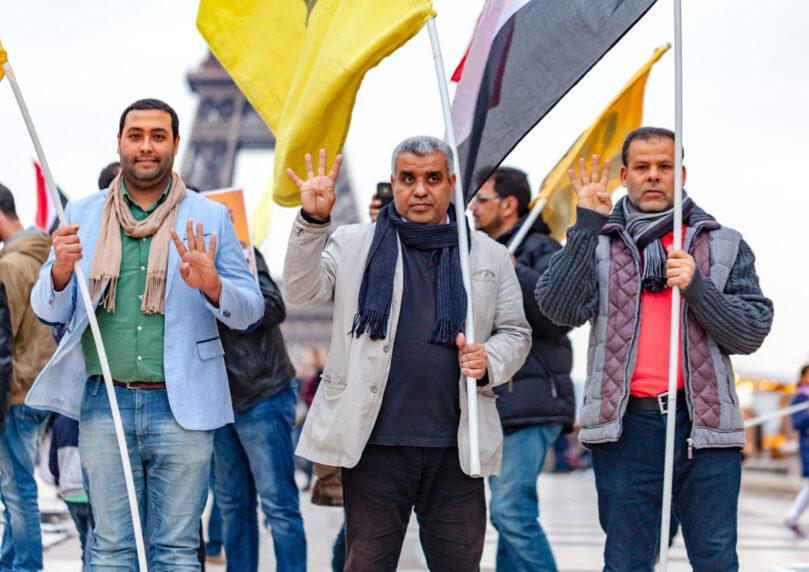

Egyptian security services launched a series of synchronized raids across the country last week, arresting a six-member media cell tied to the online platform “Matsadaash” that operated as a covert cognitive warfare arm for the Muslim Brotherhood terror organization. According to an official statement by Egypt’s Ministry of Interior, the six individuals served as an unlicensed “media committee” financed by foreign entities, systematically manufacturing fabricated news and hostile propaganda intended to undermine state security and regime stability, the Associated Press reported on Friday.

 1+
The coordinated sweep began last week on Monday night and expanded across multiple governorates. Security personnel raided operational hubs in Cairo, Port Said, and the Gharbia Governorate, arresting Abdullah Qadri, Mohamed Abu Amira, Omar Hilal, Islam Barakat, Mohamed Mahmoud, and Mohamed Adel. Authorities confiscated computers, telecommunication equipment, and mobile devices used by the operatives to orchestrate and distribute subversive content.
Egypt’s Interior Ministry disclosed that the platform—which publicly branded itself as a civic fact-checking initiative—was directed from abroad by Abdel Rahman Mansour, an active Muslim Brotherhood operative and fugitive from Egyptian law. Security findings established that the six detainees acted as a domestic operational ring generating targeted disinformation packages for Mansour to blast across social media channels, drawing direct funding from foreign sources seeking to destabilize Egypt’s domestic arena. Ministry officials said only one of the six arrestees held formal membership in the Egyptian Syndicate of Journalists, confirming that full statutory legal procedures have been initiated against them.
 1+
Mansour, operating beyond the jurisdictional reach of Egyptian security agencies, sought to dismiss the allegations, framing the detentions as an assault on journalistic freedoms while international human rights groups mobilized to pressure Cairo. Egyptian security establishments, however, identify the cell’s activities as an integral component of ongoing Brotherhood delegitimization and subversion campaigns, which routinely seek cover beneath claims of “press freedom” and civil society initiatives.
Ever since the 2013 ouster of Muslim Brotherhood leader Mohamed Morsi and the subsequent designation of the movement as a terror organization, Cairo has pursued an unyielding campaign against the group’s infrastructure. Viewed as the ideological wellspring for numerous regional Islamist extremist movements—foremost among them Hamas—the banned group has pivoted much of its operational focus toward digital warfare and underground influence networks across social media. Cairo’s decisive clampdown on these propaganda cells serves as a vital anchor in neutralizing the expansionist ambitions of regional fundamentalism.