


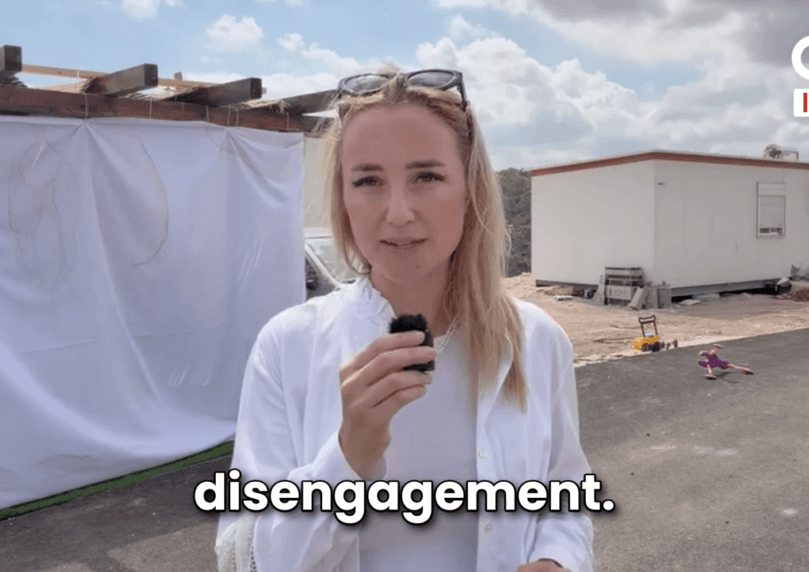

In the hills of northern Samaria, a palpable sense of renewal fills the air. For the first time in over two decades, the Jewish communities of Ganim and Kadim are alive with the sounds of celebration, the warmth of welcoming hosts, and the striking sight of temporary dwellings newly nestled against caravans, which suddenly look more permanent by contrast. It has been exactly twenty-one years since the 2005 disengagement—a deeply controversial government maneuver that resulted in a collective trauma – the uprooting and expulsion of four thriving communities in this specific region: Homesh, Sa-Nur, Ganim, and Kadim. Today, however, that historical narrative is being rewritten as families return to reclaim and rebuild the land they once called home.
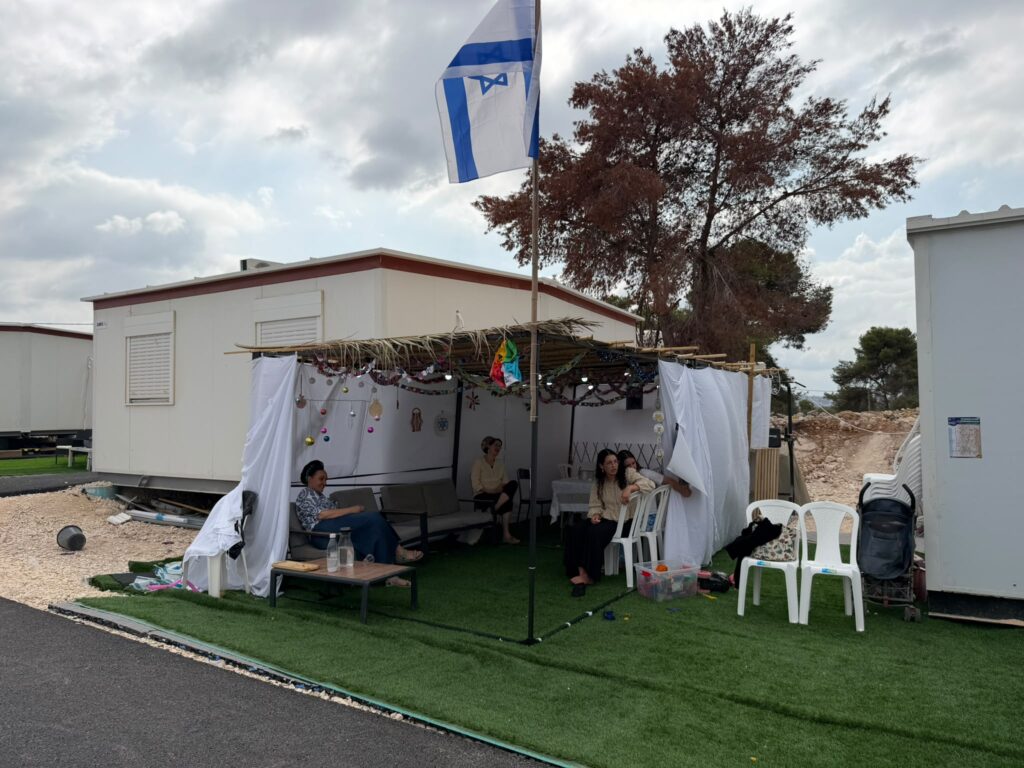

Just two months ago, life officially returned to Ganim. Families who were once forced to leave have begun moving back, putting down fresh roots in the very locations from which they were previously expelled. The timing of this grassroots restoration is particularly poignant, coinciding beautifully with the joyous Jewish festival of Sukkot. Across these newly re-established communities, a highly festive and vibrant atmosphere has taken hold. Residents have proudly put up traditional, temporary sukkahs alongside their recently placed mobile homes, opening their doors to host visitors traveling from every corner of Israel.
The celebration of Sukkot—a holiday intrinsically linked to temporary dwellings, gratitude, and faith—perfectly mirrors the current daily reality of these returning families. They are currently living in modest mobile homes, yet the temporary nature of their physical homes stands in stark contrast to the permanence of their long-term vision. Walking through Ganim and Kadim, one can easily feel a profound, unifying energy. Residents note that the sudden influx of guests has transformed the quiet hills into a nationwide celebration. Visitors, regardless of their personal political affiliations, are sharing in the unbridled joy of the return, rejoicing alongside the families who have waited twenty-one years for this exact moment.
For the people who have made this pioneering journey back, the emotional resonance is profound. There is a deep, prevailing sentiment echoing throughout the caravans: we are back home. The residents describe a remarkably homey environment fueled by an extraordinary community spirit. Here, neighbors are entirely present for one another, creating a tight-knit, supportive network that turns the everyday challenges of frontier living into shared triumphs. Living in Ganim today means waking up with the distinct, empowering feeling of being part of something vastly larger than oneself—a historic restoration of life in a place that sat completely desolate for over two decades.
Samaria Governor Yossi Dagan sounded characteristically optimistic regarding the future of these rebuilt towns, telling me, “Now we have caravans. After one or two years Godwilling, we are going to build here apartments and buildings, big city in northern Samaria.”
While the present landscape is defined by mobile homes and festive sukkahs, the collective gaze of the community is fixed firmly on a highly ambitious future. The caravans are universally viewed as merely the first step. Within the next year or two, these temporary structures are slated to be replaced by permanent architecture. Residents are already speaking enthusiastically of laying foundations for larger, robust houses. Their ultimate vision stretches far beyond mere survival; they are looking toward a horizon where modern apartments, sprawling buildings, and significant infrastructure transform this newly reclaimed land into a flourishing, big city in northern Samaria. For now, they celebrate their long-awaited return, firmly anchored by the belief that they are not just building houses, but restoring a legacy.