


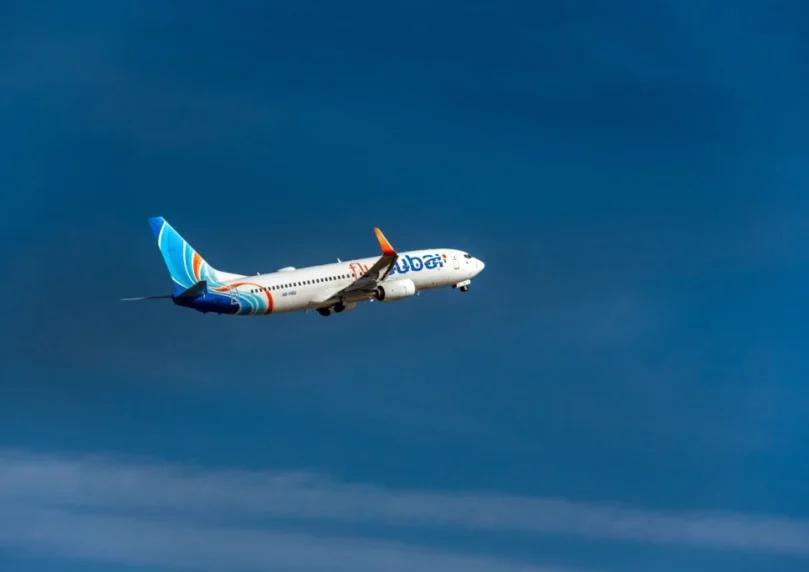

A dramatic and shocking turn of events has emerged in the investigation of the incident involving the flight from Dubai to Tel Aviv: according to initial accounts from those on board, this was not merely a medical emergency or a routine internal dispute, but rather an attempted hijacking and deliberate crash by one of the pilots, an Omani citizen. Witnesses report that the pilot initiated a steep, dangerous dive with the intent to crash the plane; only the extraordinary quick thinking of Israeli passengers—who joined forces with another crew member to physically subdue the suspect—managed to halt the descent at the last moment, saving the lives of approximately 180 Israeli citizens and the other passengers.
The incident, which triggered an urgent response from security and aviation authorities in Israel and across the region, began just minutes after takeoff. The aircraft suddenly plunged to an altitude of about 15,000 feet, deviated from its original flight path toward Saudi airspace, and broadcast the general emergency code 7700.
Shortly thereafter, the situation escalated further when tracking systems registered code 7500—an international emergency signal indicating “unlawful interference,” used to alert authorities to a hijacking or hostile takeover of the aircraft. The appearance of the code triggered a state of high alert: police and security officials held urgent situation assessments, while a decision was simultaneously made to temporarily halt all departures from Ben Gurion Airport.
However, as the minutes ticked by, the astonishing reality emerged: it was not hostile actors attempting to hijack the flight, but rather a physical altercation that had broken out inside the cockpit between the two pilots in charge. Amidst the exchange of blows and the loss of control within the cockpit, the critical distress signal was activated, prompting regional authorities to prepare for a worst-case scenario. Data from the Boeing 737 MAX 8’s monitoring and tracking systems reveal a harrowing picture, illustrating the moments of terror experienced by those on board: during the cruise phase, at an altitude of approximately 35,000 feet, a sudden, vertical plunge occurred at an unfathomable rate—peaking at roughly 30,976 feet per minute—accompanied by a ground speed exceeding 500 knots (about 930 km/h).
During those critical seconds, the engines and flight controls were driven to execute a maneuver with a single, clear implication: a deliberate crash of the aircraft into the ground. According to information now coming to light, the co-pilot recognized the attempt at mass suicide; he lunged at his colleague in the cockpit and engaged in a fierce physical struggle for control of the flight stick and controls. Amidst the in-cockpit battle, distress signals 7700 and 7500—the latter indicating a hostile takeover or unlawful interference—were transmitted, triggering alerts across security systems in Israel and the Middle East and leading to a halt in takeoffs at Ben Gurion Airport. The second pilot managed to overpower the pilot who intended to crash the plane, leveling it off at an altitude of approximately 15,000 feet and halting a dive that could have caused the airframe to disintegrate due to extreme G-forces and speed. Immediately after stabilizing the aircraft, the crew member took control of the flight, executed a U-turn, and returned to Dubai International Airport for an emergency landing.
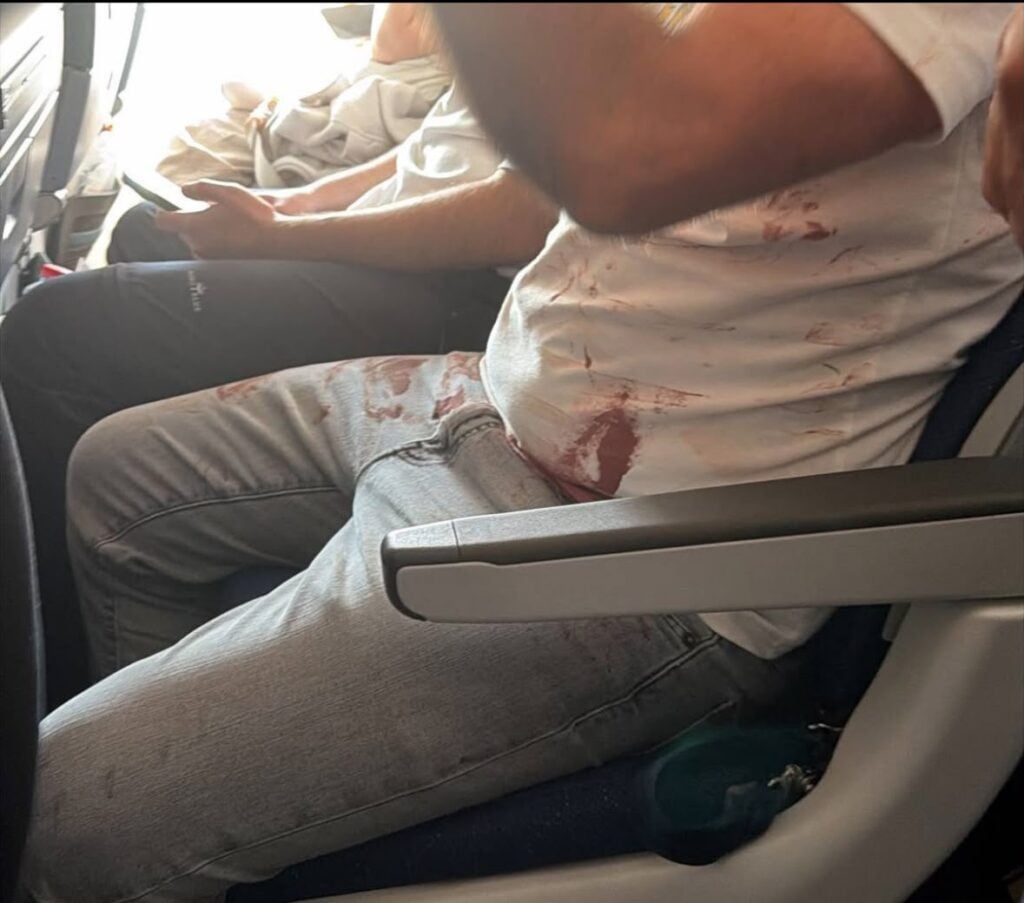
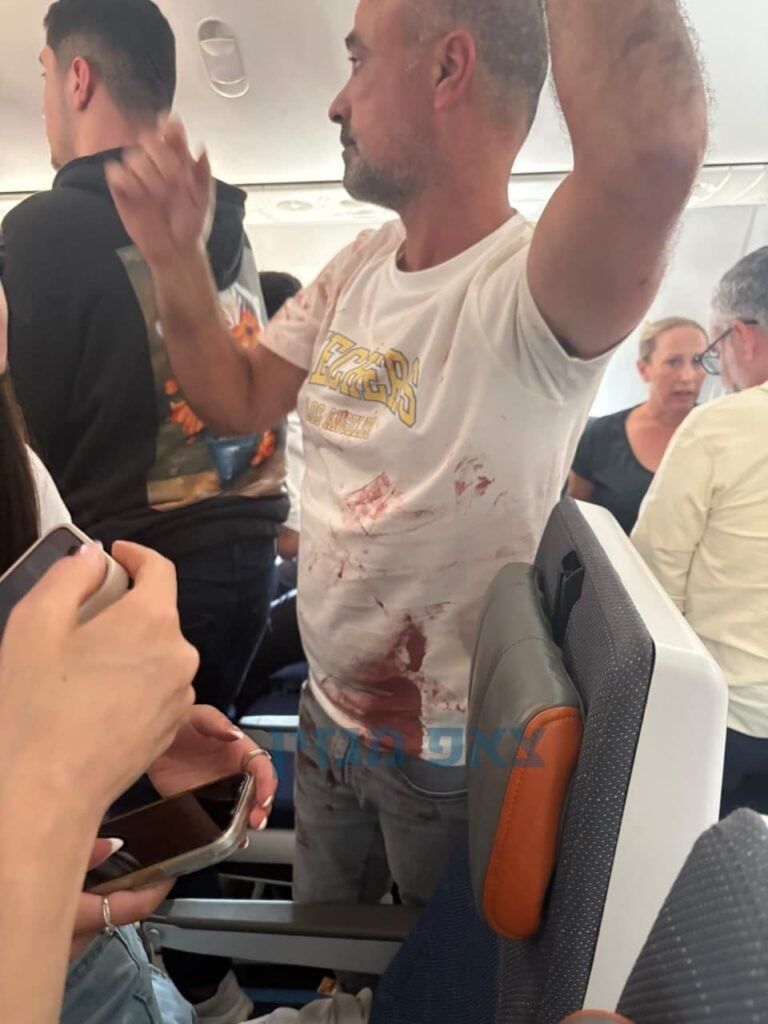
Shocking footage from inside the cabin shows one of the Israeli passengers with blood-stained clothing—likely the result of the direct physical altercation or injuries sustained from the violent turbulence and heavy G-forces during the sudden dive. Their combined struggle ultimately succeeded in arresting the descent at around 15,000 feet, stabilizing the aircraft, and bringing it back for an emergency landing at Dubai International Airport.
The aircraft ultimately performed a full U-turn, reversed course, and landed back at Dubai International Airport. Upon landing, there was a collective sigh of relief in Israel, while local authorities in the UAE immediately began questioning the two flight crew members to investigate the circumstances of this disgraceful and dangerous incident. Transponder code 7500 is considered the “doomsday” signal of aviation communications; it is activated almost exclusively in scenarios involving terrorism, hijacking, or the armed takeover of an aircraft. Transmitting this code automatically triggers the scrambling of fighter jets and places air traffic control towers along the entire flight path into a wartime emergency protocol.
Incidents in which a physical altercation between crew members escalates to the point of activating the hijacking code are extremely rare in civil aviation. Such incidents constitute a severe safety violation, as a loss of composure and a physical fight at an altitude of tens of thousands of feet directly endanger the lives of dozens of passengers and the integrity of the aircraft.