


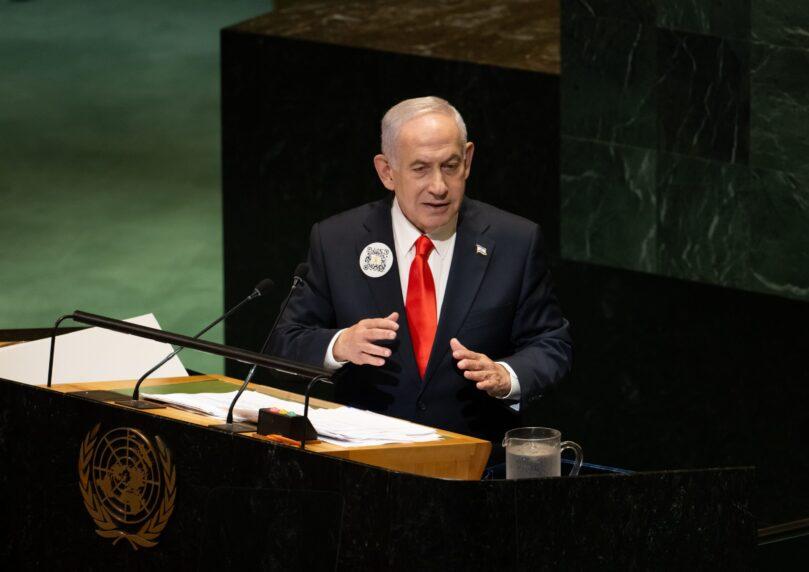

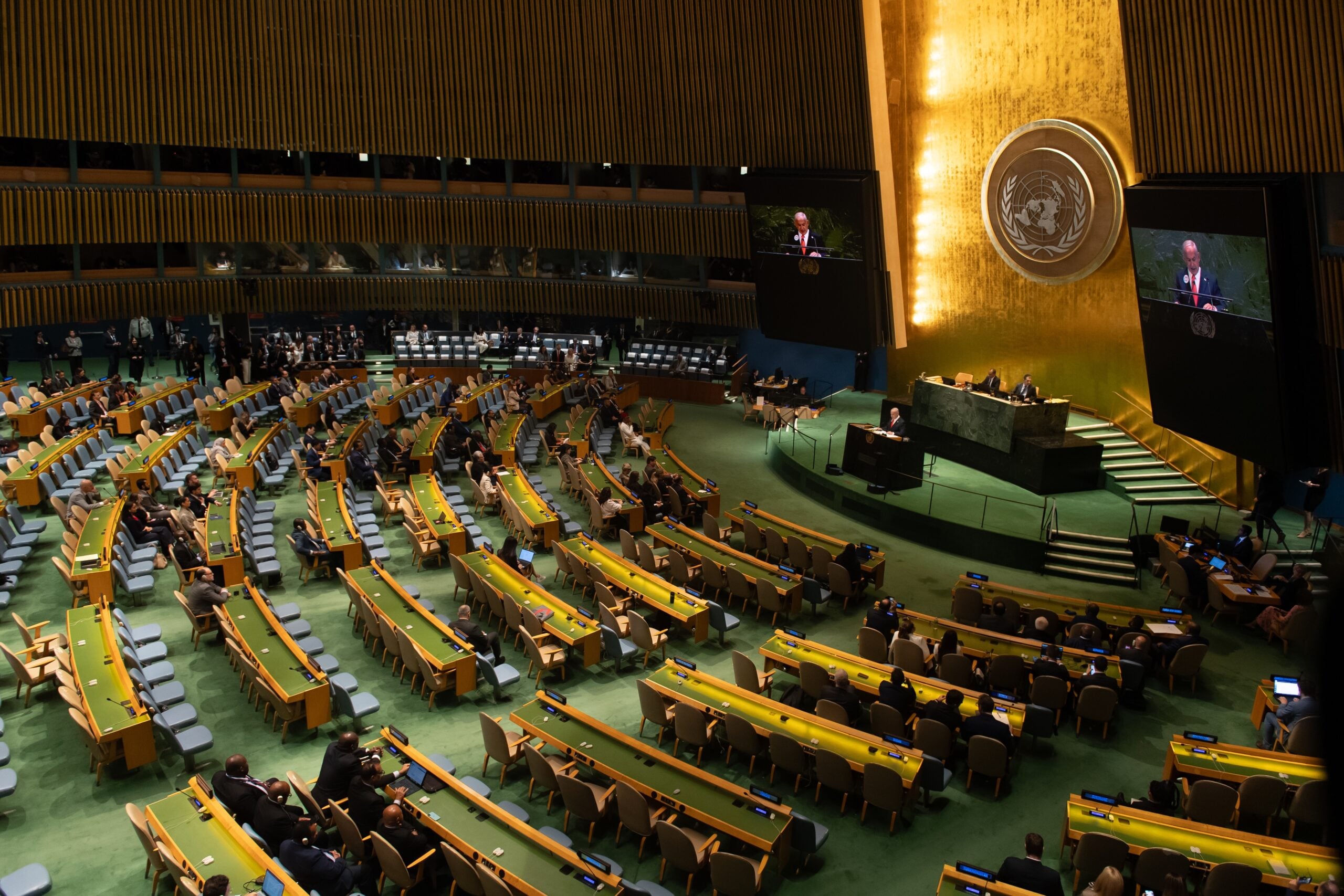
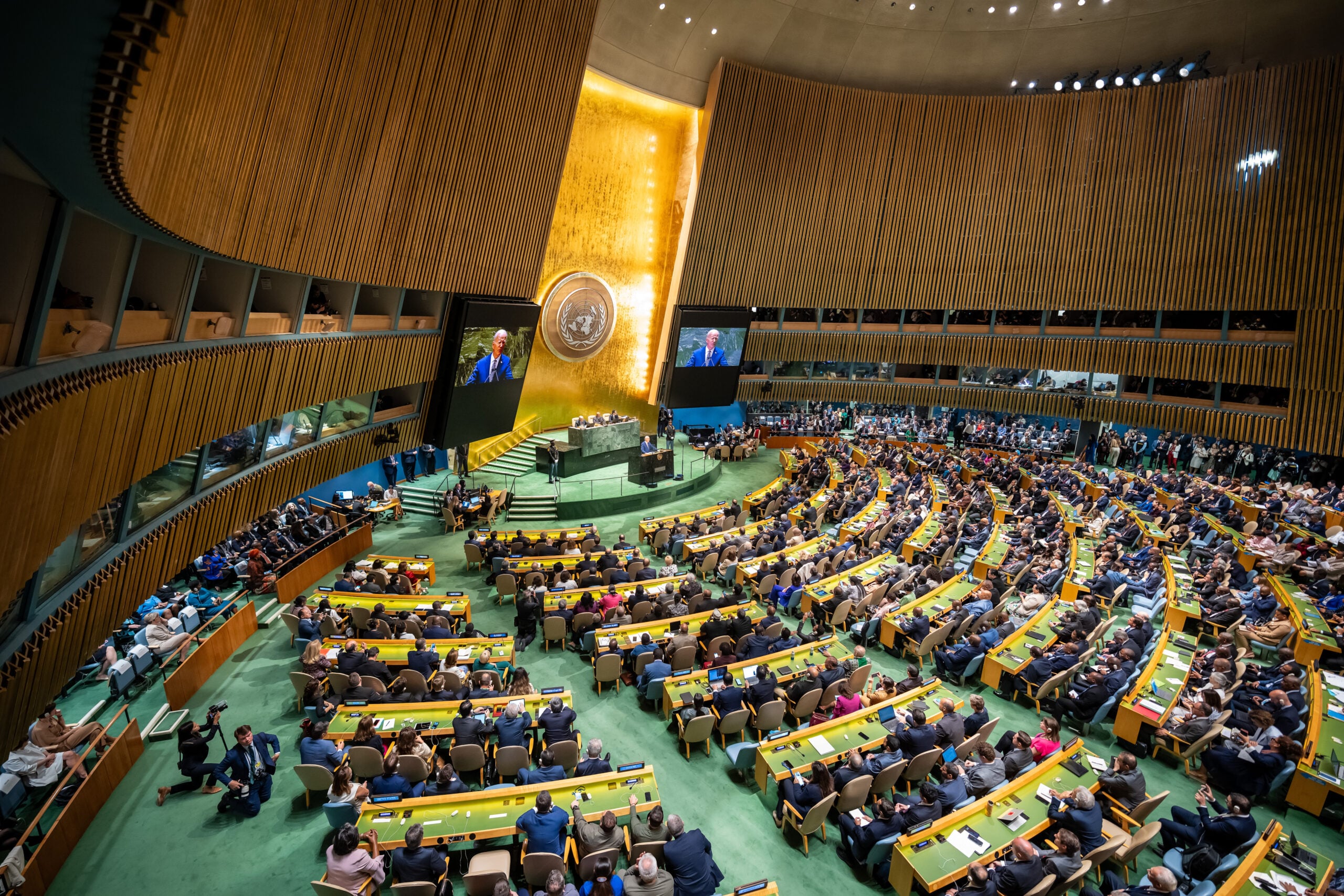
Prime Minister Benjamin Netanyahu will address the United Nations General Assembly in New York on Thursday evening at 9:00 PM Israel time (2:00 PM EDT). Ahead of the critical speech, a tightly compressed diplomatic schedule has taken shape, featuring bilateral meetings with numerous heads of state. Due to the requirement to return to Israel before the start of the Sukkot holiday, Netanyahu was able to accommodate only a portion of the requests—including the presidents of Argentina, Bolivia, Paraguay, Panama, and Ethiopia, the Vice President of Colombia, and the prime ministers of Greece, Slovenia, and Papua New Guinea.

 3+
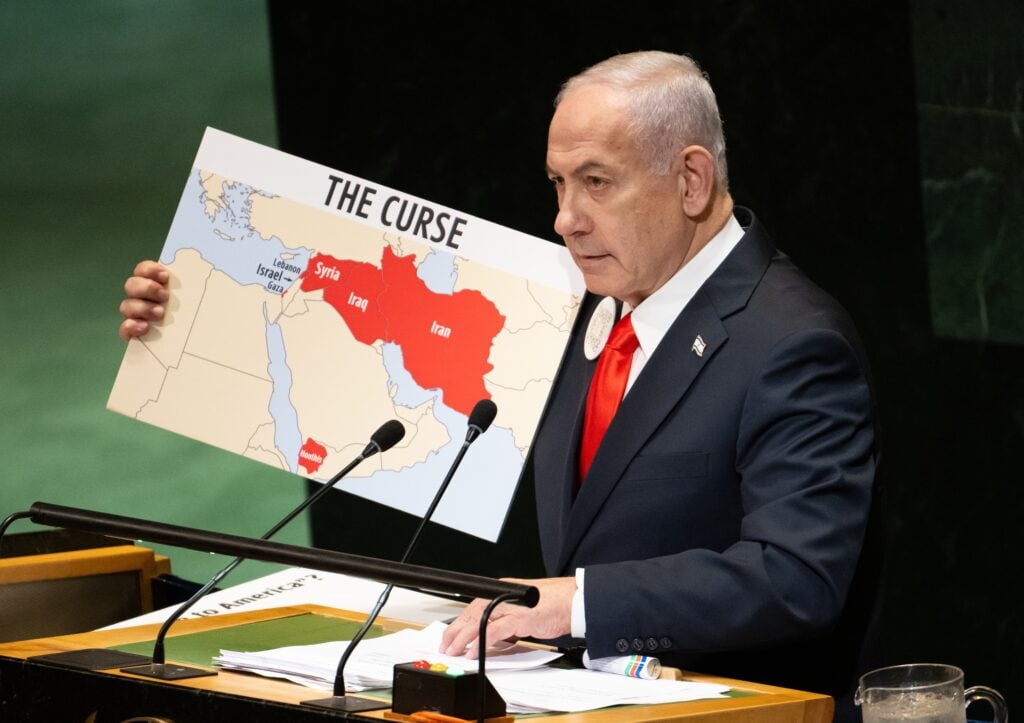
3+The visit has also drawn intense interest because of the Prime Minister’s established tradition of turning the UNGA rostrum into a visual theater, where central geopolitical arguments are crystallized into a single indelible image. Ahead of tonight’s speech, anticipation centers on what visual medium Netanyahu will introduce—recalling his famous 2012 nuclear bomb diagram with the red marker, the 44-second silence in 2015, the unveiling of secret Iranian nuclear warehouses in 2018, the “Blessing and Curse” maps, and the lapel QR code worn on his suit jacket last year.
Channel 14 diplomatic correspondent Sharia Harush noted that the Prime Minister’s UN addresses have historically served as a primary lever to showcase Israel’s security imperatives and directly counter international condemnation. Harush emphasized that Netanyahu uses the New York podium to distill intricate diplomatic policy into unmistakable symbols that linger in global public consciousness long after debates conclude, deploying powerful visual cues to puncture hostile narratives and force Israel’s agenda into the global discourse.
 3+
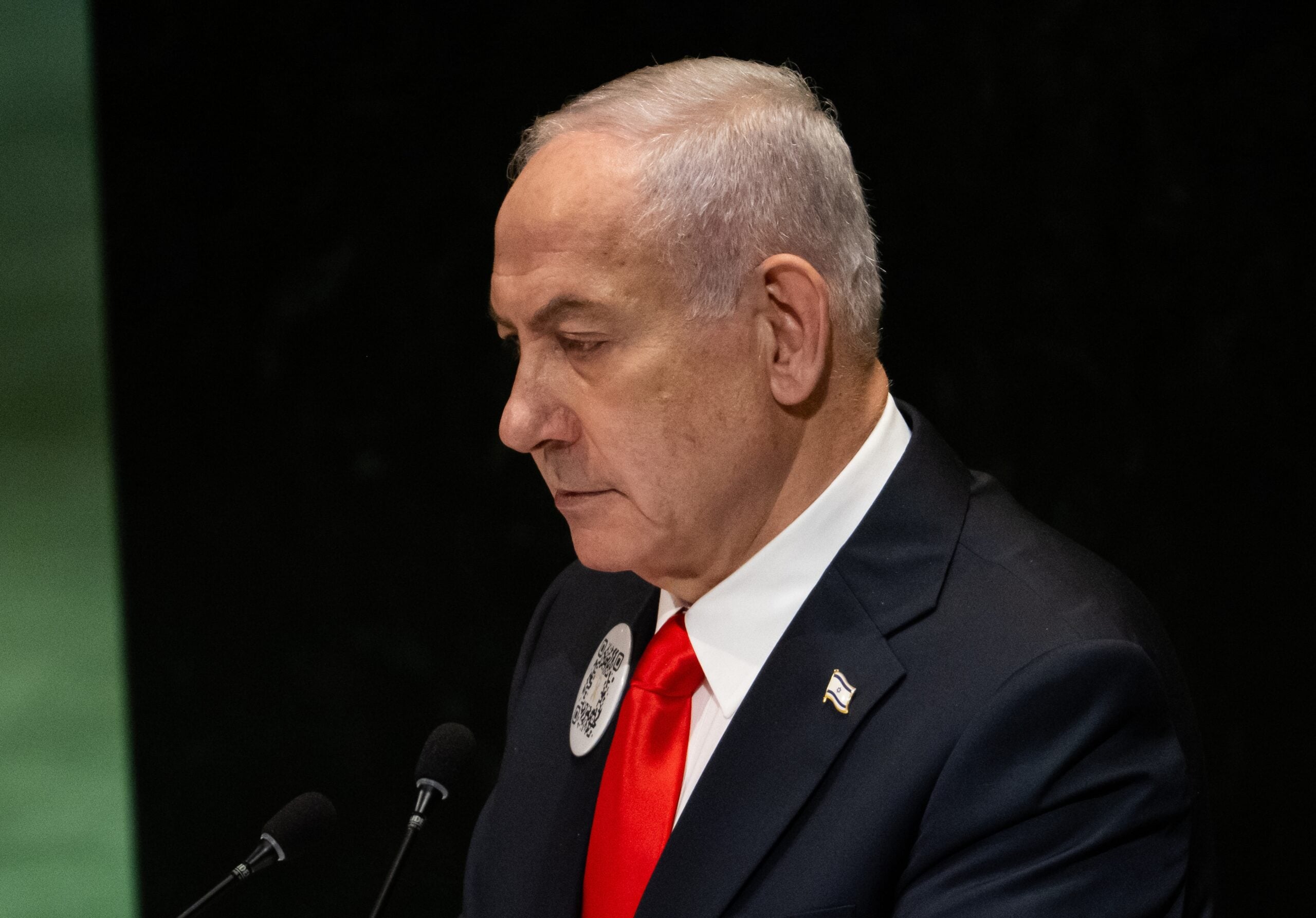
3+Channel 14 political desk chief Mati Tuchfeld noted that Netanyahu arrives at the General Assembly this year not to court international approval, but to tear off masks. For an entire year, Tuchfeld argued, the world quietly enjoyed the fruits of decisive Israeli-American strikes against Iran—moderate Arab states breathed a sigh of relief, while Western capitals received uninterrupted oil flows free from Houthi maritime extortion and Iranian nuclear blackmail. Yet when required to explicitly identify the true aggressor, world leaders mustered only feeble whispers. Iran was battered, humiliated, and exposed, yet the same international figures who preached Israeli restraint still choose to look away.
This dynamic was on display during the opening days of the General Assembly, where leader after leader took the green marble podium to deliver homilies on humanitarianism and peace while systematically ignoring October 7—omitting the massacres, the plight of the hostages, and the slaughter of children. Choosing to coddle terrorist organizations while condemning a democracy fighting for its survival reflects an attempt to soothe domestic mobs without demonstrating moral courage. Netanyahu is expected to counter that Israel will never apologize for its defense, will not seek permission to combat those who butchered its citizens, and that those who coddle terror will ultimately see it reach their own borders.
 3+
3+The expected showdown follows days of harsh attacks delivered from the rostrum. Emir of Qatar Tamim bin Hamad Al Thani alleged that “what took place in Gaza is genocide,” Turkish President Recep Tayyip Erdoğan labeled the Strip “the world’s largest graveyard for children” while calling for unilateral Palestinian statehood, and King Abdullah II of Jordan claimed that Gaza’s destruction and de facto annexation constitute an effort to erase the Palestinian presence.
British Prime Minister Andy Burnham condemned the October 7 atrocities but described Israel’s military campaigns in Gaza and Judea and Samaria as unjustified, while UN Secretary-General António Guterres briefly acknowledged October 7 before framing subsequent operations as unmatched destruction. Conversely, Argentine President Javier Milei delivered a fierce defense of Israel, blasting the UN establishment as “arrogant parasites.”
 3+
3+Ahead of Netanyahu’s Trip to New York: Which Ministers Will Fill His Place
During Netanyahu’s absence, power has been delegated across the cabinet: Justice Minister Yariv Levin is serving as Acting Prime Minister, while Defense Minister Israel Katz is serving as Chairman of the Ministerial Committee on National Security Affairs (the Security Cabinet), vested with authority to convene the forum and direct sensitive security discussions.