


When Prime Minister Benjamin Netanyahu ascends the podium at the United Nations General Assembly, international attention is never directed solely at the speech itself. Over the years, the visual props, cartographic diagrams, and theatrical gestures he brings have become an inseparable part of his address—and often, they are what remains etched in collective memory long after the diplomatic delegations disperse.

 4+
4+An illustrated bomb, a red marker, strategic maps, aerial reconnaissance photos, an extended silence, and even a smartphone-scannable QR code: over decades, Netanyahu has reshaped the rostrum in New York from a rigid diplomatic podium into a high-impact visual theater where intricate national security doctrines are distilled into a single indelible image.
One of his most defining moments occurred in September 2012. Addressing the gathering on Iran’s burgeoning nuclear program, Netanyahu pulled out a cartoon diagram of a bomb and drew a literal line across it with a thick red marker to designate the “red line” the civilized world must enforce against Tehran. Within hours, that photograph became an iconic international symbol of Israel’s crusade against Iranian nuclear breakout, sparking global media headlines.
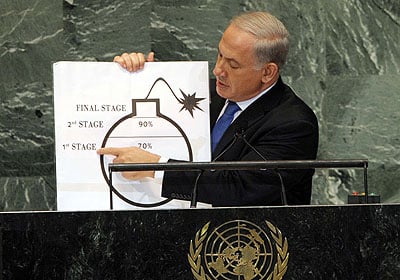
Netanyahu with the illustrated bomb diagram | Photo: GPO
Three years later, addressing the assembly in the shadow of the JCPOA Iran nuclear deal, Netanyahu arrived without a large placard and instead orchestrated a fundamentally different visual moment. After charging that the global community met Iranian threats to annihilate Israel with “deafening silence,” he halted his address. He stood motionless, staring down the delegates in total silence for 44 seconds.
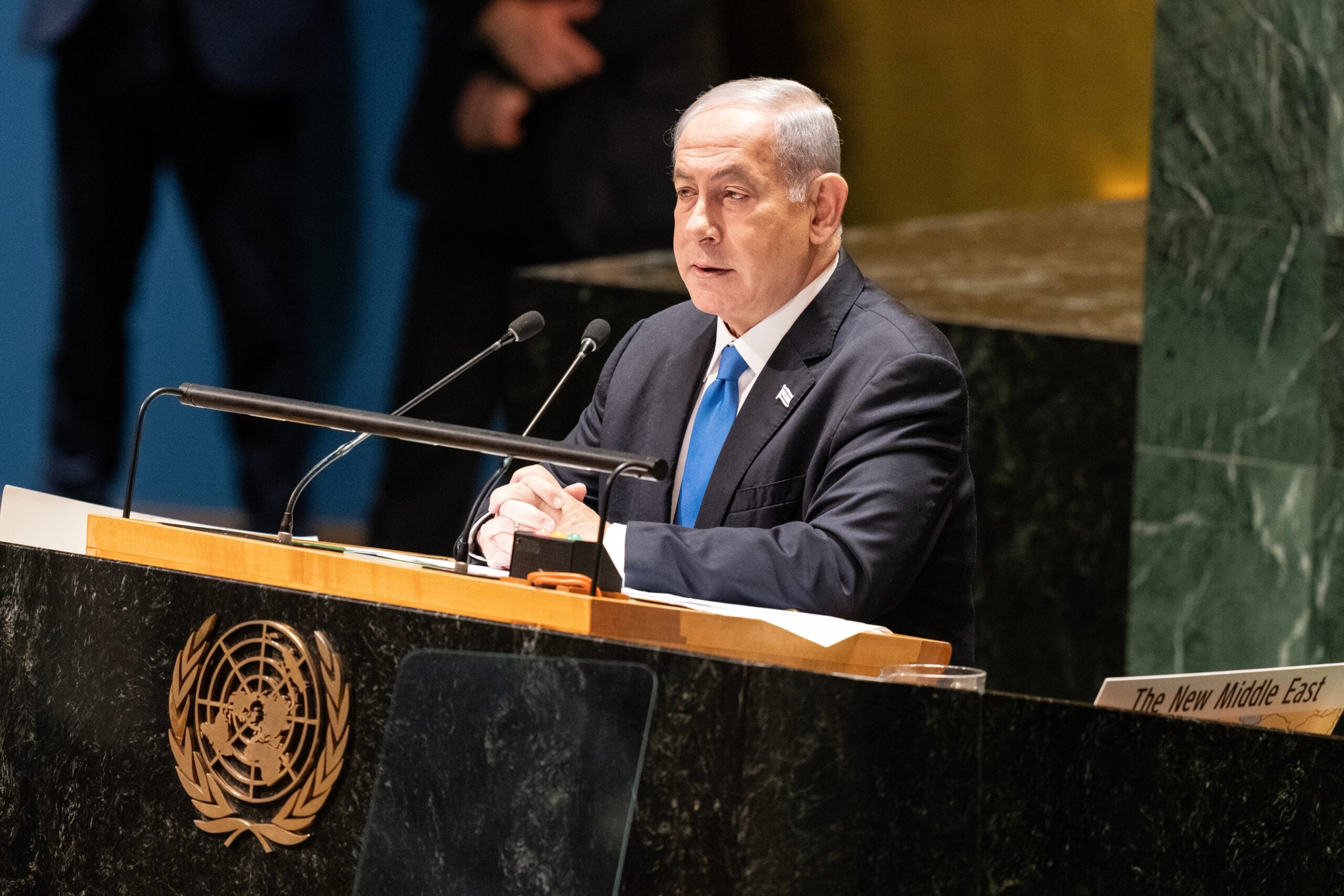
In 2018, the physical displays returned. Pointing to the clandestine Iranian nuclear archive daringly exfiltrated to Israel by the Mossad, Netanyahu unveiled classified satellite photographs and maps on the UN stage, exposing what he identified as a “secret atomic warehouse” in Tehran and revealing its precise street coordinates to the world.
 4+
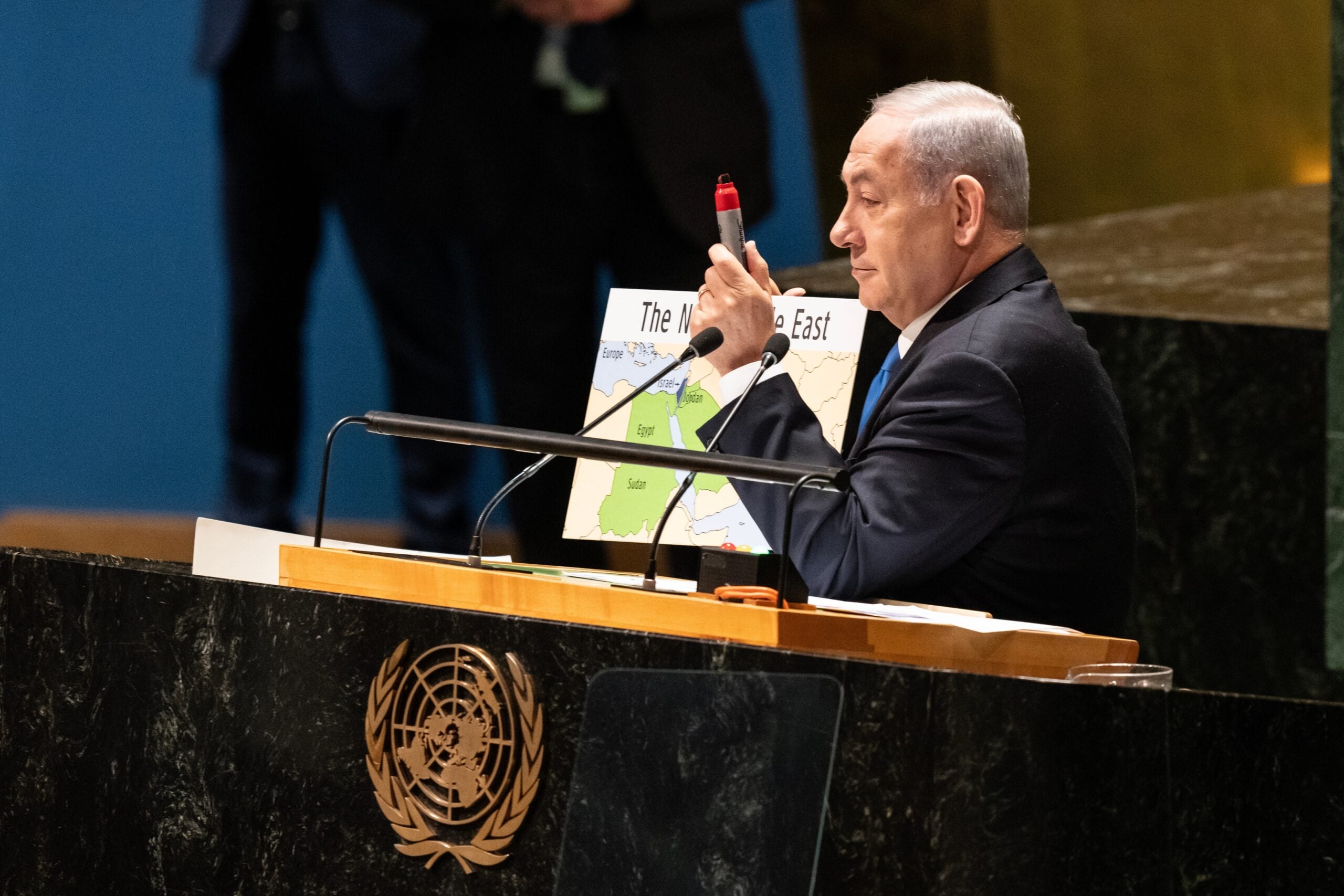
4+In September 2023, the red marker reappeared—this time conveying an entirely different message. Netanyahu presented a map depicting what he termed “The New Middle East,” highlighting a transformative corridor linking India through Arab partner nations and Israel into Europe. Departing from the dark security warnings of prior years, the visual sought to project a hopeful regional vision of economic connectivity and normalization.
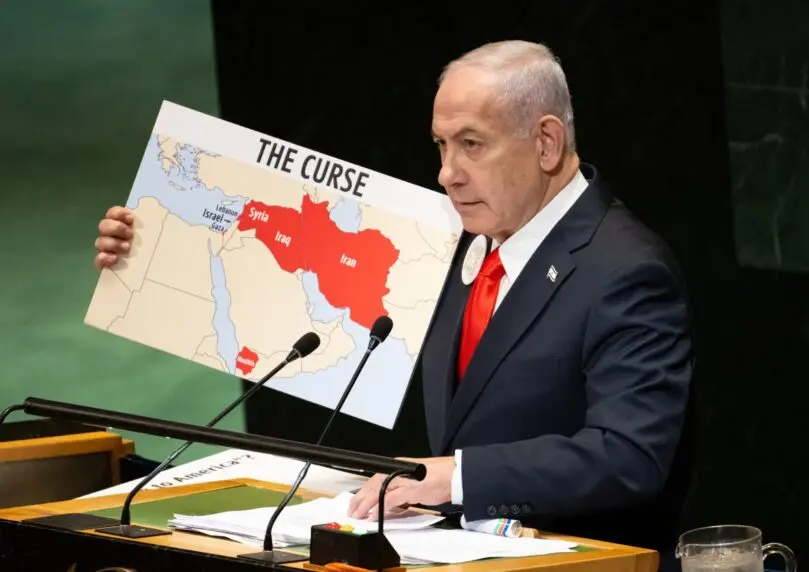
One year later, delivering his address amid a multi-front war, Netanyahu brought two distinct maps labeled “The Bles”ing” “nd “The Curse”—one illustrating prospective regional integration, the other visualizing the arc of Iranian-backed proxy aggression. During that speech, he issued a stern warning that Israel’s arm reaches everywhere in the Middle East. That day carried unprecedented drama off-stage: mere hours after stepping away from the podium, Israeli fighter jets struck Hezbollah’s central underground headquarters in Beirut’s Dahiya district, eliminating secretary-general Hassan Nasrallah on an order authorized by Netanyahu from his New York hotel.
 4+
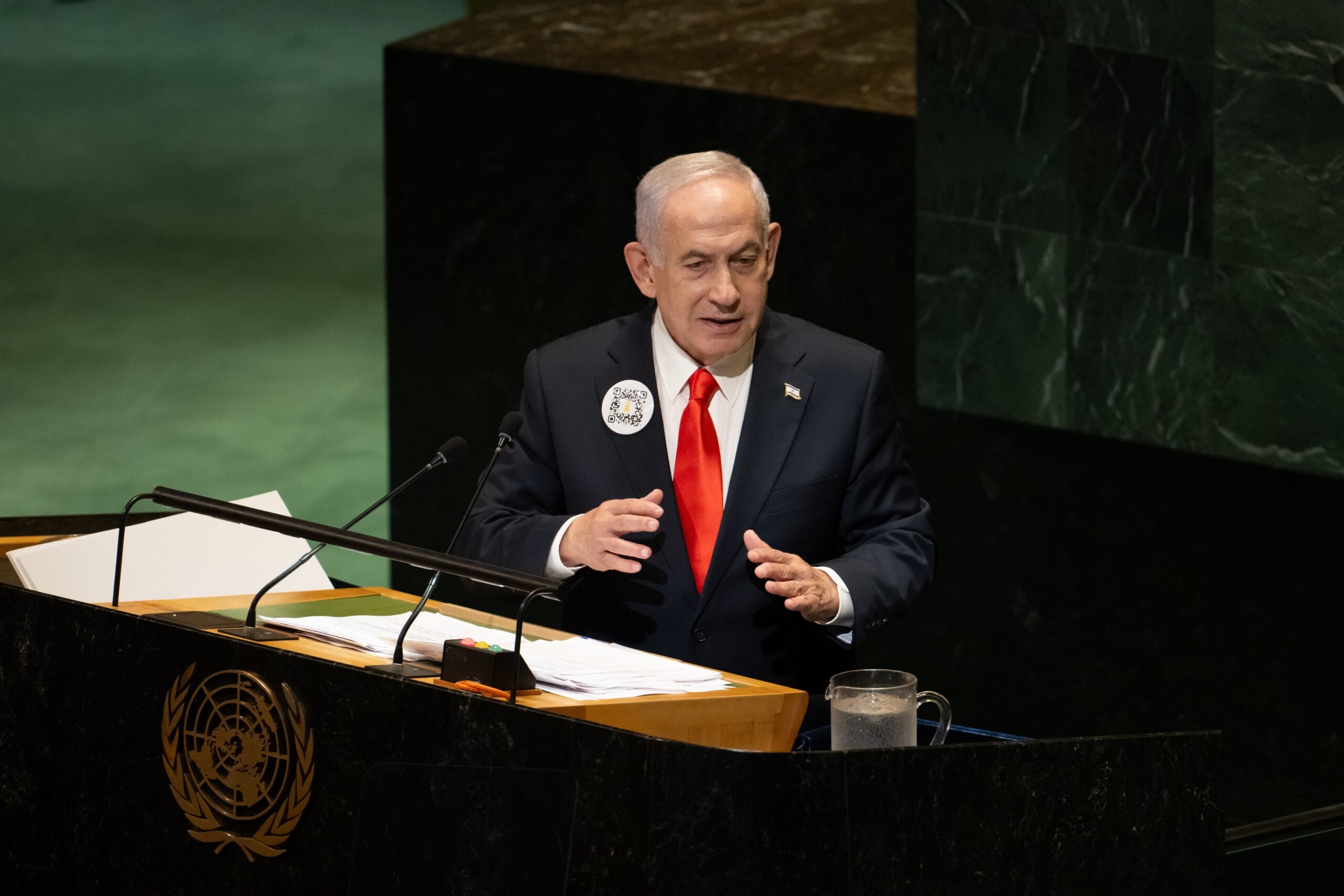
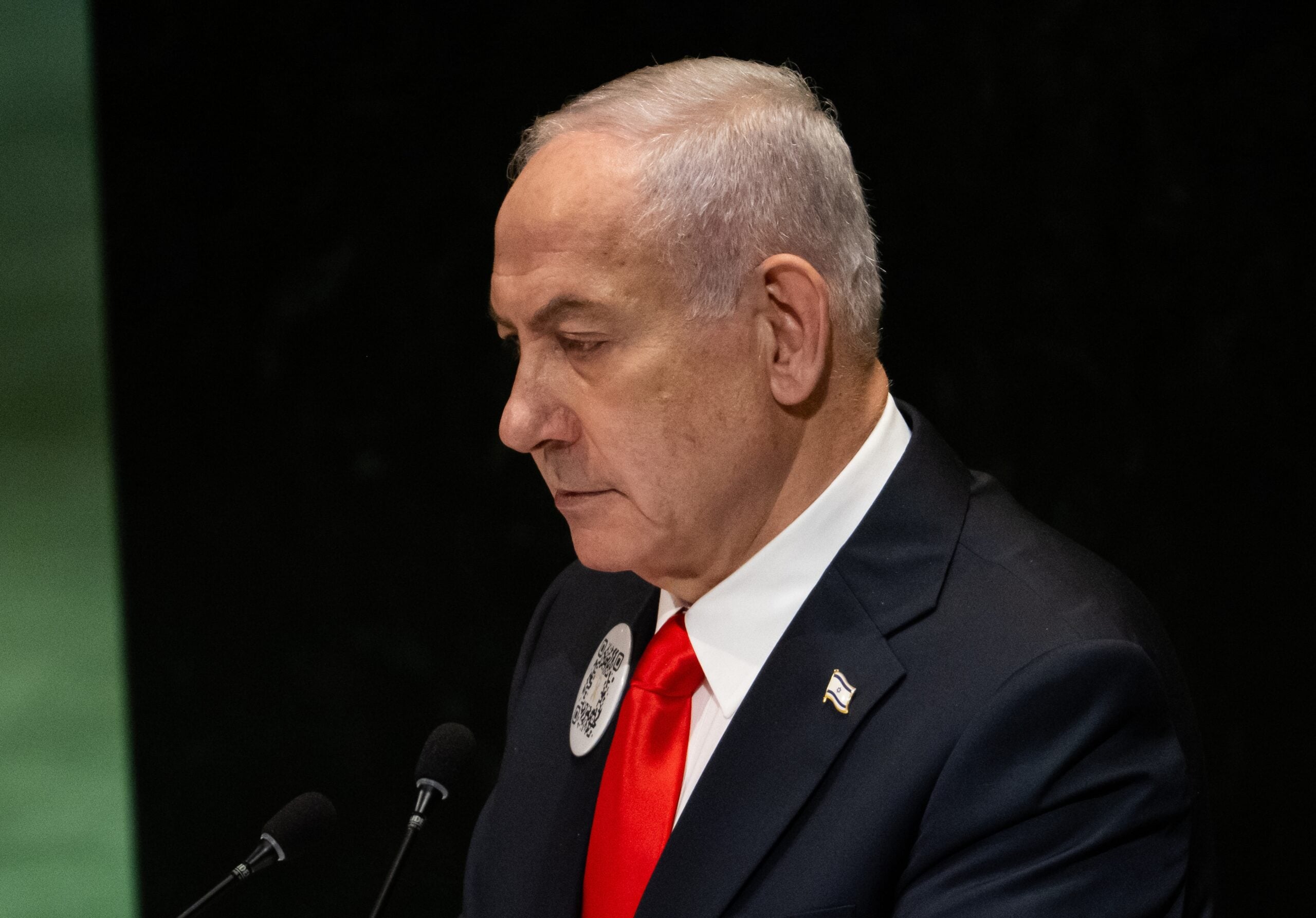
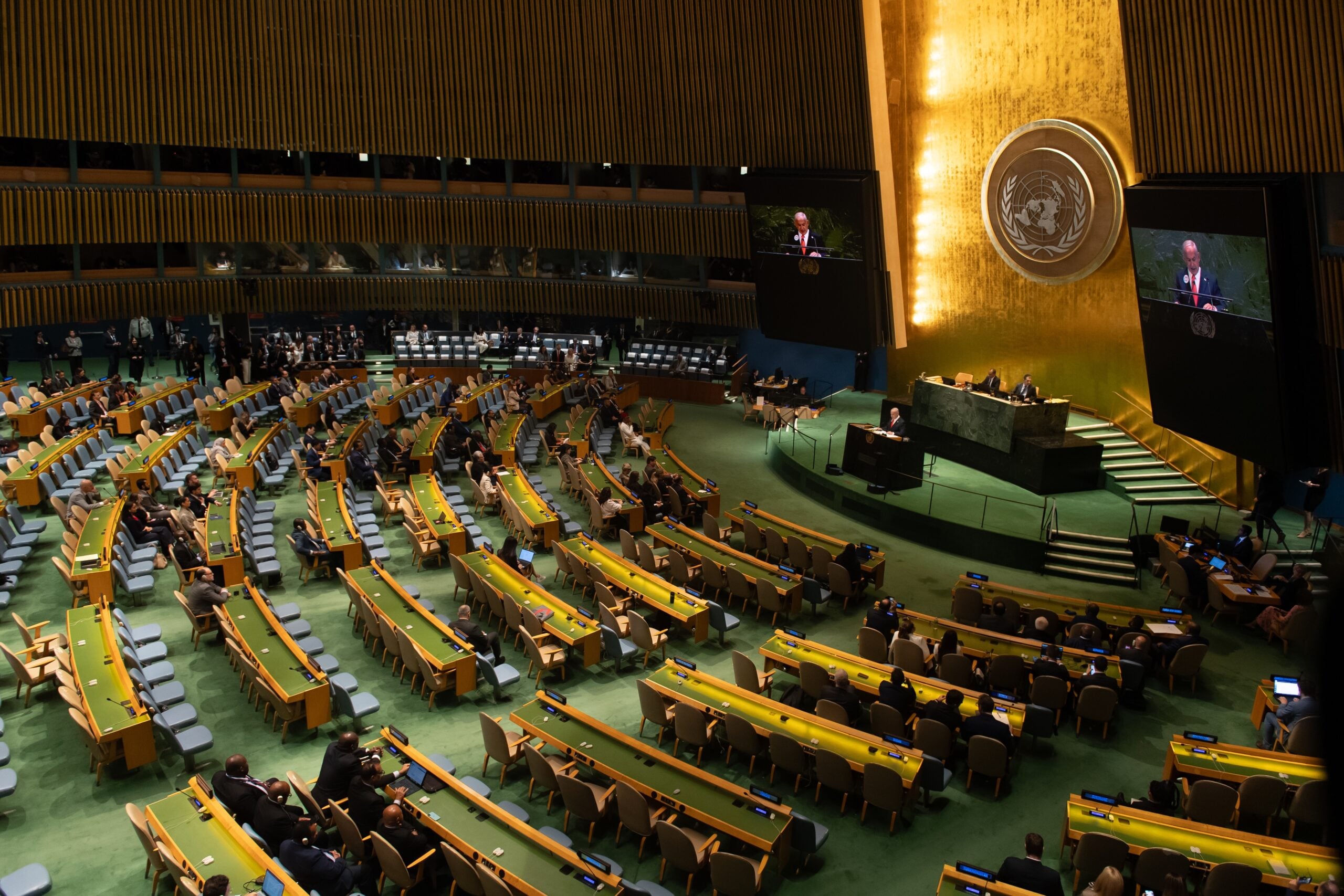
4+In 2025, the visual prop shrank to fit neatly on his suit lapel. Netanyahu wore a large, prominent QR code on his chest, calling on diplomats in the plenary to raise their smartphones and scan it live. The link routed directly to authenticated archives documenting the atrocities of October 7, an intentional move to thrust Israeli victims back into the center of international discourse.
 4+
4+Netanyahu did not invent theatrical props at the United Nations. Historic figures have waved documents, unrolled treaties, and brandished books to turn addresses into political theater. Yet with Netanyahu, visual demonstrations became a recurring tactical doctrine: distill a multi-layered diplomatic, intelligence, or security dilemma into an elemental graphic and forge a picture that sears into global memory.
The bomb was drawn to warn, the silence held to convict, the maps unrolled to illustrate strategic alternatives, and the QR code displayed to memorialize.
 4+
4+As Netanyahu returns to the UN General Assembly podium, having openly promised that his upcoming speech will deliver fr”sh “surpri” es,” the enduring question remains: what visual ace will he pull from his sleeve this time—and will it forge the next defining image of the world stage?