


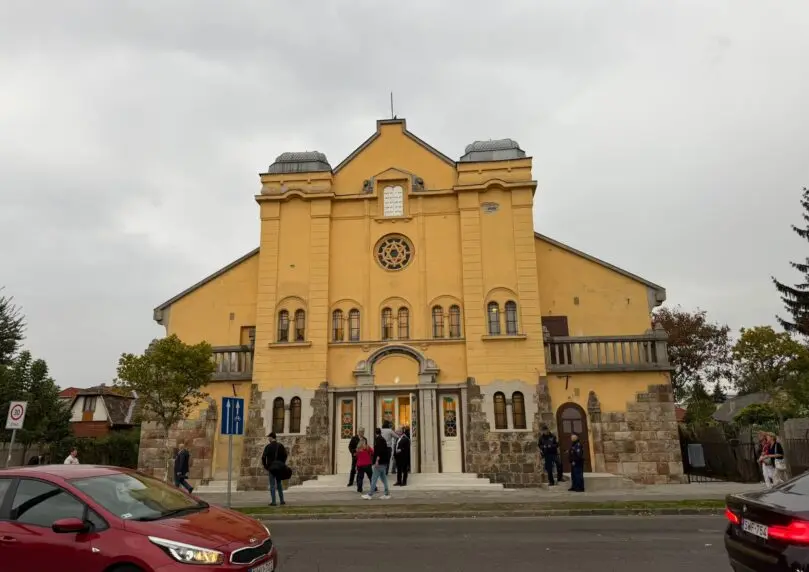

Eighty-two years after the prayers echoing through its vaulted sanctuary were silenced by Nazi German occupiers and local collaborators, and a century since its initial construction, the historic Rákospalota synagogue in Budapest’s 15th District officially returned to Jewish custody this past week. In a moving, grand ceremony held on the eve of Yom Kippur—attended by hundreds of Hungarian Jews alongside dozens of descendants of founder Rabbi Michael-Yitzchak Duschinsky—the lavishly restored landmark was formally inaugurated, holding packed Yom Kippur prayers for residents returning to worship on the holiest day of the year.
 2+
2+The story of the dispossessed synagogue did not end with the horrors of the Holocaust. After the country’s liberation from German occupation, the Soviets took control and converted the once-magnificent sanctuary into a warehouse for the Hungarian National Library. For decades, hundreds of thousands of books, newspapers, and periodicals were stacked across its floorboards where pews once stood.
The recovery process began four years ago when the Chief Rabbi of Hungary, Rabbi Shlomo Köves, launched diplomatic and community initiatives to restore the site to its sacred religious purpose. After extensive negotiations, ownership was transferred, and the building underwent a multi-million-euro rehabilitation in under a year, preserving its historic grandeur and architectural details.
 2+
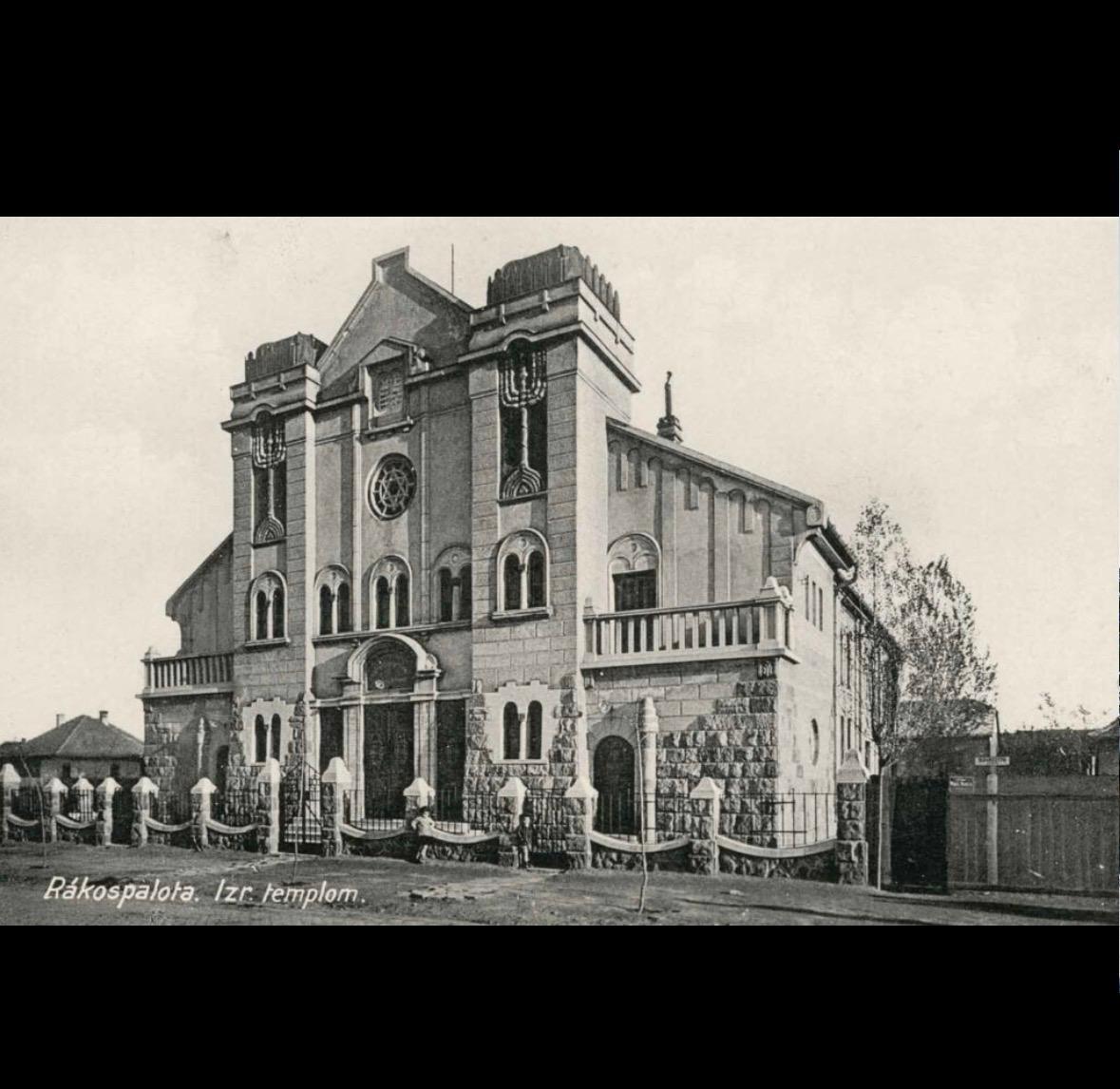
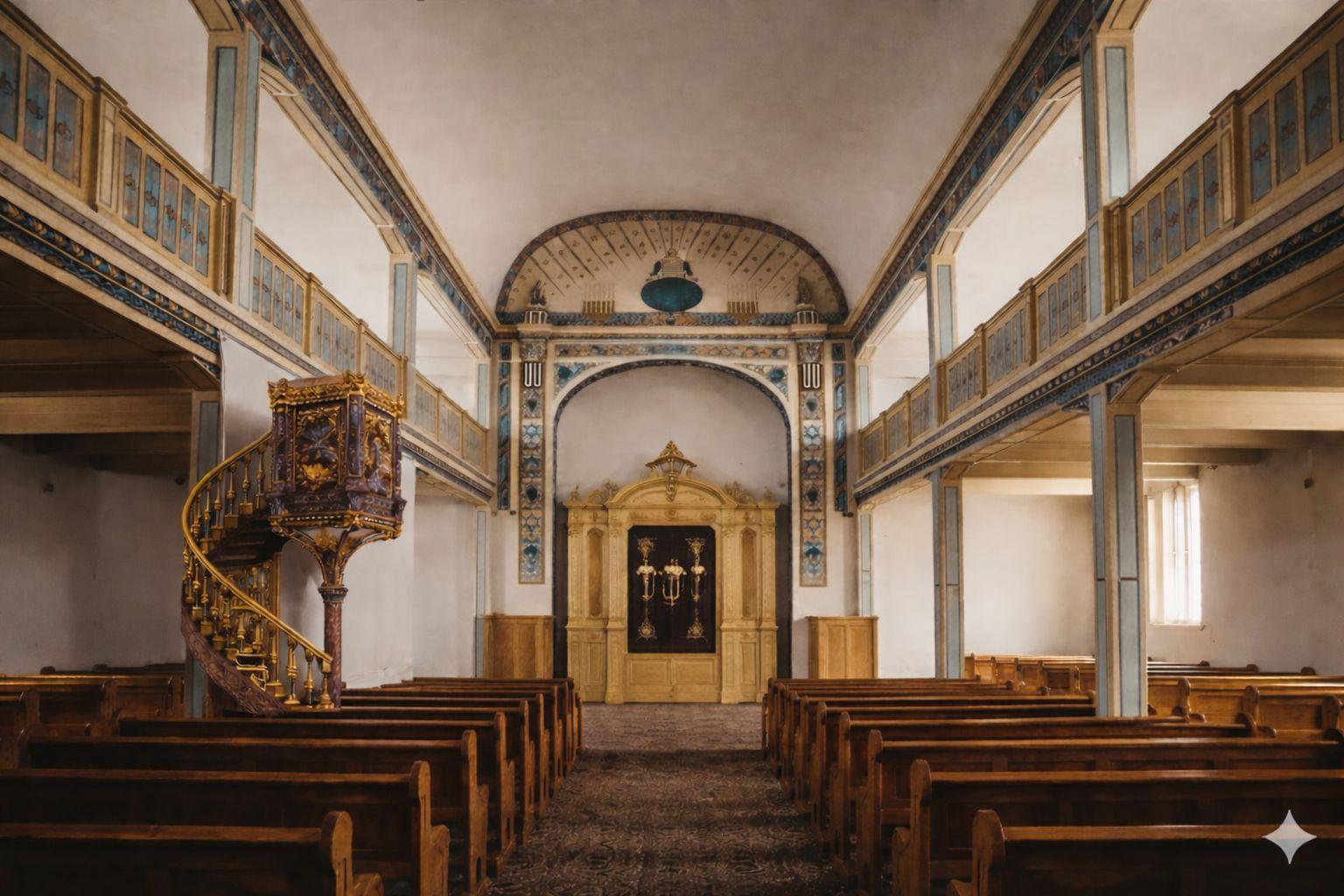
2+To reconstruct the authentic interior decor, preservationists utilized artificial intelligence algorithms to enhance and analyze the only surviving archival photograph of the sanctuary in its pre-war prime. Guided by these refined visual blueprints, experienced artisans accurately reconstructed the synagogue’s lost ornaments. Philanthropist Igor Tulchinsky, a prominent supporter of Jewish communal revival across Hungary, financed the comprehensive restoration.
The emotional centerpiece of the inauguration was the welcoming of a new Torah scroll into the restored ark, symbolizing the renaissance of Hungarian Jewish communal life. Prayers, singing, and dancing filled the hall where secular archives had accumulated for generations.
 2+
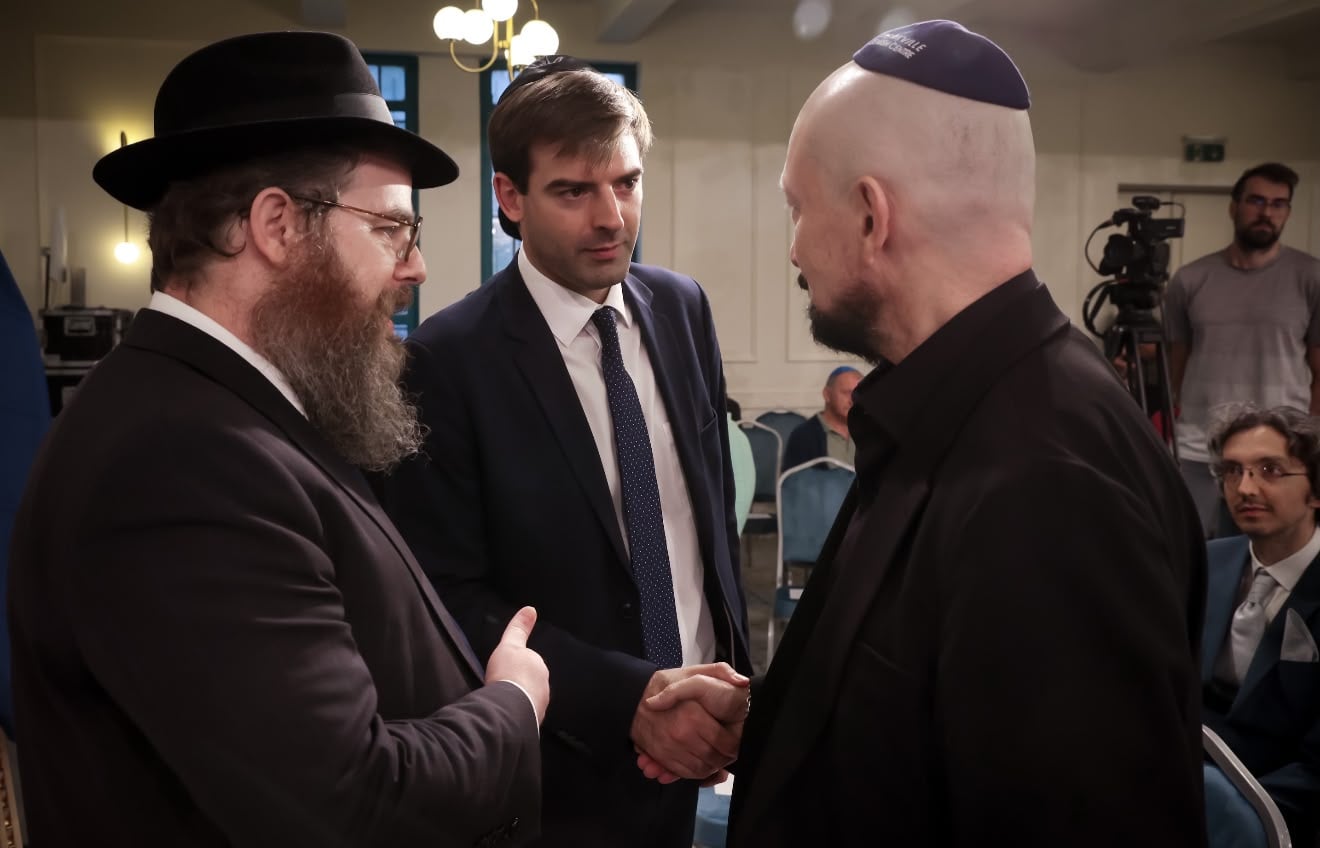
2+The ceremony was attended by the Chief Rabbi and Head of the Rabbinical Court of Budapest, Rabbi Baruch Oberlander; congregational rabbis and Chabad emissaries; philanthropist Igor Tulchinsky; Hungarian State Secretary for Religious Affairs István Szetei; and notable public figures.
A particularly poignant moment occurred with the arrival of 80-year-old Rabbi Michael Duschinsky, grandson and namesake of the synagogue’s founder, accompanied by extended family members. Community leaders formally appointed Chabad emissary Rabbi Eli Nógrádi as the new resident rabbi. Donning a tallit, Rabbi Nógrádi recited the Shehecheyanu blessing and delivered a passionate address: “The story of Rákospalota actually symbolizes the story of Hungarian Jewry in recent years: a building built out of a surge of Jewish life, went through the destruction of the Holocaust, lost its purpose for decades—and now returns to serve exactly the purpose for which it was built,” Rabbi Nógrádi said. The dedication marks the sixth historic synagogue revitalized and returned to active community service under a broader master plan led by Rabbi Köves to resurrect Budapest’s Jewish heritage.
“Am Yisrael Chai. For the local Jewish community, this represents far more than the architectural renovation of a historic edifice; it is the reclamation of a site that stood for decades as a relic of a vanished Jewish world, transforming it once again into a pulsating center of Torah, prayer, and community life. A century after it was founded by Rabbi Michael-Yitzchak Duschinsky, the sounds of Torah study and prayer reverberate between these walls once more,” the rabbi concluded.