


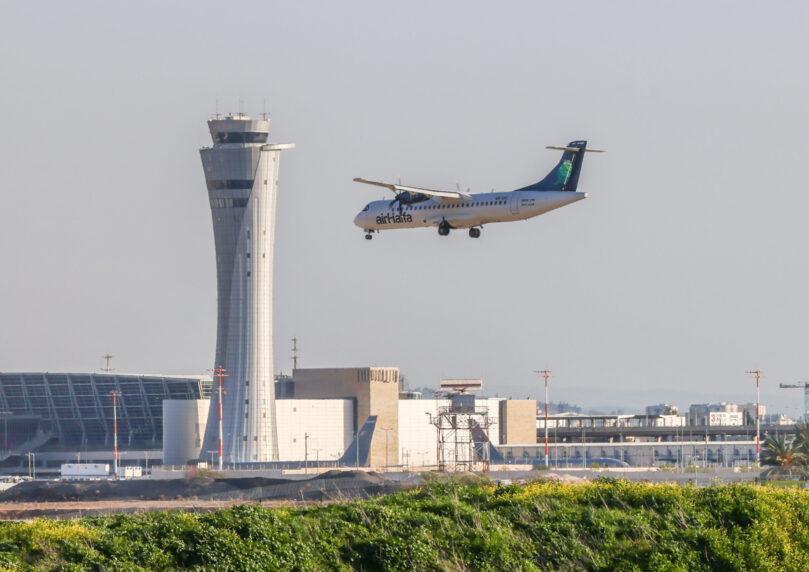

Even after pressure around American refueling aircraft at Ben Gurion eased, Israel’s airport authority is already looking ahead and demanding the remaining planes be cleared from the field. This time the demand isn’t driven by immediate congestion, but by the need to return Ben Gurion’s infrastructure to full civilian operations as aviation returns to pre-war levels.
In a letter sent last week to the Defense Ministry, Israel Airports Authority Director General Sharon Kadmi demanded the 19 U.S. Air Force refueling tankers still parked at Ben Gurion be cleared by the end of 2026. Kadmi made clear that continued operational activity by “the American partner” from civilian airports cannot continue in its current format, given the aviation sector’s return to high activity levels.
The authority emphasizes it recognizes the security and strategic importance of the American refueling aircraft presence in Israel, but notes that use of civilian airports becomes less feasible as commercial aviation returns to high volumes.
The implication is that parking positions and takeoff and landing slots at Ben Gurion will be more in demand, and the authority wants to ensure infrastructure is available for civilian flights. That’s why the demand is to complete removal of the 19 remaining aircraft by year’s end, rather than wait until civilian activity reaches expected levels.
Meanwhile, some American tanker activity has also moved to Ramon Airport. But there’s a limitation there too: operations cannot continue in the same format during nighttime hours, so the tankers cannot take off and land at Ramon during those times. The authority also raises the issue of manpower required to operate Ramon at night. Running the airport during hours outside normal operating routine requires additional personnel, and the authority warns of burnout among workers required to staff the airport during nighttime hours.
So while the American presence continues to be viewed by Israel as having security and strategic importance, the airport authority is seeking to reduce use of civilian airports for these purposes. Now a solution must be found that allows continued American operations without the aircraft continuing to occupy civilian infrastructure as commercial activity expands.