


State elections across two German federal states provided stark further evidence of the deep political realignment rocking the country, as the electorate turned in droves toward political extremes while abandoning long-standing establishment centrist parties.

In Berlin, which operates as both Germany’s federal capital and a city-state, the vote delivered an earthquake of its own: the far-left Die Linke finished first with 26% of the vote—roughly 460,000 ballots. The party benefited from a massive wave of support among young professionals, capturing half of all voters aged 28 to 34.
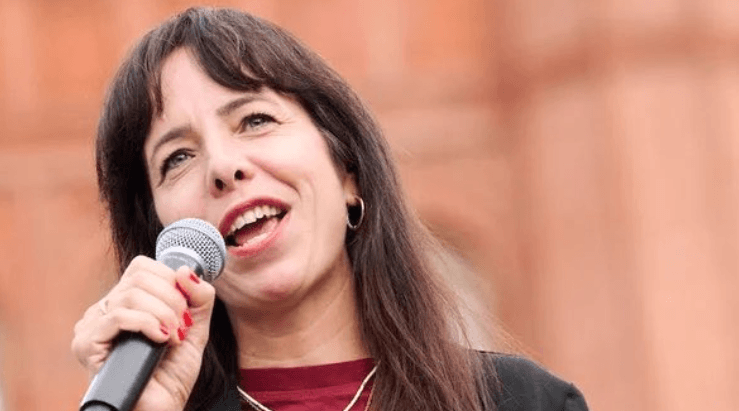
The party’s candidate for governing mayor is Elif Eralp, a 49-year-old attorney of Turkish heritage who has been dubbed the “Mamdani of Berlin.” Eralp spearheaded a campaign centered predominantly on domestic socio-economic issues, asserting that she would combat antisemitism while simultaneously vowing to back the arrest of Israeli Prime Minister Benjamin Netanyahu should he arrive in Berlin, citing the international arrest warrant issued by the International Criminal Court.
Victory celebrations at party headquarters were quickly overshadowed by the appearance of controversial figures, including Issa Remmo, the prominent head of an organized crime family, and Ibrahim Ibrahim, an Arab activist linked to the Popular Front for the Liberation of Palestine (PFLP) terror organization. Party leadership moved quickly to distance themselves from their presence, insisting neither had been invited.
Video: social media
Die Linke’s electoral triumph sparked deep apprehension throughout Berlin’s Jewish community. Community leaders pointed to increasingly vocal and radical pro-Palestinian elements embedded within the party—including a local district candidate who publicly characterized the campaign as an “intifada election.”
Despite capturing first place, Die Linke’s 26% plurality leaves it far short of the threshold required to form a governing coalition independently. Outgoing Mayor Kai Wegner appealed to centrist factions to unite to block the far-left from entering city hall. Discussions are underway regarding the viability of a fragile governing pact, as the right-wing Alternative for Germany (AfD) also registered major gains in the capital, more than doubling its vote share to secure 16%.