


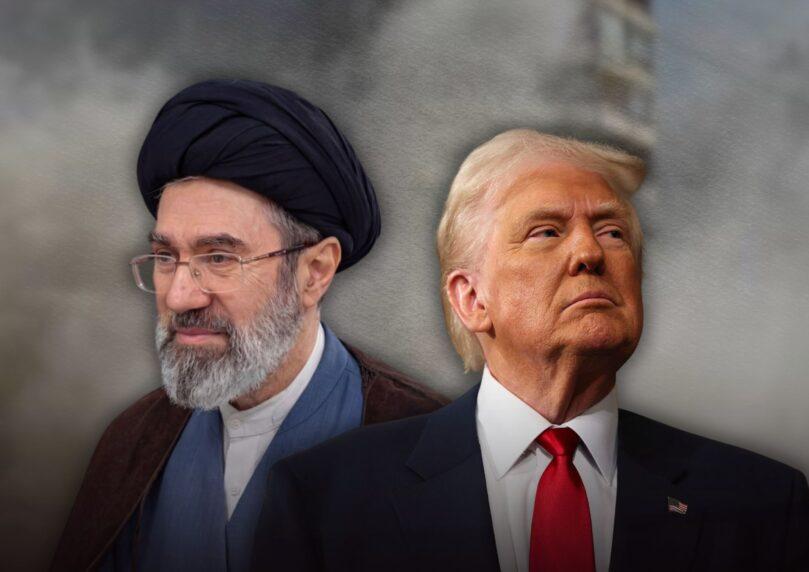

Following nearly seven months of active military conflict between the United States and Iran, both nations sharply escalated their hostile rhetoric and economic measures on Monday ahead of a critical diplomatic week in New York. Islamic Revolutionary Guard Corps (IRGC) spokesman Hossein Mohebbi warned that Tehran is fully prepared for an extended conflict, pledging to expand strikes to targets untouched until now and field advanced weaponry that will “shock the world.” Mohebbi’s threats followed direct remarks from US President Donald Trump, who stated he is currently in “decision mode” while laying out three clear choices for the Iranian regime: “Obliterate it, let it rot with its economy, or make a deal.”

 4+
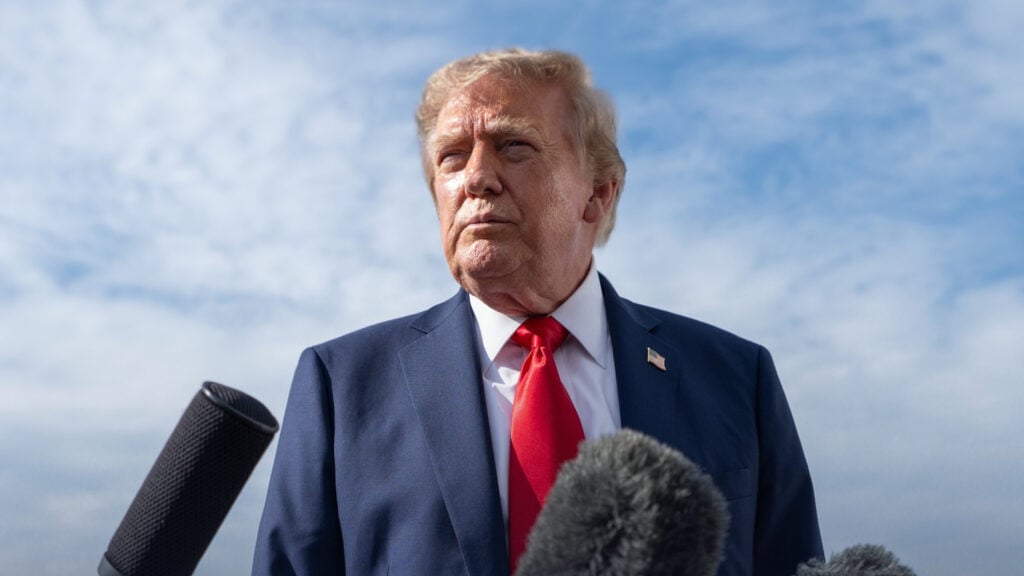
4+The confrontation comes as both Trump and Iranian President Masoud Pezeshkian arrive in New York for the United Nations General Assembly. Trump will address the Assembly on Tuesday, followed by Pezeshkian on Wednesday. Washington officials confirmed that the Iranian delegation will face stringent movement limits on American soil, severely curbing its access to international press outlets.
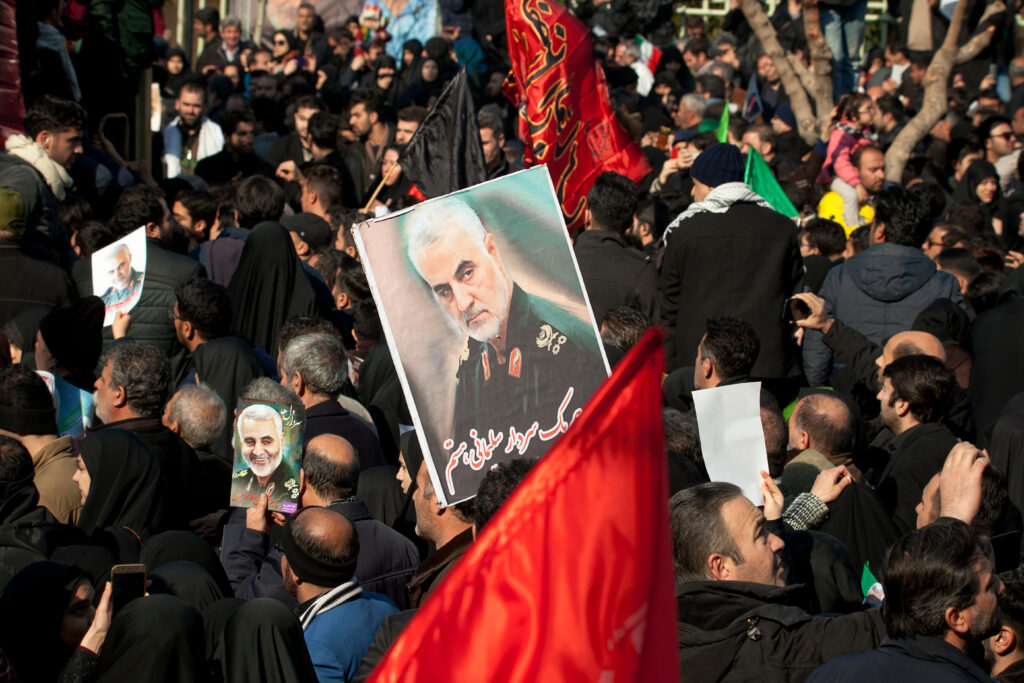
US Ambassador to the UN Mike Waltz remarked on the prospect of bilateral discussions, emphasizing that while Trump is “always open to a deal,” negotiations depend on whether the Iranian delegate possesses direct authorization from Supreme Leader Ali Khamenei to finalize a treaty. Waltz stressed that “the American foot is on the neck of Iran’s economy,” pointing to a collapsed rial, runaway inflation, depleted foreign currency reserves, and Tehran’s growing failure to cover fuel subsidies and state salaries. In response, Iranian Supreme National Security Council Secretary Mohsen Rezaee submitted seven preconditions to international intermediaries for resuming diplomatic contacts.
 4+
4+On the economic front, the Trump administration is tightening enforcement. US Treasury Secretary Scott Bessent announced that comprehensive secondary sanctions will take effect Wednesday, designed to ground Iranian airlines. Under the rules, any foreign airport or service provider offering fuel, ground handling, or ticketing to Iranian carriers will be immediately expelled from the US dollar clearing network. Bessent held consultations with Chinese Vice Premier He Lifeng, describing Beijing as “deeply engaged” and cooperative regarding sanctions compliance.
US Trade Representative Jamieson Greer noted that Beijing “heard loud and clear” warnings from Trump and Bessent, generally refraining from material assistance to Iranian aggression—partly because it lacks exportable Iranian crude. Meanwhile, Republican Representative Brian Mast urged Trump to directly challenge China at the UN over its military support for both Iran and Russia.
 4+
4+At sea, hostile action continues to disrupt commercial shipping corridors. The United Kingdom Maritime Trade Operations (UKMTO) reported two separate incidents in the Strait of Hormuz on Monday: an inbound tanker was struck by an “unidentified projectile,” lightly injuring two crew members. Projectile fragments struck, in contrast, an outbound liquefied petroleum gas (LPG) carrier. Both vessels maintained propulsion without reporting environmental spills, though transit volumes through the strait remain sharply below pre-war baselines.
US Vice President JD Vance addressed the attacks, accusing Iran of “terrorizing international commerce” and inflating fuel costs for American consumers. Vance reaffirmed that the administration is employing every measure to lower prices—including urging US states to suspend gasoline taxes—while the US Navy maintains maritime escort operations.
 4+
4+Amid the volatility, crude oil prices dropped to a 12-day low, briefly dipping below $100 per barrel. The retreat was driven by an emergency operation by Saudi Aramco, which loaded roughly 14 million barrels of crude onto seven supertankers across Gulf terminals—primarily Ras Tanura—to steady global supply.
The massive crude injection proceeded under direct operational threats: Iranian-backed Houthi forces in Yemen claimed recent missile and drone launches aimed at Riyadh and an Aramco crude facility in Yanbu on the Red Sea coast, alongside ongoing ground attempts to cut coastal access from pro-Saudi units.
 4+
4+The Saudi oil shipment was executed under a real security threat. Yemen’s Houthi rebels, backed by Iran, claimed they recently fired missiles and drones at the capital Riyadh and at a Saudi Aramco oil facility in the Red Sea coastal city of Yanbu, while simultaneously attempting to cut off the coastal region from pro-Saudi forces’ control.