




Residents of the Arab town of Majd al-Krum in the Galilee recently discovered that an authorized Jewish grazing outpost had been established on an adjacent ridge overlooking their locality. Framing the site as an “encroaching settlement outpost,” local activists mobilized an aggressive campaign to force its removal, claiming municipal and Arab ownership over the land. Prominent Arab and left-wing political figures backed the campaign, including Ra’am chairman Mansour Abbas and The Democrats MK Gilad Kariv.
Following days of friction characterized by virulent anti-Jewish hostility and extremist pro-‘Palestinian’ rhetoric denying Jewish rights to the land, the Arab-led effort secured an interim victory this week.
After a struggle that included displays of anti-Jewish hatred and pro-‘Palestinian’ sympathy with Hamas elements denying Jewish existence here, the Arab side scored a victory this week.
An Arab Council Banner Replaces the Flag of Israel
At the very hilltop where the Israeli national flag had flown prominently above Majd al-Krum in recent days, locals raised an Arab municipal banner on Wednesday night. Voices within the Arab camp declared that “Majd al-Krum has triumphed”—and at least for now, that claim holds weight. According to a statement from the Jewish National Fund (KKL-JNF), the grazing encampment was temporarily dismantled for operational reasons, with its presence slated to be reestablished on regional KKL-JNF lands after Yom Kippur.
Yet the standoff over the ridge above Majd al-Krum has become a flashpoint and case study for the broader state of Zionist sovereignty across the country—a sovereignty challenged and steadily eroded even after 78 years of Jewish independence in the historical homeland.
In the Middle East, Retreat Equals Weakness
Just as on external battlefronts, immutable realities govern the internal security landscape: Jewish capitulation and withdrawal from areas facing local hostility—especially within sovereign Israeli borders—pose an immediate hazard to national security. Historical precedent underscores that Israeli retreats are invariably interpreted as weakness, emboldening adversaries and inviting further instability. Conversely, strategic initiative and community development project deterrence and reinforce regional governance.
With great pain, history has taught us that Jewish retreat and withdrawal are interpreted as weakness and inevitably bring more pain and disasters in their wake, while conversely, Jewish initiative and settlement are interpreted as strength that brings security and victories.
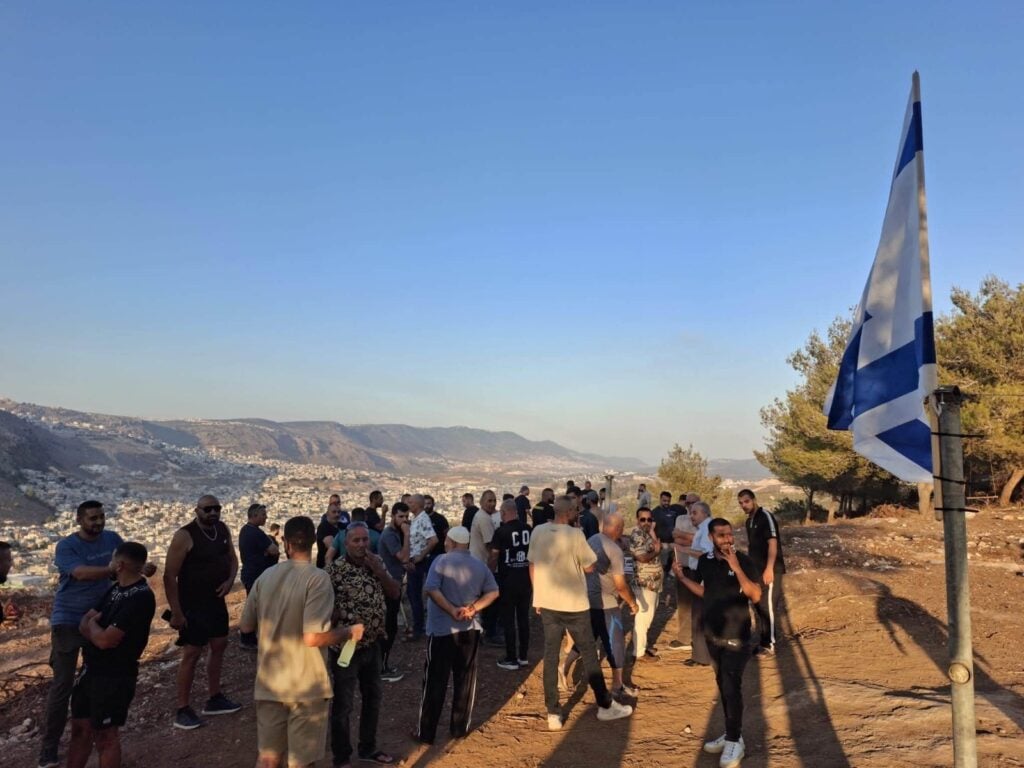

The perception of victory achieved by those pushing Jewish presence out of the Galilee delivers dangerous momentum to nationalist factions residing within the country. Recent events have signaled to hostile elements that rolling back Jewish presence in the Galilee requires minimal resistance.
To protect the state’s security and future, the State of Israel must decisively reverse this perception: developing and strengthening Jewish presence across the Galilee and Negev remains a fundamental, strategic imperative of the Jewish state.