


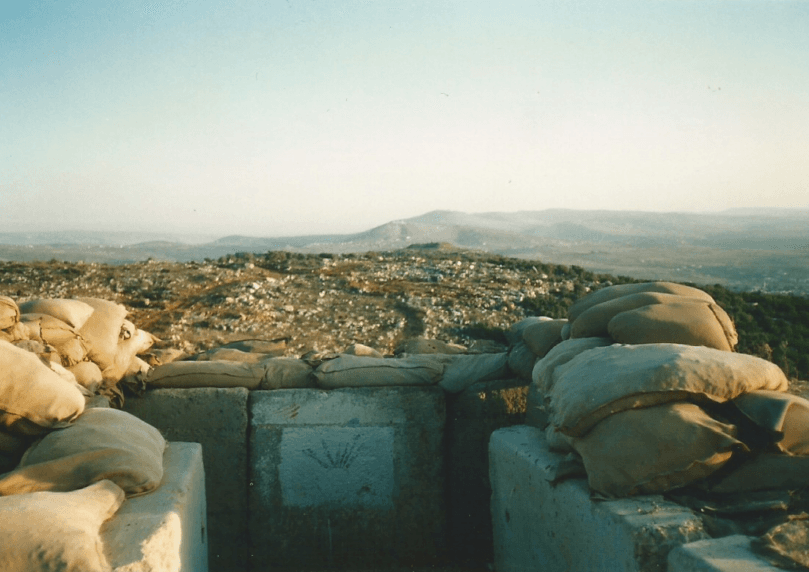

The Ali Taher Ridge, the most fortified, strategic, and significant target Hezbollah built in southern Lebanon over the past twenty years, no longer exists. The IDF destroyed the terror organization’s underground “terror city” down to the dust after months of grueling combat against guerrilla cells and suicide drones deployed to defend Hezbollah’s last major stronghold in the area.

 2+
2+For two decades, Hezbollah worked to transform the ridge into a fortified underground city. From this complex, the terrorist organization planned attacks against Israel, including major raids that were ultimately never carried out, as well as operations against IDF forces since Oct. 8.
The ridge’s immense strategic importance stemmed from its geography and topography. Stretching approximately 10 kilometers, it is located southeast of the city of Nabatieh and north of the Litani River, just 15 kilometers from the Israeli border as the crow flies. Its peaks rise to approximately 697 meters above sea level, while the mountainous terrain—made up of rock, limestone, cliffs and forested areas—provided terrorists with commanding positions and natural concealment.
New details released by the IDF reveal that the operation was less a frontal assault than a slowly tightening noose. Small commando teams moved covertly through the dense terrain surrounding the ridge, gradually destroying Hezbollah’s surveillance cameras, explosives and logistical positions without the terrorists fully realizing how close Israeli forces had come. Egoz soldiers then spent hours concealed in the brush intercepting supplies bound for the underground complex—including food, water, fuel, batteries and even cigarettes—while preventing supply drones from reaching the tunnel entrances. As the encirclement tightened and supplies dwindled, some Hezbollah terrorists attempted to flee the tunnels, only to emerge toward Israeli forces waiting outside.
 2+
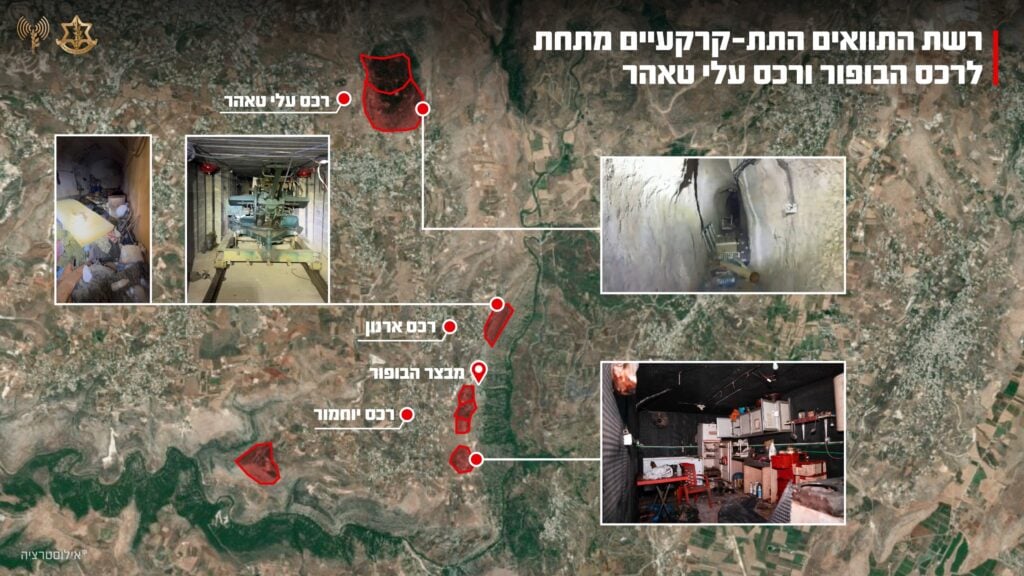
2+What lay beneath the ridge was far more than a network of tunnels. The sprawling underground complex served Hezbollah’s Badr Unit, responsible for operations across southwestern Lebanon, and included command centers, weapons depots, generator rooms, living quarters, showers and a kitchen designed to allow terrorists to remain underground for extended periods. The IDF said troops discovered dozens of Iranian-made rockets, missiles and anti-tank weapons, UAVs, machine guns and hundreds of mines and explosive devices inside infrastructure built over two decades with Iranian funding and planning.
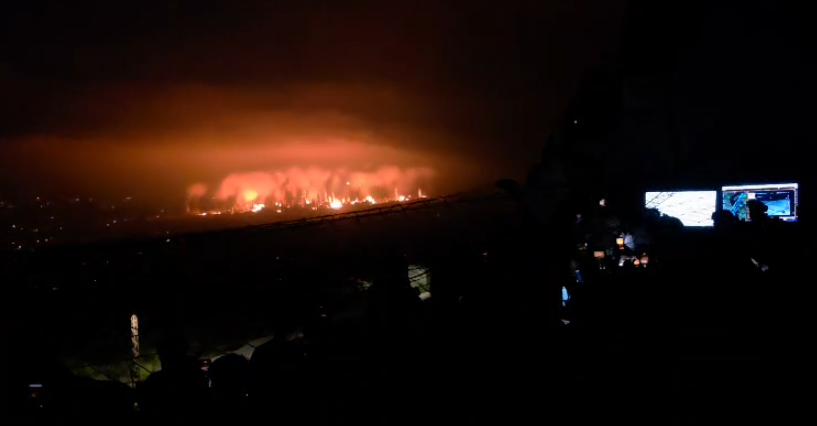
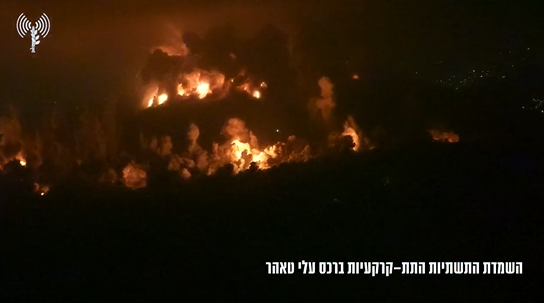
The operation reached its climax with a demolition on an extraordinary scale. Israeli forces used more than 1,100 tons of explosives to bring down the underground complex, according to senior military officials cited by Israeli media. The resulting blast was so powerful that the U.S. Geological Survey registered a magnitude-4.1 seismic event in the area. Commanders on the ground described the moments before the button was pressed as among the tensest of the entire war. Only after the massive blast and mushroom cloud erupted did “the air return to their lungs,” as the forces moved on to their next missions.
 2+
2+The destruction of the Ali Taher Ridge marks the breaking of the largest and most significant stronghold Hezbollah maintained in southern Lebanon. But the IDF stresses that despite the major achievement, significant Hezbollah infrastructure remains—and the mission is not yet complete.