


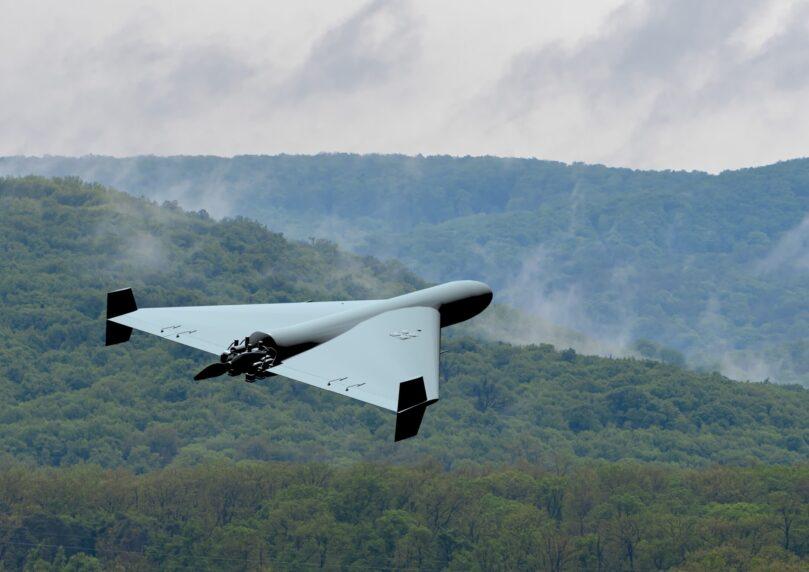

In a military role reversal posing a direct security challenge to Israel, Iran has formally requested that Russia deliver its newest generation of “Geran” strike drones for operational deployment against Israel and the United States, the Financial Times reported on Sunday, citing Western intelligence and security officials.

At the core of the request lies an extraordinary geopolitical turnabout between the two allies. In the early stages of the war in Ukraine, it was Tehran that supplied Moscow with basic Shahed-136 loitering munitions. However, Russian defense engineers adapted the underlying Iranian technology, extensively upgraded it under intense combat conditions, and now Iran is seeking to acquire the sophisticated developments built upon its own initial blueprints.
The Russian modifications have transformed a slow-moving, propeller-driven platform into a high-speed strike system. The latest models, designated “Geran-4” and “Geran-5,” are powered by turbojet engines capable of speeds up to about 600 km/h (370 mph)—several times faster than the original Shahed. They also carry heavy 90-kilogram warheads, have an operational strike range of roughly 1,000 kilometers, and are outfitted with thermal optics, artificial intelligence target acquisition, and enhanced electronic warfare shielding.


These enhanced systems are already having an operational impact across Ukraine’s air defense network. Ukrainian Air Force figures indicate that while interception rates for legacy piston-engine Shaheds stood between 90% and 95%, interception rates for the jet-powered Geran variants have plunged to around 60%, with multiple units successfully piercing defense arrays and striking strategic infrastructure in recent weeks. For Israel’s defense establishment, the trend represents a concerning escalation: the deepening Moscow-Tehran military axis ensures that Iranian arms refined in the European theater return to the Middle East faster, heavier, and significantly harder to intercept.