


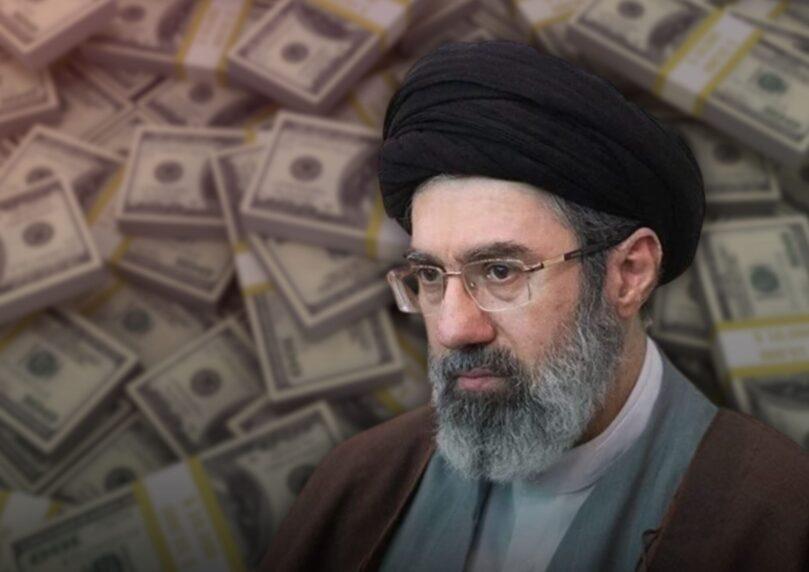

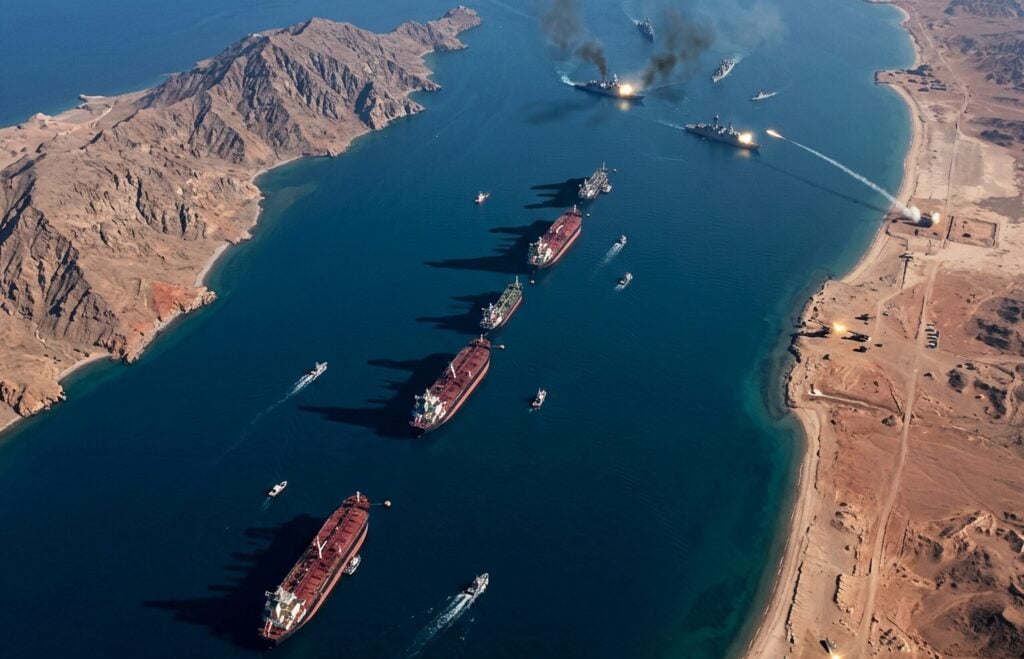
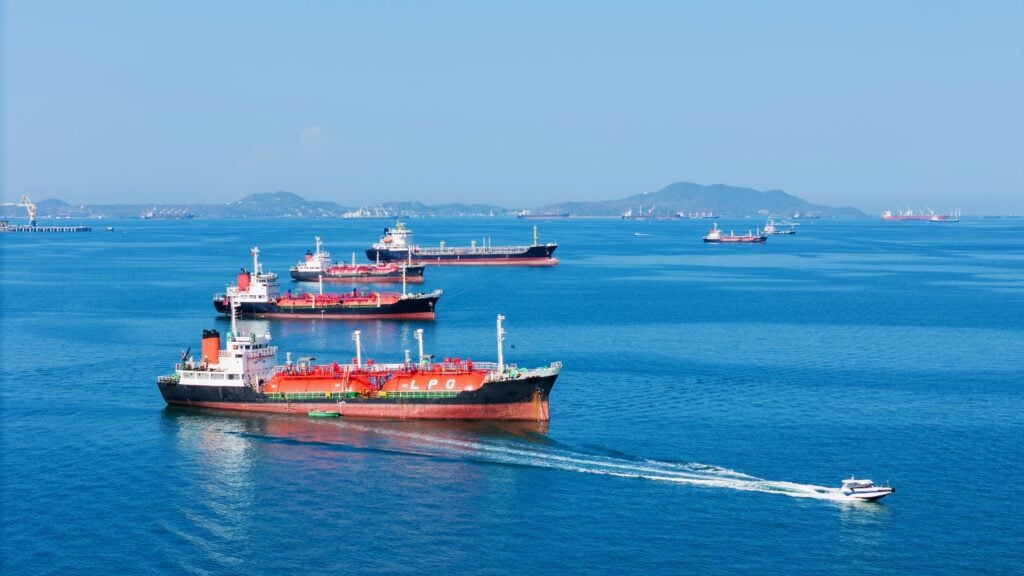
The U.S. Navy’s naval blockade imposed on Iran since mid-July is exacting a devastating toll on the Islamic Republic’s primary financial artery. According to shipping analytics firm Kpler, not a single barrel of Iranian crude oil has breached the naval perimeter to reach export markets since the blockade began. While Tehran continues loading minimal crude volumes onto tankers within the Persian Gulf, the vessels remain trapped and unable to move. Simultaneously, the offshore reserves Iran managed to slip beyond the blockade during an earlier pause are rapidly depleting—threatening to sever the regime’s vital foreign exchange revenue within weeks, The Wall Street Journal reported on Tuesday.
The economic shock is most evident outside the Persian Gulf. In mid-July, Iranian oil held on floating tankers beyond the blockade line totaled about 90 million barrels. This floating buffer allowed the regime to maintain uninterrupted shipments to primary customers—principally Chinese independent teapots—and sustain critical hard-currency inflows.

 6+
6+Now, Kpler data indicates this offshore inventory has plummeted to around 29 million barrels. At the current outflow rate of roughly one million barrels per day, the entire reserve is on track to drop to zero by mid-October. Consequently, incoming payments for previously delivered cargoes are projected to halt entirely by mid-December. Iranian Oil Minister Mohsen Paknejad attempted to project business as usual, claiming that “oil sales and handoffs to clients are taking place thousands of kilometers away from the Persian Gulf and the Gulf of Oman.” However, reality reveals that this offshore stockpile is drying up fast, with no replacement cargoes breaking out from Gulf terminals.
August data reflects a steep collapse in Iranian export capacity: Tehran loaded just 255,000 barrels per day inside the Gulf—an 85% plunge compared to its daily average between February and April. Furthermore, these loaded barrels remain stranded behind U.S. naval assets.
 6+
6+By comparison, before the outbreak of hostilities, Iran exported nearly two million barrels per day. Attempts to compensate via overland corridors have provided no tangible relief. Homayoun Falakshahi, head of crude oil analysis at Kpler, noted that Iran can transport at most 40,000 barrels per day using tanker trucks. Rail infrastructure similarly fails as a substitute due to a severe shortage of dedicated rolling stock for crude and refined fuels.
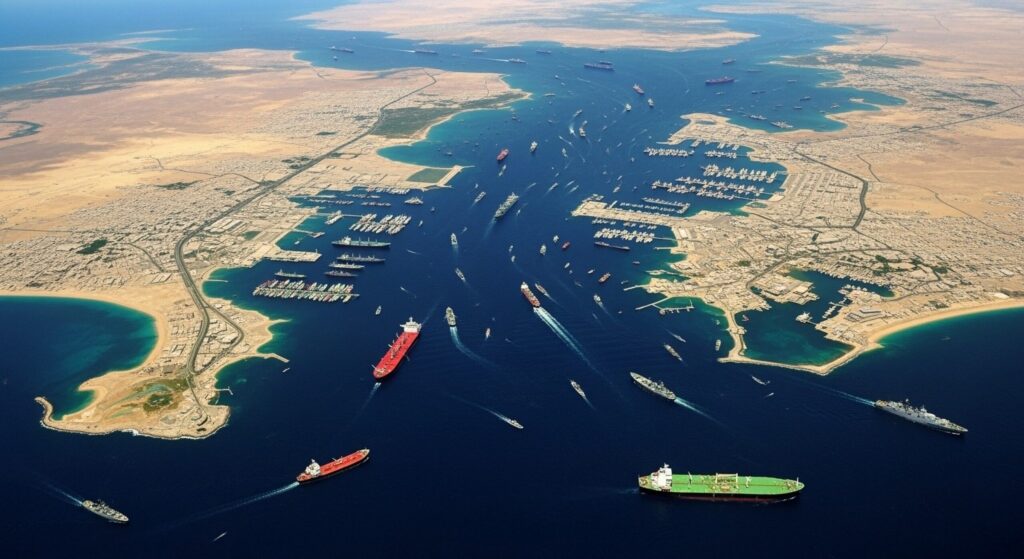
The maritime cordon has begun choking domestic extraction at wellheads. Despite exports dropping to near-zero, inland storage facilities across Iran have shown no substantial volume increases. Falakshahi noted this indicates the regime has been forced to shut in crude production to levels barely matching domestic consumption. The shift confirms long-standing warnings from energy economists: without export routes and with tank farms full, shutting down active oil wells becomes unavoidable.
 6+
6+The damage has concurrently cascaded into the petrochemical sector—Tehran’s second-largest foreign currency earner behind crude. Kpler estimates that August loadings of petrochemical products fell by nearly two-thirds compared to levels recorded in early 2026.
Tehran faces an added strategic blow across international markets as China, its principal and almost exclusive buyer, turns to alternative suppliers. Gulf energy sources report that Chinese refiners have increasingly contracted substitute supplies from Saudi Arabia, Iraq, and the United Arab Emirates. With immediate Iranian deliveries cut off, Iranian crude—historically offloaded at steep discounts—has in some instances become more expensive than competitors. Regional producers are capitalizing on the opening: Iraq is offering aggressive discounts near $30 per barrel on select grades to capture former Iranian market share.
 6+
6+The fallout extends well beyond the energy sector. Crude revenues traditionally finance roughly one-third of Iran’s national budget and serve as the backbone of foreign currency liquidity. Crucially, crude sales directly fund the regime’s security apparatus. According to the U.S. Treasury, the Islamic Revolutionary Guard Corps (IRGC) and the armed forces rely on dedicated front entities and “shadow fleet” networks to market crude and underwrite overseas and domestic operations.
The blockade is designed to simultaneously squeeze the state budget, crash the Iranian rial, and dismantle military funding structures. U.S. Treasury Secretary Scott Bessent highlighted the campaign’s success on X, posting a graphic inspired by the film Jaws showing a shark tearing through graphs of Iranian oil exports and currency valuations.
 6+
6+The financial pressure lands on an already fragile Iranian domestic economy. Official inflation figures have surpassed 80% annually, while the International Monetary Fund projects a 5.4% GDP contraction—the steepest downturn since the 1980s. Severe dollar shortages hamper the central bank’s ability to prop up the rial or fund imports of essential industrial raw materials, driving consumer prices higher. Hamed Hosseini of Capital Economics noted that since President Trump announced the renewed pressure campaign in August, the rial has depreciated by nearly 15% against the dollar: “A great deal will depend on the threshold of economic pain the regime is willing to endure to preserve its military objectives.”
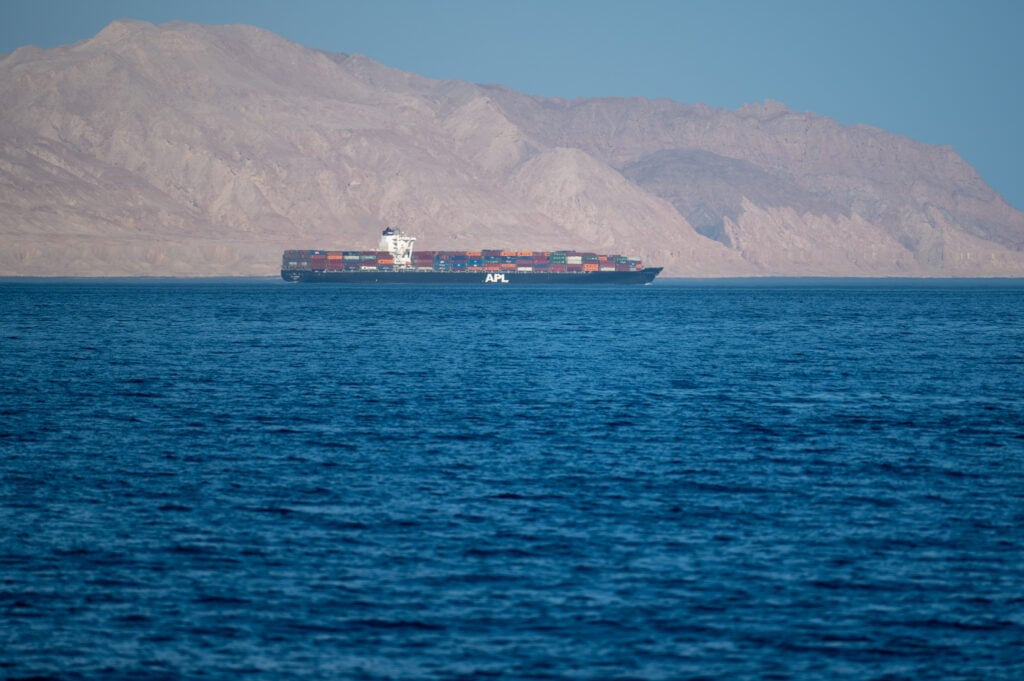
While Iran’s non-oil commerce continued—registering nearly $15 billion in exports between March and August, below last year’s performance—a critical trading route was severed last month when the UAE suspended most financial and business transactions with Tehran. Although low-level trade persists through shell entities, Iran has been forced into inefficient, costly alternate transit routes via Turkey, Iraq, Oman, and Pakistan.
 6+
6+Underlying Washington’s strategy is the premise that catastrophic economic strangulation will compel Iran’s leadership to seek a negotiated settlement. Conversely, Gulf security officials and regional analysts warn the pressure could instead provoke broad regional escalation.
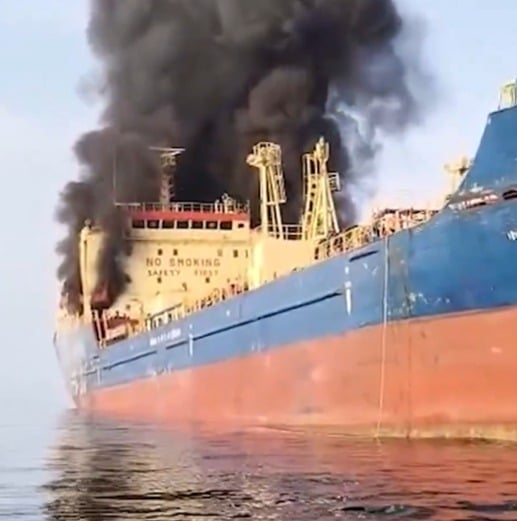
The intersection between economic warfare and armed conflict materialized this past Saturday, when U.S. forces struck three Iranian tankers after Iran fired ballistic missiles toward American naval vessels, including an aircraft carrier. Simultaneously, Saudi sources report Tehran has surged missile deliveries, intelligence assets, and personnel to the Houthi militia in Yemen to menace regional shipping routes and Saudi infrastructure.
Ellie Geranmayeh, an Iran analyst at the European Council on Foreign Relations, voiced skepticism regarding regime capitulation: “The campaign hits the ordinary citizen hard, but historical evidence suggests the regime will prioritize resistance and confrontation over surrender at the negotiating table.”
 6+
6+Tehran’s ability to weather recent weeks stemmed from a temporary pause in the blockade in mid-June under a diplomatic memorandum of understanding. Iran utilized that window to surge tens of millions of barrels out of the Gulf into offshore storage, assembling the 90-million-barrel reserve that sustained revenue flows after the U.S. Navy reinstated the maritime blockade in July.
That buffer is now nearing exhaustion: mid-October marks the critical tipping point when offshore inventories reach zero, with receipts from prior transactions ending entirely by mid-December. With the U.S. blockade demonstrating clear tactical efficacy in halting exports, international observers are monitoring how Tehran will respond once its primary cash spigot is shut off completely.