



U.S. officials recently revealed that a quadcopter drone was detected conducting suspicious surveillance over a sensitive U.S. military missile testing facility in New Mexico, according to a CNN report. The incident came after a similar drone was spotted in the same area in the fall of 2024, prompting U.S. Customs and Border Protection agents to pursue it for approximately 35 miles before it crossed into Mexico.
 4+
4+In the latest incident, according to the report, the drone hovered over the White Sands Missile Range for approximately five days, repeatedly entering and leaving restricted airspace. A joint task force involving the military, FBI, Department of Homeland Security and even the Pentagon office responsible for tracking unidentified objects monitored its movements. Using electronic warfare equipment, authorities eventually forced the drone to land inside the base.
At the same time, authorities were reportedly tracking a group of Chinese nationals traveling in a rented RV parked nearby. According to U.S. officials, the group arrived in New York, rented the vehicle, drove to Las Vegas to pick up another individual and then traveled directly to the base. Another Chinese woman, who arrived in Texas aboard a cruise ship and traveled to White Sands National Park, was also spotted in the area.
 4+
4+Both groups were detained by authorities. The FBI later told military and security officials that the suspects were linked to Chinese intelligence, according to the report. Identifying information belonging to the woman was found inside the RV, further strengthening the suspected connection between the groups. A spokesperson for the Chinese Embassy denied the allegations, calling them “baseless speculation.”
The incident is reportedly one of many drone incursions into U.S. airspace over military facilities and restricted government sites. While many are operated by hobbyists or cartels, concerns are growing that some are being flown by foreign operatives conducting espionage, particularly on behalf of China.
 4+
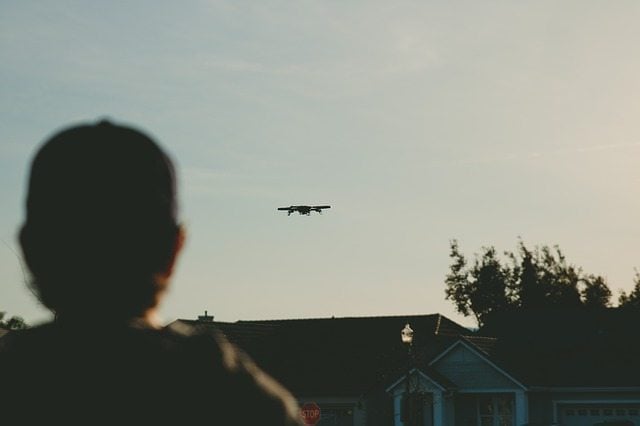
4+The proliferation of cheap, easy-to-operate drone technology has made surveillance increasingly accessible while making it significantly more difficult for the U.S. government to detect and prevent such activity, according to CNN. U.S. officials are also concerned about the potential use of drones in terrorist attacks against critical infrastructure or civilian targets, a threat highlighted by the theft of 15 agricultural spraying drones in New Jersey.
The U.S. military has warned that a swarm of drones could overwhelm existing air-defense systems. Ukraine’s June 2025 Operation Spiderweb, in which 117 drones were used in attacks that destroyed or damaged numerous Russian military aircraft, demonstrated the rapidly growing capabilities of such weapons.
 4+
4+The White Sands incident is considered an operational success, but according to CNN, the broader problem remains: No single U.S. agency is responsible for detecting, deterring and neutralizing drone incursions, creating what has been described as a “command vacuum.” Following a similar incident at an Air Force base in Virginia in late 2023, U.S. Northern Command was designated as the coordinating authority for drone incidents at military bases.
Despite progress, significant failures remain. In February, the Federal Aviation Administration was forced to close the airspace over El Paso, Texas, for eight hours after the Defense Department failed to coordinate a test of a counter-drone laser system. Two weeks later, the U.S. military accidentally shot down a Customs and Border Protection drone with a laser, according to the report.
 4+
4+Congress granted the CIA new authority in 2026 to neutralize drones threatening its facilities, while state and local governments have also received expanded powers. However, significant security gaps reportedly remain, including privately operated data centers containing sensitive government information that do not fall under any clearly designated authority.
Definitively attributing espionage operations to Chinese intelligence authorities remains difficult because China frequently uses what officials describe as “civilian covers”—including students or Chinese-American citizens—rather than trained intelligence officers. As a result, authorities often struggle to bring charges beyond relatively minor offenses such as illegally flying drones in restricted airspace.