


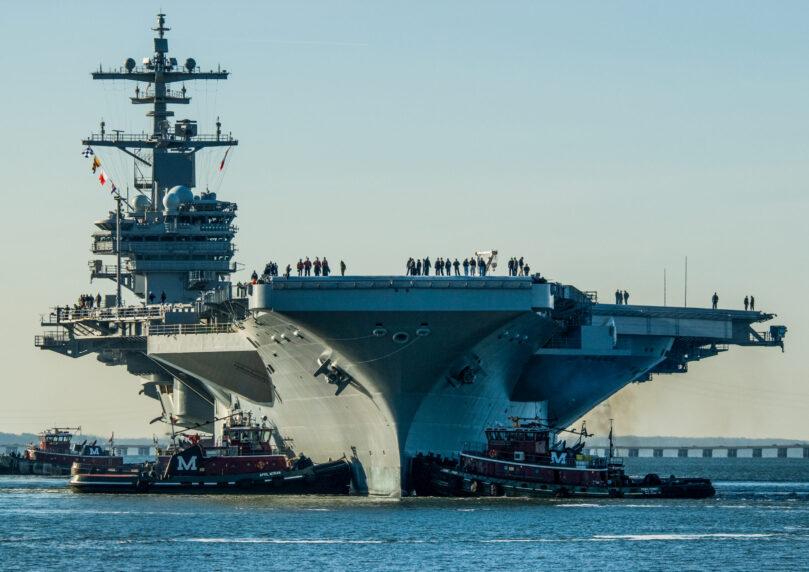

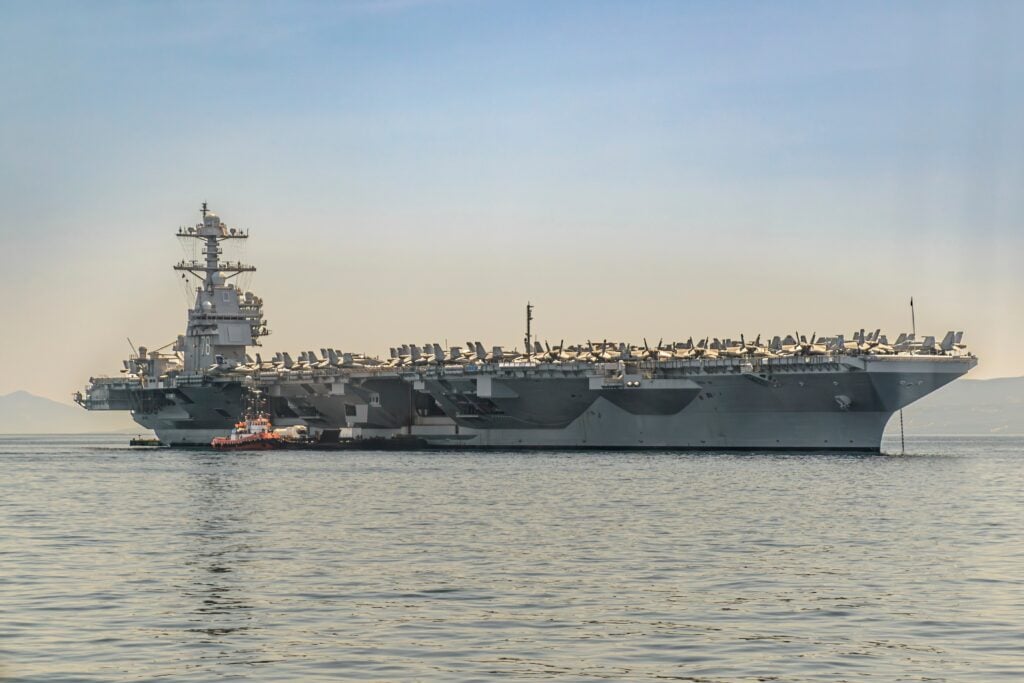
The United States positioned a formidable naval strike force near Iran on Sunday as the nuclear-powered aircraft carrier USS George Washington (CVN-73) arrived in the Arabian Sea near the strategic Strait of Hormuz, officially relieving the USS Abraham Lincoln. Operating essentially as a massive floating airbase, the carrier enables round-the-clock combat sorties far from American shores. Manned by approximately 5,000 crew members and deploying advanced multi-role air wings, U.S. Navy commanders affirmed their readiness for sustained operational missions across the theater.

 4+
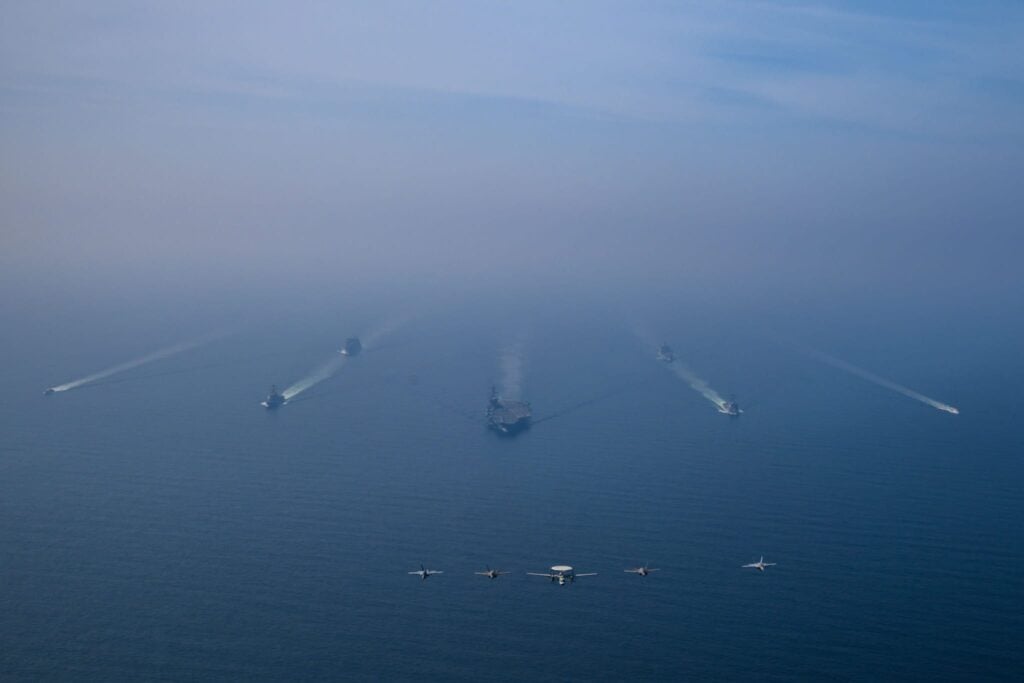
4+The George Washington operates at the core of Carrier Strike Group 5 (CSG 5), flanked by guided-missile cruisers and destroyers that provide comprehensive integrated air defense and strike support. The posture ensures Washington maintains self-sufficient, sea-based combat aviation capable of tracking emergent threats and projecting lethal airpower without relying on land bases in the region.
The carrier’s stationing in the Arabian Sea places direct combat pressure alongside the Strait of Hormuz—the vital maritime choke point connecting the Persian Gulf to international waters—granting the Pentagon immediate rapid-response strike capabilities.
 4+
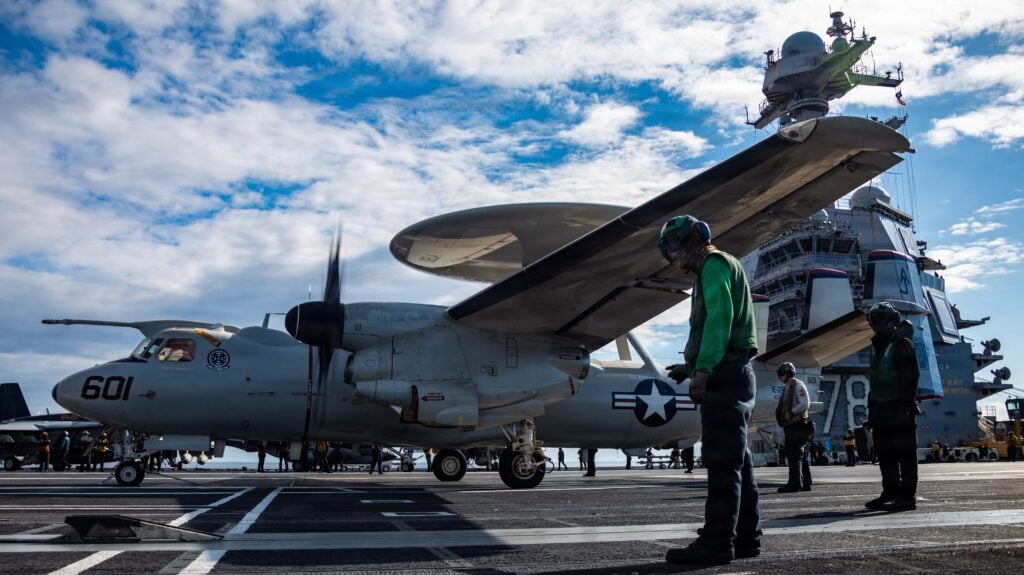
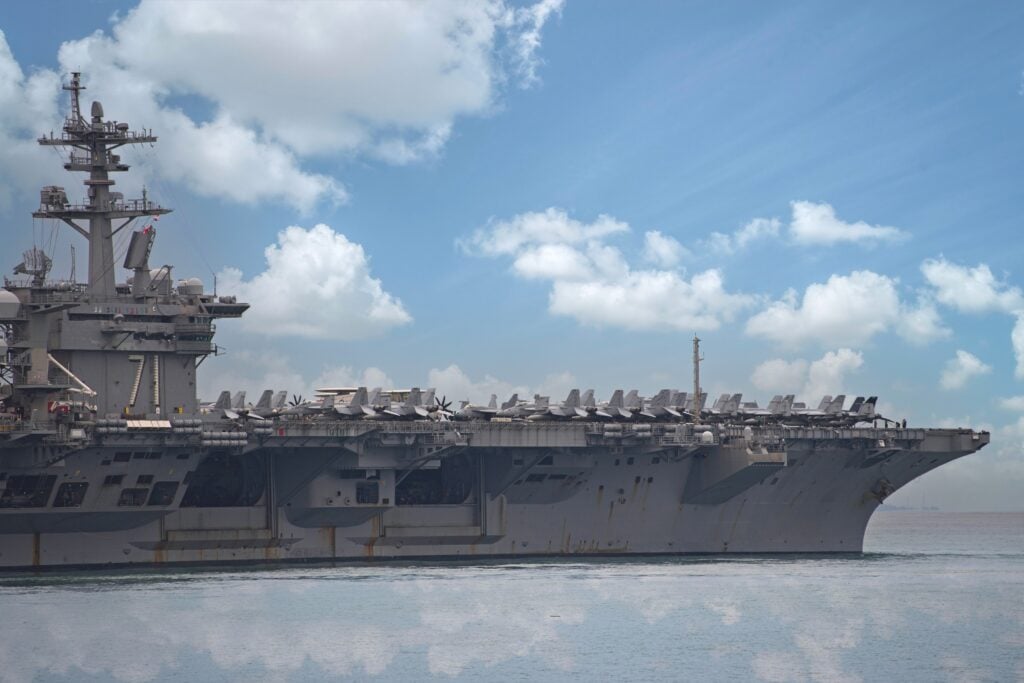
4+The carrier’s flight deck hosts some of the most advanced strike aircraft in the U.S. inventory, including 5th-generation stealth F-35C Lightning II fighters alongside F/A-18E/F Super Hornets for air superiority and precision strike missions. The air wing also deploys EA-18G Growlers for airborne electronic attack, E-2D Advanced Hawkeye early-warning command platforms, and multi-mission helicopters for search-and-rescue and anti-submarine warfare (ASW).
The commanding officer of the USS George Washington, Captain Nicholas DeLeo, noted that crew morale remains exceptionally high: “I see it when I walk the ship and see our sailors taking immense pride in their craft—whether launching aircraft, maintaining critical systems, or backing each other up. The dedication and teamwork across this ship are extraordinary, and that spirit keeps us ready and resilient.”
 4+
4+Rear Admiral Jeff Heimes, Commander of Carrier Strike Group 5, reiterated that forces are fully prepared for extended regional posture: “The sailors and aviators aboard USS George Washington and across Strike Group 5 are ready, resolute, and equipped for sustained operations. Our personnel understand the strategic stakes of this mission and execute daily with precision and absolute professionalism.”
Flight deck operations maintain an intense tempo, capable of recovering aircraft at a rate of nearly one per minute, averaging roughly 70 arrested landings daily. This week, the carrier marked a historical milestone when an F-35C conducted the 200,000th arrested recovery in the ship’s operational history.
 4+
4+Supporting a floating military city of 5,000 personnel requires a massive logistical apparatus. Around 150 culinary specialists prepare over 15,000 meals daily aboard ship. Aviation fuel, munitions, and provisions are continuously replenished via underway replenishment ships and vertical helicopter transfers, while the carrier’s twin nuclear reactors provide virtually limitless propulsion without requiring port refueling.
Former CENTCOM Commander, retired General Joseph Votel, emphasized that maintaining heavy carrier power in the Middle East is vital for enduring deterrence, stressing that the U.S. must prepare for prolonged regional volatility while keeping forces peaked at maximum combat readiness.
 4+
4+While the deployment of the USS George Washington does not itself signal an immediate strike order, it places decisive tactical firepower within direct striking distance of Tehran, backed by naval escort destroyers providing multilayered regional air and missile defense.