


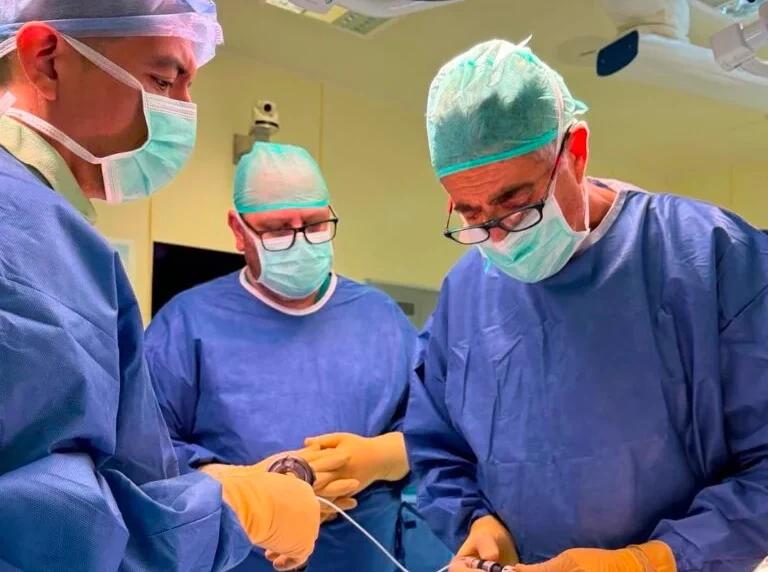

New hope now exists for patients whose aggressive brain tumors have returned after standard treatment. Hadassah Ein Kerem Medical Center has become the first in Israel to treat recurrent glioblastoma using alpha radiation delivered directly into the tumor. The experimental treatment was performed on a 77-year-old man as part of Israel’s first clinical trial of its kind.
The patient was diagnosed with recurrent glioblastoma after previously undergoing surgery, radiation and drug therapy. During the procedure, tiny radiation sources using Alpha DaRT technology were inserted directly into the tumor. According to Hadassah, in a world first, the radiation sources were simultaneously inserted through two different pathways to maximize coverage of the tumor while maintaining precision.

 3+
3+Radiation Concentrated in Tumor Area
Alpha DaRT technology uses tiny sources that emit alpha particles with high biological effectiveness. Because the particles travel only a very short distance, the radiation is designed to concentrate primarily within the tumor while minimizing damage to surrounding healthy brain tissue. The procedure was performed using a neurosurgical navigation system capable of millimeter-level precision. Doctors first took a sample to confirm active disease, then used the same system to insert the radiation sources.
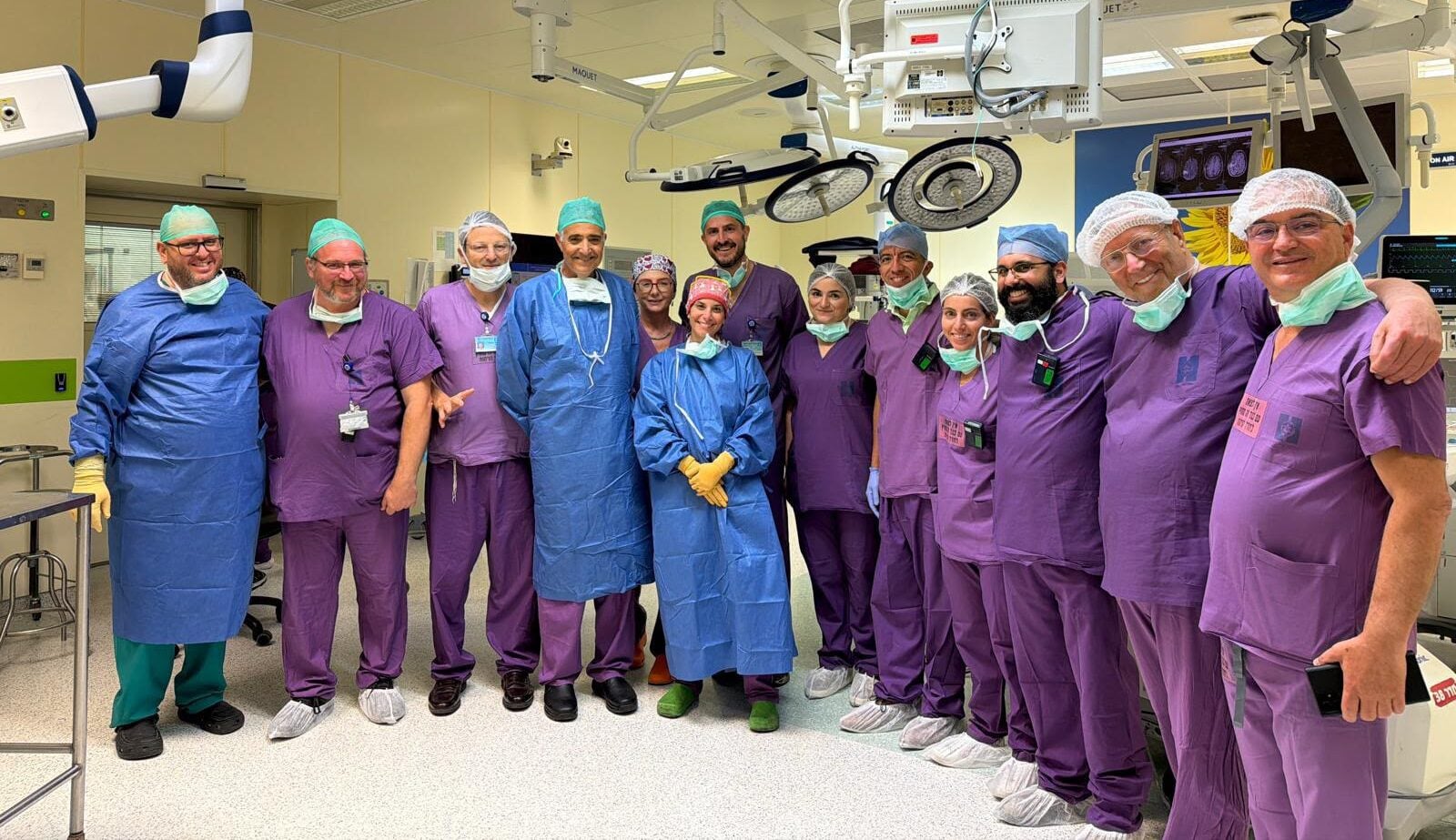
The operation was led by Prof. Yigal Shoshan, director of Hadassah’s Neuro-Oncology and Stereotactic Radiosurgery Unit, together with neurosurgeons and a multidisciplinary team from the operating rooms, Sharett Institute of Oncology, Radiotherapy Institute and Neuropathology Unit. “One of the technology’s greatest advantages is that it integrates naturally with the neurosurgical navigation systems we use every day,” Shoshan explained. “The same system that allows us to perform brain biopsies with millimeter precision also allows us to insert the alpha sources with similar precision into the center of the tumor.”
He said adapting the technology to existing navigation systems was a central part of the development process. After confirming active disease through a biopsy, doctors used the system to precisely insert the alpha sources, enabling “local, precise and minimally invasive treatment, without the need for extensive brain surgery.”
 3+
3+From the Laboratory to Israel’s First Patient
The neurosurgical application was developed through a collaboration between Hadassah’s Neurosurgery Department and Sharett Institute of Oncology and Alpha Tau. Reaching the first patient required laboratory research, preclinical studies in large animals, development of specialized applicators, integration with neurosurgical navigation and repeated operating-room simulations.
“The procedure performed at Hadassah is not only the first treatment in Israel, but the culmination of a research path that lasted years,” Shoshan said. He explained that each stage—from laboratory and preclinical research to developing the applicators and integrating them into navigation systems—was designed to ensure the clinical trial began with the highest possible level of precision and safety. “Seeing the technology reach a patient in Israel for the first time is an exciting moment for everyone who has been part of this journey,” he said.
 3+
3+Tumor That Recurs in Most Patients
Glioblastoma is the most common malignant primary brain tumor in adults. Between approximately 150 and 250 new patients are diagnosed annually in Israel. Despite standard treatment involving surgery, radiation and chemotherapy, the disease returns in the overwhelming majority of patients. According to Hadassah, median survival is approximately 15 to 16 months, while only about 10% of patients survive five years after diagnosis.
Prof. Aharon Popovtzer, director of the Sharett Institute of Oncology, stressed that treatment options for recurrent disease remain extremely limited. “Therefore, every innovative technology that can be examined within a controlled clinical trial is of great importance,” he said. “Combining research, clinical experience and multidisciplinary cooperation is the only way to advance new treatments for these patients.”
 3+
3+Early Results from the United States
A parallel REGAIN trial is underway in the United States. According to interim results from its first three patients, complete local disease control was achieved in the treated area, while two patients showed no remaining signs of the tumor on post-treatment MRI scans. However, these are preliminary findings from a very small number of patients and cannot yet establish the treatment’s effectiveness.
Preclinical studies have also examined whether the treatment could trigger an immune response against tumors elsewhere in the brain, though that possibility remains under investigation.
Next Step: Brain Metastases
Shoshan said the current study focuses on recurrent glioblastoma, but Hadassah is already preparing to expand the clinical program to patients with localized brain metastases, particularly when surgery or stereotactic radiosurgery has failed to control the disease. “We believe that the ability to insert alpha sources directly into the tumor and deliver precise, localized radiation with high biological effectiveness makes the technology particularly suitable for this indication as well,” he said.
Alpha Tau CEO Uzi Sofer called the first Israeli treatment a significant milestone for the company. “We are an Israeli company operating today in medical centers around the world, but our heart remains here,” he said. “For us, there is special significance in seeing technology developed in Israel reach Israeli patients as well. This is not only a scientific or business success—it is also a Zionist mission. It is important to us that innovation born here also be available to patients in Israel.”