




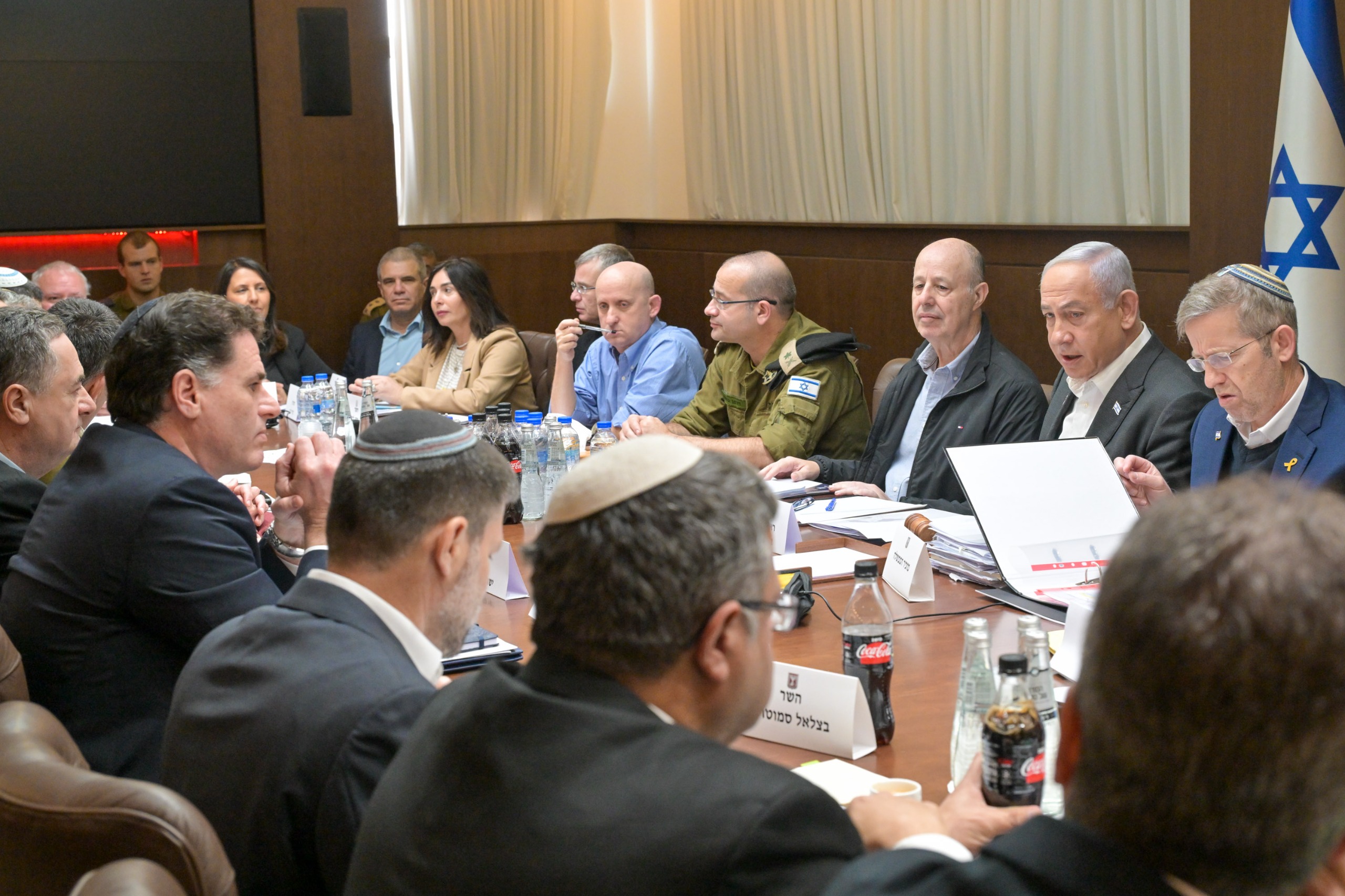
Finance Minister Bezalel Smotrich and Judea and samaria affairs Minister Orit Strook sent an urgent letter today (Monday) to Prime Minister Benjamin Netanyahu demanding an immediate convening of the Security Cabinet and a halt to the implementation of the “roadmap” published by the Board of Peace, until it is amended to meet the war’s objectives and the commitments given to Israel.

According to the two, the official document published over the weekend differs fundamentally from the outline presented to cabinet ministers during the discussions prior to its approval. They claim the Cabinet’s decision was made based on information that does not match the final wording, and therefore a new decision must be made to prevent the implementation of the outline in its current format. According to the letter, without immediate intervention, a security reality contradicting the war goals could be created in the Gaza Strip.
The dispute focuses on the “roadmap” formulated by the Board of Peace as part of the international plan for Gaza. According to the published documents, the outline includes the establishment of a ‘Palestinian’ technocratic committee (NCAG), the gradual deployment of an International Stabilization Force (ISF), phased demilitarization of terror organizations, and a gradual Israeli withdrawal, subject to international verification mechanisms.

In their letter, Smotrich and Strook list seven main gaps between the outline presented to the Cabinet and the published text:
-
Full Demilitarization: They claim there is no requirement in the document for the full demilitarization of the Gaza Strip and the removal of all weaponry from the Strip. Instead, weapons are supposed to be transferred to the responsibility of a new ‘Palestinian’ body—the NCAG—and not to Israel or another non-‘Palestinian’ entity.
-
IDF Withdrawal: According to them, the outline allows the IDF withdrawal to begin alongside the demilitarization process, contrary to Israel’s position that a withdrawal will only take place after the completion of Hamas’s disarmament.
-
Legal Framework: They further claim that the document establishes that the legal framework in the Strip will be ‘Palestinian’ Authority laws, which they say create an infrastructure allowing continued payments to terrorists and Hamas elements even after the change of government.
-
Role of the ISF: The two claim that the ISF force, which was presented to them as a force to assist in demilitarizing the Strip, is actually defined in the document as a buffer force between the IDF and NCAG mechanisms, thereby potentially restricting the IDF’s freedom of action.
-
International Verification Commission (IVC): In addition, they warn against the establishment of an International Verification Commission (IVC), which they claim was not presented to the Cabinet and could include countries acting contrary to Israel’s security interests.
-
Reconstruction: It is further argued that the outline does not condition the reconstruction of the Strip on the completion of demilitarization, nor does it include sufficient oversight mechanisms for construction materials entering Gaza.
-
‘Palestinian’ Statehood: Finally, they object to the document presenting the advancement of a ‘Palestinian’ state as part of the political goals of the process.

In the background of the dispute stands a broader plan promoted by the Board of Peace, which was approved in a UN Security Council resolution in 2025. According to Board of Peace and UN documents, the principles of the outline speak of a gradual and supervised dissolution of all armed organizations, the establishment of a temporary ‘Palestinian’ civil administration through the NCAG, the deployment of an international ISF force, and the start of phased reconstruction of the Strip, alongside an international verification mechanism to assess the parties’ compliance with their commitments.
However, while Board of Peace documents present the outline as based on a phased and verified demilitarization of Hamas and other armed groups, Smotrich and Strook argue that the final text published does not guarantee the principles of demilitarization on which the Cabinet’s decision was based, and therefore cannot serve as a basis for Israel’s policy.
At the conclusion of their letter, the two ministers demand that the government announce it does not accept the roadmap in its current text, urgently convene the Security Cabinet, and pass a resolution preventing the entry of the ISF force into the Gaza Strip until the Board of Peace amends the document to meet—according to them—the war’s objectives and the commitments given to Israel.