


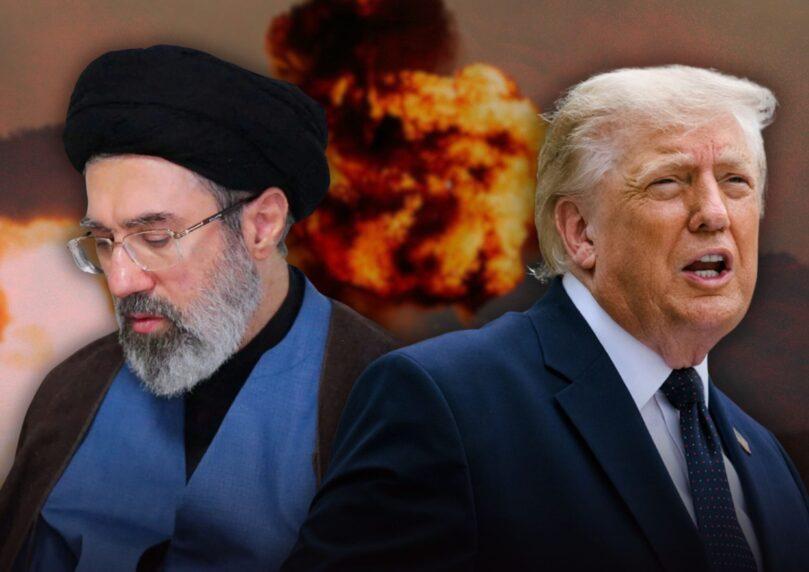

Tensions in the Middle East reached a fever pitch as reports surfaced that Washington and Israel are weighing a major military operation against Iran’s energy infrastructure—even as U.S. embassies across the region urged American citizens to prepare for immediate evacuation. Tehran fired back with sharp threats, a tanker was hit near the Strait of Hormuz, and Kuwait announced it intercepted Iranian missiles.
According to a report published overnight Friday on CBS, the United States and Israel are preparing for one of the most significant strikes yet against Iranian energy facilities. Sources told the network the attacks were being considered for this weekend, though the operation could be delayed until Sunday—before U.S. markets open Monday. Israel has been briefed on the planning and is coordinating with Washington, the report said.
Meanwhile, The Wall Street Journal reported that President Donald Trump has already ordered preparations for renewed strikes on Iran. However, any significant diplomatic developments could delay or even cancel the move, the paper said. One source estimated Trump might still reverse his decision at the last minute. According to the Journal, the president’s main goal is to ratchet up pressure on Tehran until it capitulates, though no details were provided on the nature of the planned attack.
Two sources told CBS that targets under consideration include major energy facilities such as power plants and refineries. White House spokesperson Karoline Leavitt didn’t deny the reports, saying only that “as President Trump said in the Cabinet meeting—the United States will win, and Iran will not have nuclear weapons during his term.”
But later in the day, CBS published a follow-up report citing an Israeli official who said Israel “is not aware of any decision to fully resume military operations” and that no American request to join military action against Iran has been received.
Against this backdrop, U.S. embassies in countries across the region—including Israel, Bahrain, Iraq, Jordan, Kuwait, Lebanon, Oman, Qatar, Saudi Arabia, the United Arab Emirates, and Egypt—issued unusual warnings to their citizens. The notices said tensions in the Middle East could rapidly escalate in unpredictable ways, and recommended American citizens consider leaving the region or at least be ready for immediate departure. The warnings also cautioned about flight cancellations, airspace closures, and disruptions to air travel, after some airlines already postponed resuming operations and others canceled routes.
Tehran didn’t stay silent. The Tasnim news agency quoted a “senior security official” who called the American media reports about a planned attack “a kind of madness.” Iran has already completed plans for a sweeping response that would target critical infrastructure in Israel as well as American energy facilities across the region if military action is taken against it, he said.
Alongside the war of words, events unfolded on the ground. Britain’s United Kingdom Maritime Trade Operations (UKMTO) reported this morning that a tanker was hit by unidentified munitions about 20 kilometers from the city of Lima in Oman, near the entrance to the Strait of Hormuz. The ship’s engine room was damaged and it lost control, but no crew casualties were reported. Shortly after, Kuwait’s military announced it intercepted a missile attack launched from Iran.
Meanwhile, Iran’s Revolutionary Guards declared overnight that the Strait of Hormuz is “closed” to traffic. Their statement said that as long as American threats and involvement in the region continue, free passage through the strait will not be permitted. Ali Akbar Ahmadian, secretary of Iran’s Supreme National Security Council, escalated the rhetoric further, claiming continued American pressure would affect not just the Strait of Hormuz but other shipping routes as well. The global economy, energy markets, and the United States itself will pay the price, he said.