


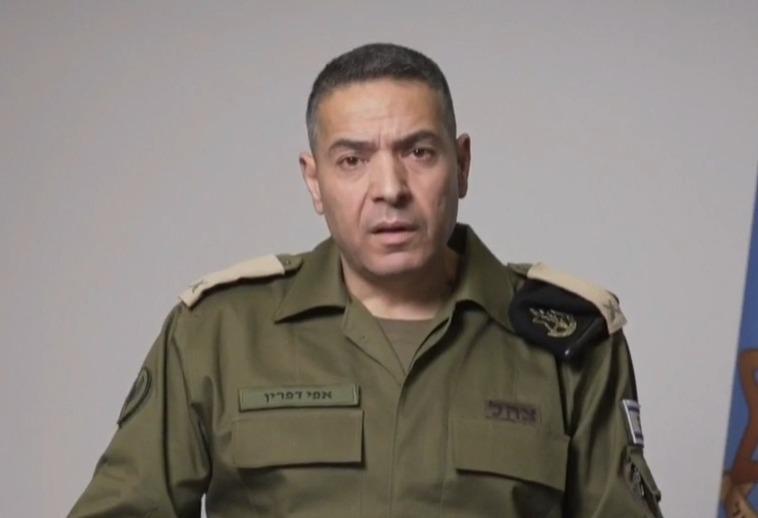

IDF Spokesman Colonel Efi Defrin has issued a new directive freezing the activity of numerous digital accounts across the military, including social media accounts of various units and frameworks. Under the directive, only the official accounts of the IDF itself, along with accounts of branches, arms, and commands at the command framework level, will be permitted to operate.
In a letter signed by Defrin, the spokesman noted that in recent years, websites and social media accounts—including Instagram, Facebook, Telegram, and TikTok—have been opened and operated by various military frameworks. According to the IDF Spokesman’s Office, some of these accounts were opened without prior approval and without oversight or accompaniment by the spokesperson’s apparatus, leading to gaps.


 1+
1+The directive stipulates that digital account activity by divisions, brigades, and headquarters frameworks will be frozen, and that any deviation from the directive will require approval from the IDF spokesman alone. The IDF Spokesman’s Office explained that the move is intended to reorganize the military’s social media activity, particularly against the backdrop of the election period and the need, they said, to maintain statesmanship and message uniformity.
The decision comes after several public controversies involving IDF personnel and social media activity. In one case, a female soldier from the IDF Spokesman’s Office was photographed with social media influencer Braden Peters, known as “Clavicular,” who gained notoriety for controversial documentation. The soldier, who served in the international media branch and managed social media activity, received a suspended confinement punishment and was transferred from her position.
 1+
1+Another controversy erupted after a social media star posted a video showing himself dancing while dressed in IDF uniform, at a booth operated as part of the “Yoter” festival for recruits. Following public criticism, the video was removed, and the IDF said at the time that the booth was set up without required approval, and that the soldiers’ behavior at the site did not represent IDF values and was inconsistent with the event’s purpose.
Now, the IDF Spokesman’s Office is seeking to consolidate digital activity under tighter supervision, reduce independent activity by units and frameworks in the military, and ensure that messages distributed on behalf of the IDF on social networks are transmitted only through official channels.
The directive marks one of the IDF’s most significant efforts to centralize its online messaging, signaling that official communication—not viral content—will define the military’s digital presence going forward.