


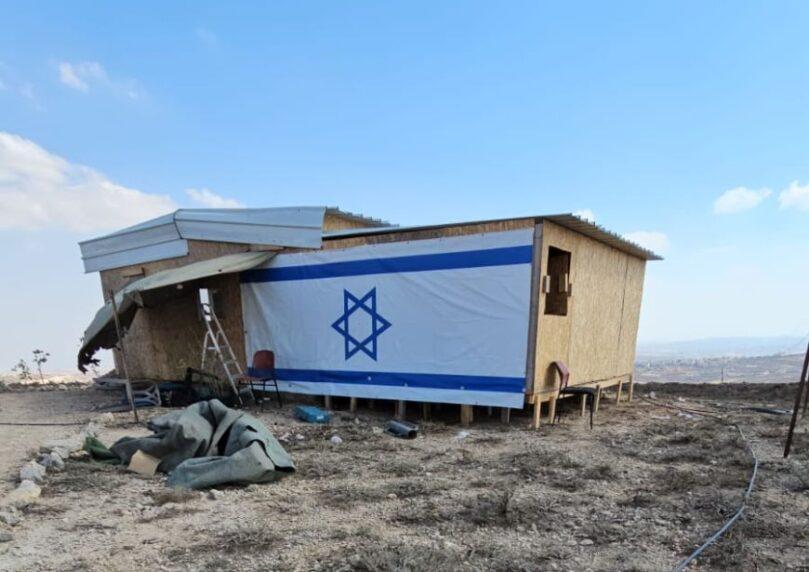

The word “settlers” was once among the most noble terms in the pioneering settlement enterprise. It belonged to the lexicon of redeeming the land, conquering labor, conquering the wilderness, and conquering the pasture. These weren’t merely descriptive terms, but foundational words charged with mission, renewal, and redemption—even in the mouths of secular pioneers.
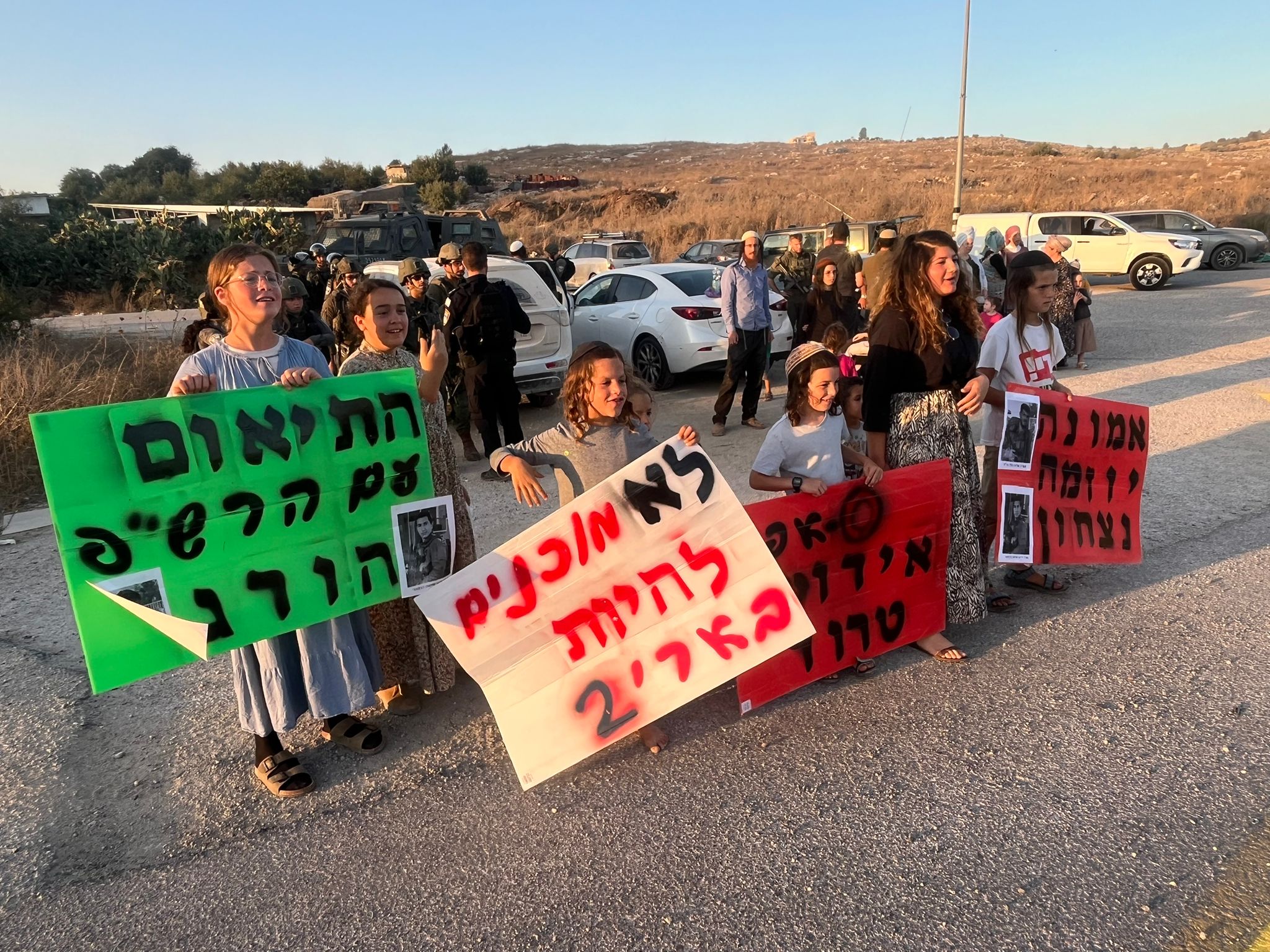
These words carried no negative baggage then. On the contrary: they were a natural part of the language of working settlement, from the day of “taking to the land” celebrated in kibbutzim as the “Settlement Holiday,” through romantic descriptions of “the settlers on the mountain,” to headlines and publications of the kibbutz movement celebrating their “Settlement Day.” On these words, the State of Israel was built.
But less than forty years after the state’s founding, around the rise of Gush Emunim and the 1977 upheaval, a politicization and blackening of these foundational concepts began. The new settlers were no longer perceived as the peaceful successors of the historical “settlers,” and the words themselves were gradually quarantined in public discourse as terms linked to violence, threat, and condemnation.
The current wave of headlines about “settler violence” and “Jewish terror” has intensified dramatically since the Simchat Torah massacre, and sharpened particularly in recent weeks. This is the current peak of an ongoing linguistic and historical reversal. Every few hours another report and another commentary appears, sometimes even before the facts are fully clarified.
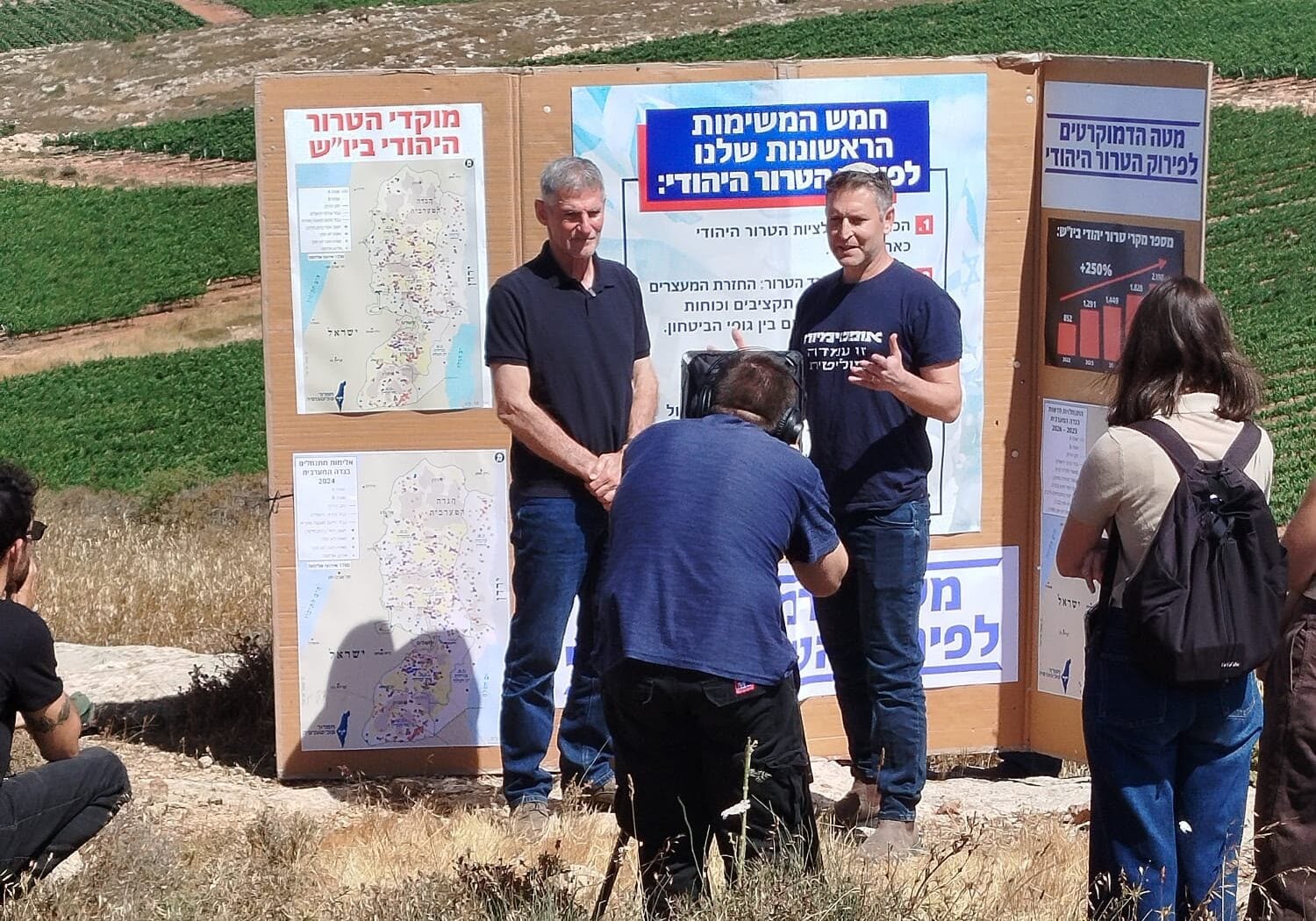
Thus, a specific incident immediately becomes a public category. An act by an individual or group is attributed to an entire public. There’s no discourse about “Tel Aviv violence” or “kibbutznik violence.” Only one Jewish public in Israel has been turned, as a category, into a violent public, a fixed character in a plot that’s been written for more than fifty years.
Just flip through countless headlines in the press since the seventies, eighties, and nineties—the decades when this campaign gained momentum, partly encouraged by new “peace movements” that emerged then, mainly to bring down right-wing governments. “Jewish terror,” “the Jewish underground,” “militias,” caricatures depicting the settler as an armed thug, sometimes even using imagery borrowed from European history, covers dealing with “violent settlement,” and articles about “the new anti-Semites.”
Each case dealt with a different context, but their accumulation created over the years a stable public lexicon into which almost every new incident was slotted. This wasn’t a random series of headlines, but a consistent accumulation of images, concepts, and symbols that built over decades a defamatory public language.
Parallel to the shaping of media discourse, a new legal discourse around settlement also began to take shape. The Karp Report, prepared at the initiative of then-Attorney General Yitzhak Zamir, was one of the influential documents in this defamation campaign. Its impact extended beyond the legal sphere into broader public discourse, and is effectively felt to this day.
The roots of this reversal lie in the political and cultural upheaval of the late seventies. Jewish settlement in Judea and Samaria didn’t just open a dispute over borders, but also a battle over the story of Jewish revival in the Land of Israel. From the moment settlement became the focus of political controversy in Israel, the vocabulary used to describe it also gradually changed.
Thus, “settlers” ceased to be a word of pioneering and gradually became a loaded label. “Settlement” distanced itself from its biblical and Zionist meaning. Even the term “conquest,” which for decades was an integral part of the ethos of conquering labor, land, wilderness, and pasture—inspired by biblical conquests of the land—remained almost only in its accusatory political meaning.
The land itself was also defamed. Judea and Samaria, Gaza and Sinai, the cradle of the Bible and the territories where foundational chapters in the growth of the Jewish nation took place, were gradually presented in public discourse not as homeland, but primarily as a conflict zone. Hebron, Shiloh, Beit El, Elon Moreh, and Mount Gerizim were pushed behind headlines about confrontations, checkpoints, and disturbances of order.
The image built for settlers also stuck to the places where they live. They too began to be perceived, in many eyes, first and foremost through venomous campaigns, and not through historical, biblical, and Zionist continuity.
The letter from hundreds of former senior security officials to U.S. President Donald Trump, in which the escalation of “Jewish terror” was presented as a threat to Israel’s security, American interests, and regional stability, illustrates that even today this isn’t just a discussion about specific incidents. It’s the continued existence of that same public lexicon built over decades.
The current storm isn’t just a debate about a series of events. It exposes how complete the linguistic reversal has become: a word that once expressed the pinnacle of Zionist fulfillment today appears almost always adjacent to the words “violence” or “terror.”
On the soil of the homeland, a media, political, and territorial battle is being waged, but in the field of language an equally profound struggle is taking place. Restoring the correct meaning of words isn’t just a semantic correction, but a necessary condition for restoring truth to the enterprise of settling the land and to words that have been stripped of their original meaning.