


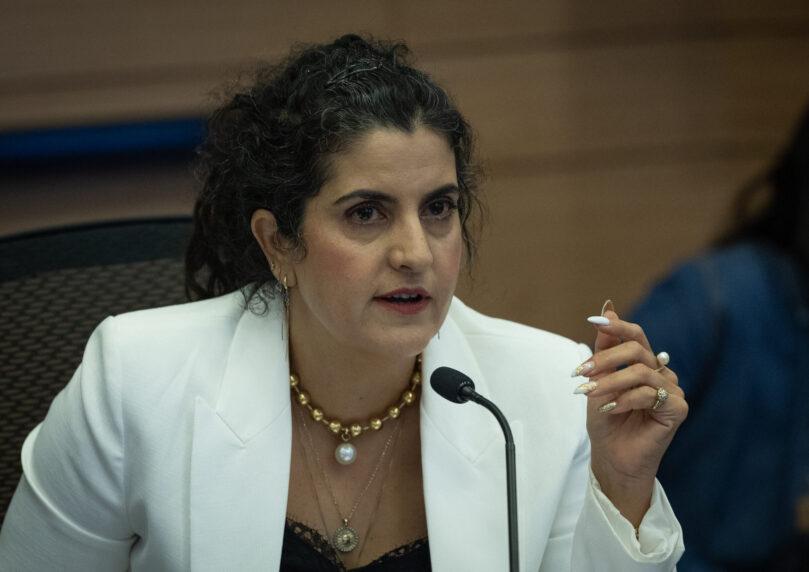

The Knesset’s legal advisor asked Israel’s High Court of Justice on Monday to reject a petition demanding a freeze on the controversial law overhauling the IDF’s investigative unit for soldiers—known by its Hebrew acronym Mach”ash—arguing that the law won’t actually take effect for another eight months.
In her response to the petition, Sagit Afik argued that during the interim period, only preparatory steps will be taken, including establishing an appointments committee, selecting a director, and approving a budget. Therefore, she wrote, there’s no irreversible harm that would justify an injunction halting implementation at this stage.


 3+
The legal wrangling over the petition is part of a broader wave of challenges to legislation the coalition rushed through in the Knesset’s final week before recess. Afik’s opinion, submitted Monday morning, pushes back against petitioners’ demands for an interim order freezing the law.
According to Afik’s position as reflected in the legal opinion, the justices should refrain from issuing an interim order delaying the law’s implementation. Her central argument: the law doesn’t take effect immediately anyway—it has an eight-month preparation period built in.
 3+
The response argues that the preparation period is designed to allow the establishment of Mach”ash in its new format, including selecting members of the appointments committee, choosing the unit’s director and commissioner, and approving the department’s budget. According to Afik, these provisions “prepare the ground for making the necessary arrangements for Mach”ash to begin operating in its new format on the effective date.”
 3+
The Knesset’s legal advisor emphasized that no immediate change in the unit’s operations is expected at this stage, and that actions taken during the transition period are preparatory only. The response states that if the petition is ultimately accepted, it will be possible to halt the steps taken under the law, and that the tenure of officials selected will be subject to the outcome of the legal proceedings.
On the other hand, according to the opinion, granting an interim order could damage the ability to complete preparations on schedule. Afik argued that if the order is granted and the petition is later rejected, “the preparation period the legislature set for establishing Mach”ash in its new format will be significantly shortened,” in a way that could make it difficult to complete appointments, budgeting, and necessary preparations before the law takes effect.
 3+
The response further argues that the harms the petitioners pointed to are not certain and irreversible damages, but rather are based on future scenarios. According to the filing, “the petitioners’ claims regarding expected harms are speculative,” and don’t justify freezing a law the Knesset enacted before the petition has even been decided on its merits.
In conclusion, the Knesset’s legal advisor asked the court to reject the request for an interim order and allow preparations for implementing the law to continue during the eight months set before it takes effect. The response did not take a position at this stage on the petition’s chances of success itself—the argument focused on the balance of convenience and the absence of irreversible harm during the transition period.