


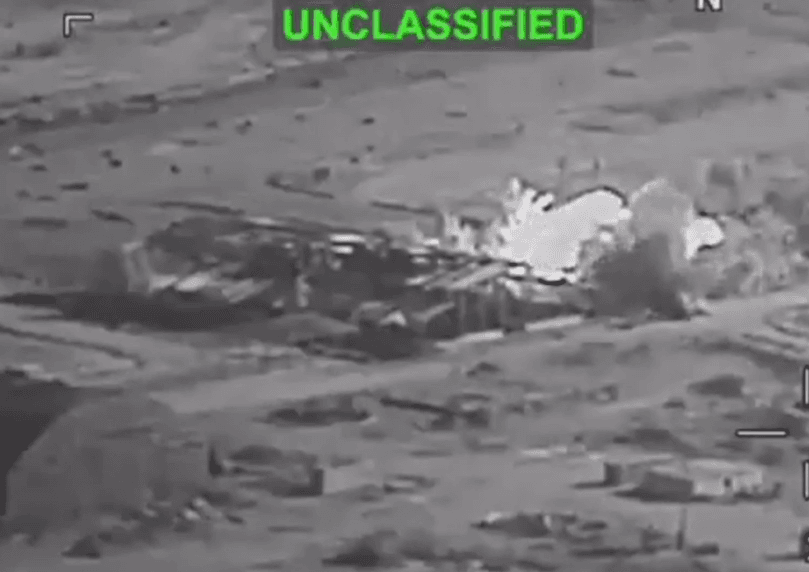

The U.S. military struck targets in Iran overnight Thursday into Friday for the 13th consecutive night, as threats mount between Washington and Tehran, with the terror regime rejecting ceasefire offer from President Donald Trump.
Explosions were reported in cities across southern and southwestern Iran, alongside air defense activations in the capital Tehran.
Meanwhile, The New York Times reported that Iran rejected a ceasefire proposal from Trump that was delivered through Iraqi Prime Minister Ali al-Zaidi. According to the report, based on Iranian and Iraqi officials who spoke anonymously, al-Zaidi traveled to Iran with a senior delegation and met with top regime officials in Tehran.
The meetings included Iranian President Masoud Pezeshkian, Parliament Speaker and negotiating team chief Mohammad Bagher Qalibaf, and Foreign Minister Abbas Araghchi. Details of the ceasefire proposal were not disclosed, but Iranian sources told the paper it was the only offer on the table—and that the regime in Tehran isn’t interested in a temporary deal that doesn’t settle the question of control over the Strait of Hormuz.
Iranian Foreign Minister Araghchi addressed the Iraqi prime minister’s visit, calling it “significant given the current circumstances in the region.” He said al-Zaidi shared his “positions and impressions” from his visit to Washington, but claimed the problem isn’t message delivery between the sides. “The problem is not conveying messages,” he said. “The problem is America’s perception, which is illogical and greedy.”
The overnight strikes come after roughly two weeks of sustained escalation in exchanges of fire between the United States and Iran. According to reports, the U.S. military is targeting military bases and other infrastructure in Iran, while Tehran is responding with drone and missile attacks against American targets and sites in Gulf states and Jordan. At the same time, Iran continues to threaten shipping lanes in the region, including the Strait of Hormuz.
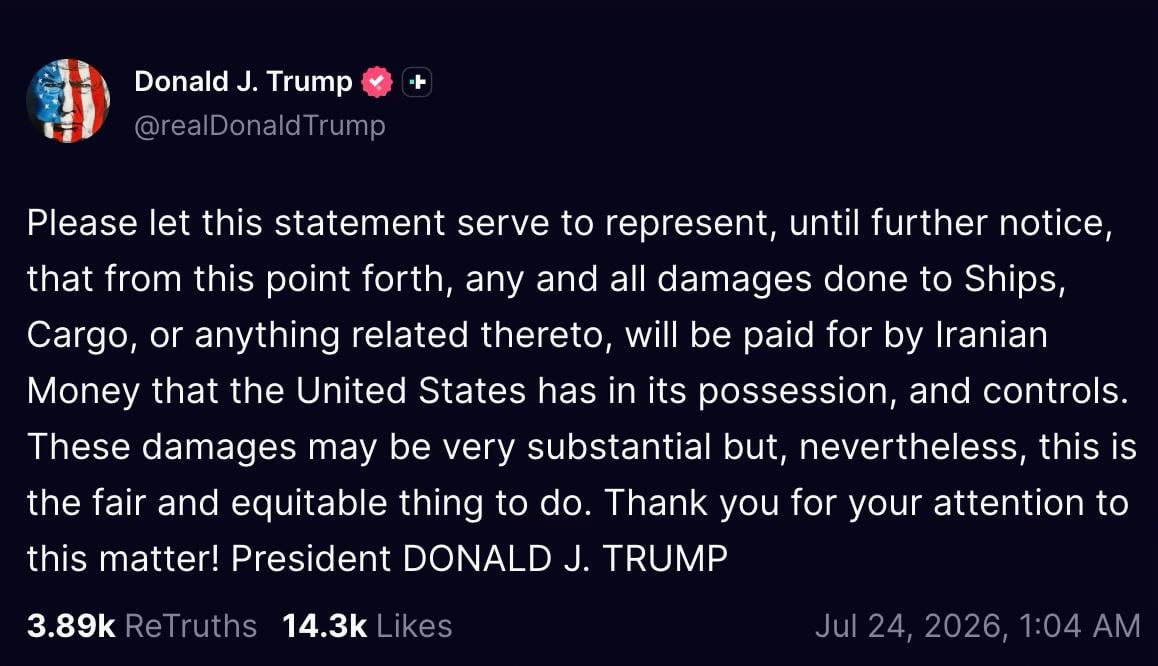
In a post on Truth Social overnight, Trump announced that damages to ships, cargo, or anything related to attacks on vessels will be paid using Iranian money held by the United States. “Until further notice, from this point forth, any damage caused to ships, cargo, or anything related thereto, will be paid for using Iranian Money that the United States has in its possession, and controls” Trump wrote. He added that “These damages could be very significant, but nevertheless, this is the fair and equitable thing to do.”
President Trump’s overnight post:

Two Iranian sources said the regime’s armed forces are preparing for the possibility of expanded war if Trump follows through on threats to strike Tehran and critical infrastructure in the country. According to them, in such a scenario Iran is expected to widen the fighting regionally, including the possibility of an attack on Tel Aviv. Additionally, the sources claimed Tehran may ask the Houthis in Yemen to close the Bab al-Mandab Strait, which connects the Gulf of Aden to the Red Sea and is considered one of the region’s strategic shipping routes.
U.S. Central Command (CENTCOM) posted a statement on X as the wave of strikes began. The statement said that U.S. forces began another night of strikes against Iranian military targets at 6:45 p.m. Eastern Time. This is the 13th consecutive night of strikes aimed at holding Iran accountable and reducing threats from the Revolutionary Guards against commercial shipping.
About two and a quarter hours later, Central Command announced the wave of strikes was complete, publishing footage of American attacks on Iran. According to the statement, targets included Iranian military headquarters, drone storage facilities, communications networks, coastal surveillance sites, and naval capabilities. The U.S. military said the strikes were aimed at reducing the threat Iran poses to civilian and commercial vessels transiting the Strait of Hormuz.
The U.S. military added that the international waterway in the Strait of Hormuz remains open to traffic despite attacks by the Revolutionary Guards. According to the statement, commercial vessels continue to sail freely through the strait with U.S. military support.
Amid the strikes and threats, Western intelligence agencies assessed Thursday that Iran may try to strike Israel first in an attempt to drag it into confrontation. Amid preparations for possible escalation over the weekend, Prime Minister Benjamin Netanyahu is expected to convene the security cabinet today.
Trump himself said Thursday he’s considering “a massive attack, bigger than ever” against Iran, adding that he’s “close to making a decision.” He said the United States is ready to act. Trump also addressed the possibility of Israeli involvement, saying Israel “will join in two minutes if I ask them to,” but added “we don’t need anyone.”
Israeli lawmaker: “We all know we’re on the verge of a strike on Iran. Maybe even this weekend.”
In Israel, there’s heightened alert ahead of possible escalation. Likud MK Moshe Saada said Thursday that “We all know we’re on the verge of a strike on Iran. Maybe even this weekend.” Meanwhile, several local authority heads announced the opening of municipal shelters, though the Home Front Command has not issued updated guidelines or ordered shelters opened.
At this stage, the IDF is preparing for multiple scenarios, and the security establishment is on high alert ahead of the possibility of rapid changes in the regional security situation.