


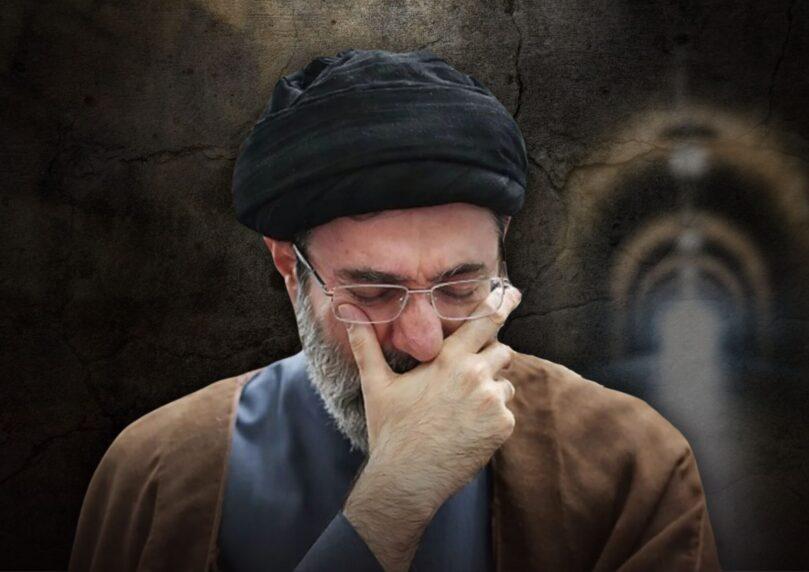

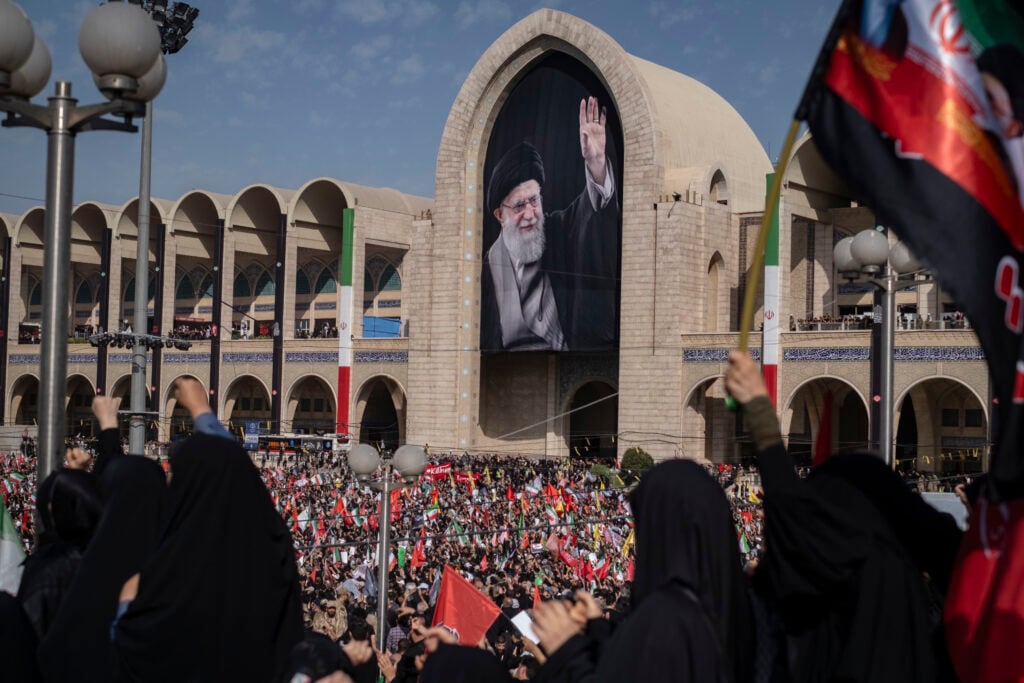
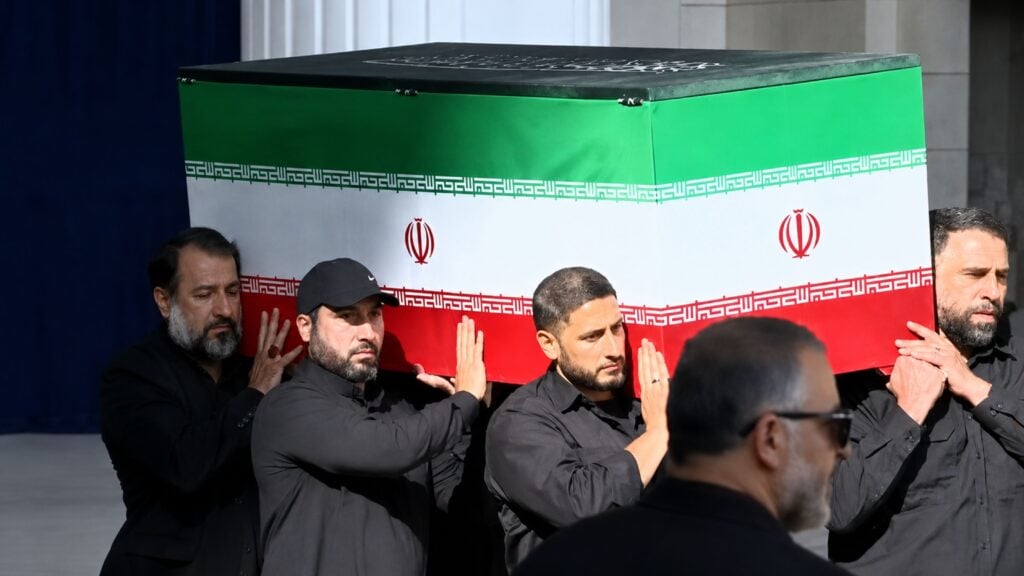
Thousands of Iranians accompanied former ‘Supreme Leader’ Ali Khamenei on his final journey yesterday (Thursday), but the seat of his son and successor, Mojtaba Khamenei, remained empty. His prolonged absence from public view since the strike that killed his father raises weighty questions about his health, his real grip on power, and the regime’s deep fear of another assassination at the highest leadership level.

 2+
2+For six days of ceremonies, Mojtaba Khamenei made no public appearance. He avoided leading masses of supporters, didn’t stand alongside his brothers, and was absent from his father’s burial. The absence ignited feverish speculation on social media: AI-generated videos purported to show him disguised in the crowd, photos of lookalikes circulated as documentation of him, and protesters called out his name at ceremonies as declarations of loyalty.
Official Iranian sources insist Mojtaba is recovering from his injuries and managing the fateful negotiations with Washington from the shadows. The reality appears far more complex. Experts believe paralyzing security paranoia is preventing him from appearing. Ali Vaez of the International Crisis Group says his absence indicates either serious concern for his safety or significant injuries from which he hasn’t yet recovered.
 2+
2+Tensions also erupted in the streets. Hardline factions within the regime are now accusing those conducting negotiations with the West of betraying the late Khamenei’s directives. During the funeral, stones were even thrown at Foreign Minister Abbas Araghchi and President Masoud Pezeshkian. These incidents mark deep rifts in the leadership and illustrate the heavy price of lacking a present, authoritative leader.
Mojtaba’s absence isn’t just a security matter—it exposes the heart of Iran’s crisis: the principle of clerical rule requires the presence of a supreme authority. Without him, the system loses its anchor of stability. Moreover, Mojtaba’s father used to mock Western leaders who “disappeared” during crises. Now his son finds himself in exactly that position, handing his rivals and critics a powerful rhetorical weapon.
 2+
2+Mojtaba functions as an arbiter behind the scenes among security elites. A prolonged absence could lead to two possibilities: either he’s running the country with a firm hand without needing public appearances, or he’s merely a fictional figure designed to mask power struggles among the Revolutionary Guards generals.
The regime may have deliberately chosen to hide Mojtaba to prevent his assassination. In such a scenario, he becomes a “ghost figure”—physically protected but politically vulnerable, since it’s hard to demonstrate loyalty to a leader no one knows is alive or actually making decisions.