


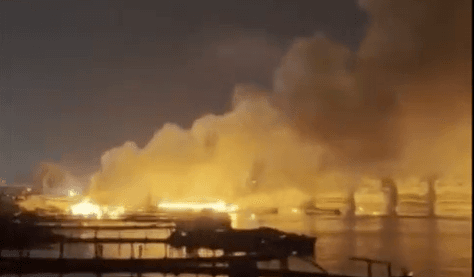

The U.S. Central Command announced overnight Wednesday that American forces began strikes against Iran under orders from President Donald Trump. The operation aims to degrade Iran’s ability to threaten freedom of navigation in the Strait of Hormuz, following attacks on commercial vessels in the region. A U.S. official said the strikes included cruise missile attacks on two railway bridges in northern Iran—a military action marking a significant escalation compared to the period before April 8, when a ceasefire was still in effect.
The Revolutionary Guards claimed responsibility for strikes on American bases in Kuwait and Bahrain. Pro-Iranian media reported explosions at the Fifth Fleet headquarters in Bahrain and air raid sirens at a U.S. base in Jordan. Authorities in those countries activated air defense systems and instructed residents to remain in protected areas.
President Trump, flying back to the U.S. after a NATO summit in Turkey, spoke from Air Force One and said the Iranians reached out requesting negotiations. Trump expressed doubt about their credibility but emphasized the strength of the American response: “We hit them significantly. Every time they hit us, we respond with 20 times the force.” In a post on Truth Social, he added: “If it happens again, it will be much worse!”
Iranian Parliament Speaker Mohammad Bagher Ghalibaf declared on X: “America has not learned that bullying comes at a high price. If you strike, you will get hit.” Iranian Foreign Minister Abbas Araghchi said the country would respond with “action” to Trump’s criticism. Araghchi also thanked the Iraqi government and religious authorities there for the “warm hospitality” extended to them following the death of Supreme Leader Khamenei, emphasizing the deep ties between the nations.
Meanwhile, Fox News host Mark Levin claimed Iran is responsible for the ceasefire’s collapse and called it a “terror regime” that should be “eliminated.” He expressed satisfaction that massive sums of money were not transferred to the Iranians. However, opposition voices emerged in the U.S. as well: Senator Bernie Sanders called for ending the war, labeling the campaign “irresponsible” and warning it would cost lives and waste taxpayer money.
The current crisis comes after months of instability following the death of Supreme Leader Ali Khamenei in late February. Since then, Tehran’s leadership has suffered from a power split: the Revolutionary Guards represent the central force driving the aggressive line, while more moderate political figures—like former Foreign Minister Mohammad Javad Zarif—have been pushed to the margins. Experts like Banafsheh Zand point out that even if Iran seeks negotiations, it’s unclear whether those sitting at the table hold the authority to enforce an agreement against military forces on the ground.
Meanwhile, Trump conducted a “plane swap” at Mildenhall Air Force Base in Britain, switching to the new Air Force One gifted by Qatar after arriving from Turkey on the old aircraft. The president explained the move was planned to allow American troops at the base to tour the new plane, and that it had nothing to do with security considerations.