


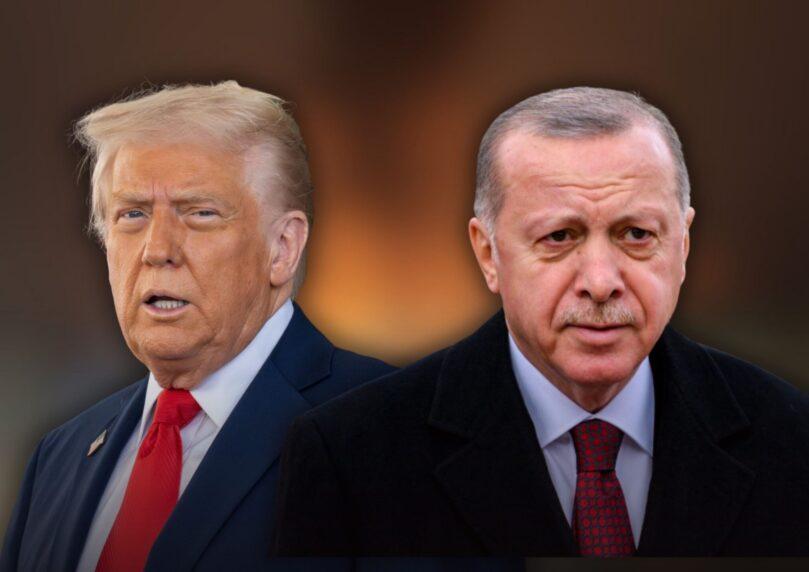

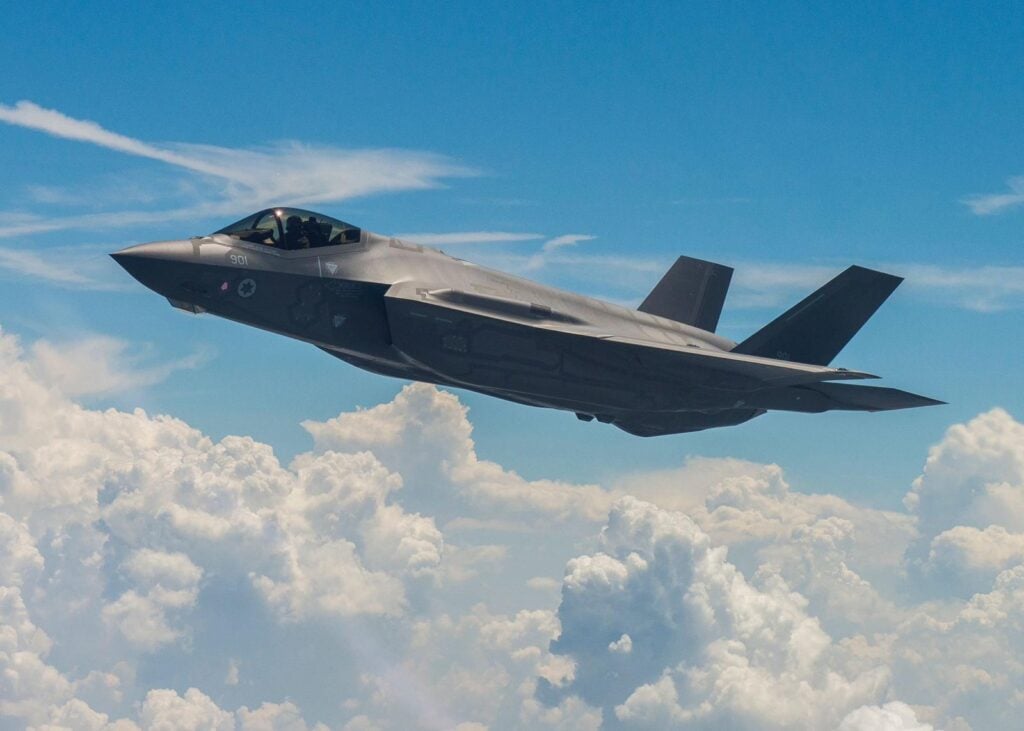
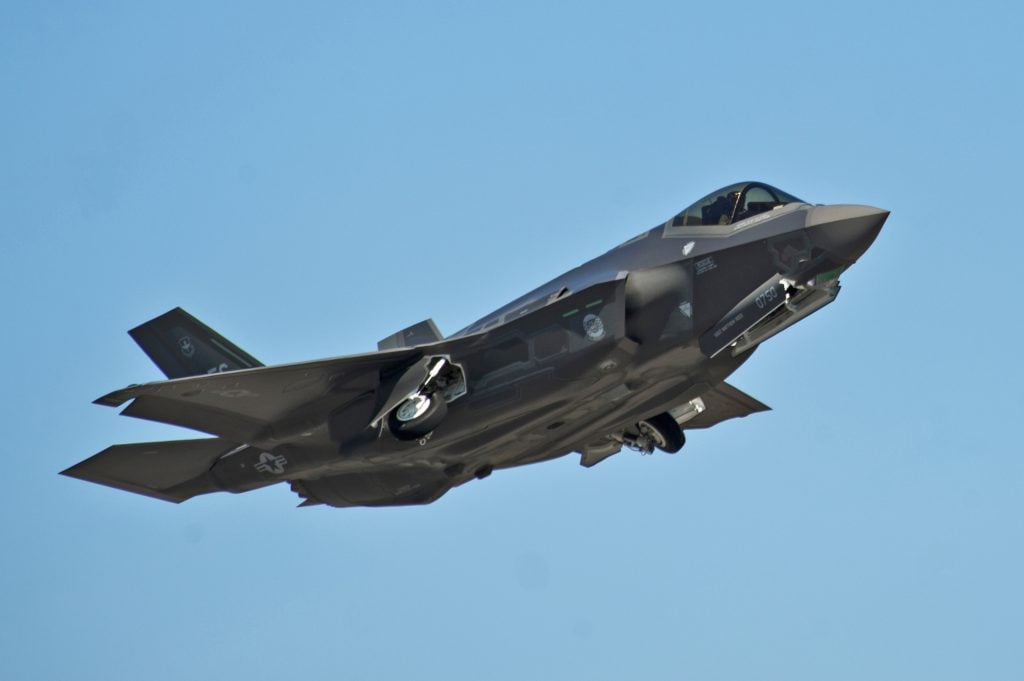
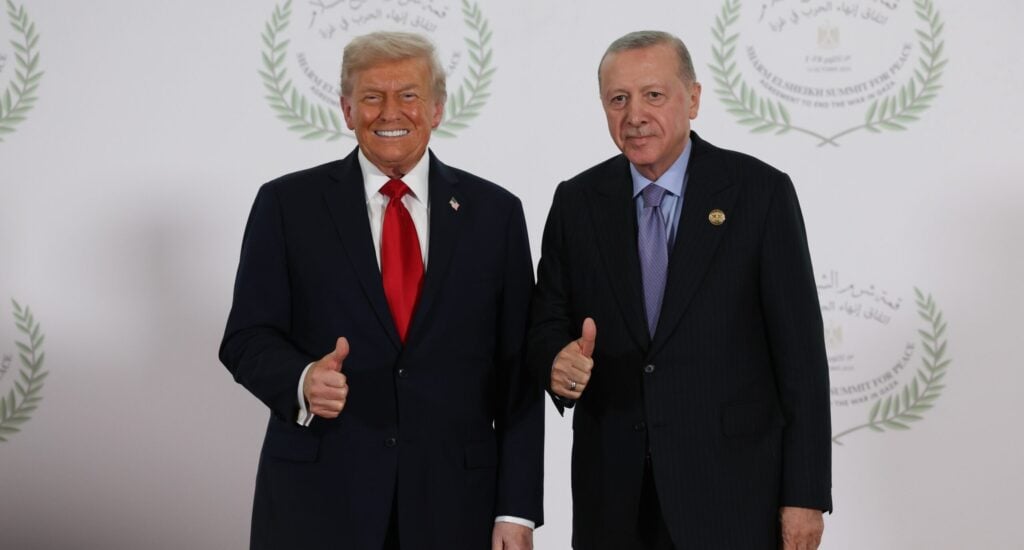
President Donald Trump is preparing to tell his Turkish counterpart, Recep Tayyip Erdoğan, that he’s ready to bring Turkey back into the F-35 stealth fighter program ahead of this week’s NATO summit in Ankara. The decision marks a sharp reversal in U.S. policy—overturning the economic and security embargo Trump himself imposed seven years ago on national security grounds. Four senior administration officials confirmed the move was finalized after weeks of behind-the-scenes work by defense officials, though Trump is expected to face serious legal hurdles and strong resistance on Capitol Hill, the New York Times reported Tuesday.

 6+
6+According to administration sources, the move could be launched through an exchange of formal letters between the two leaders during Trump’s visit to Turkey. Vice President J.D. Vance recently confirmed that the president has directed administration officials to find a workaround to restrictions in order to deliver the jets Erdoğan has long coveted.
Vance said the matter has been referred to Defense Secretary Pete Hegseth for review: “Pete and the whole team are looking at it right now, because there are certain things we need to verify actually happened if we want to comply with American law. The president has asked us to do that.”
 6+
6+Behind the scenes, the deal hinges on finding a legal loophole in a 2020 U.S. law that bars the sale of F-35s to Turkey as long as the Russian S-400 defense system remains in its possession. To bypass the obstacle without forcing Erdoğan to admit failure, defense officials in Washington are examining a creative mechanism: transferring the Russian missile batteries—most of which are still packed in their original shipping containers and have never been activated—to a third party, or alternatively, leaving them in Turkey while dismantling critical components that would render the system unusable. This controlled neutralization would allow President Trump to declare to Congress that Turkey is in compliance with the letter of the law, thereby authorizing delivery of the stealth fighters locked in U.S. warehouses.
 6+
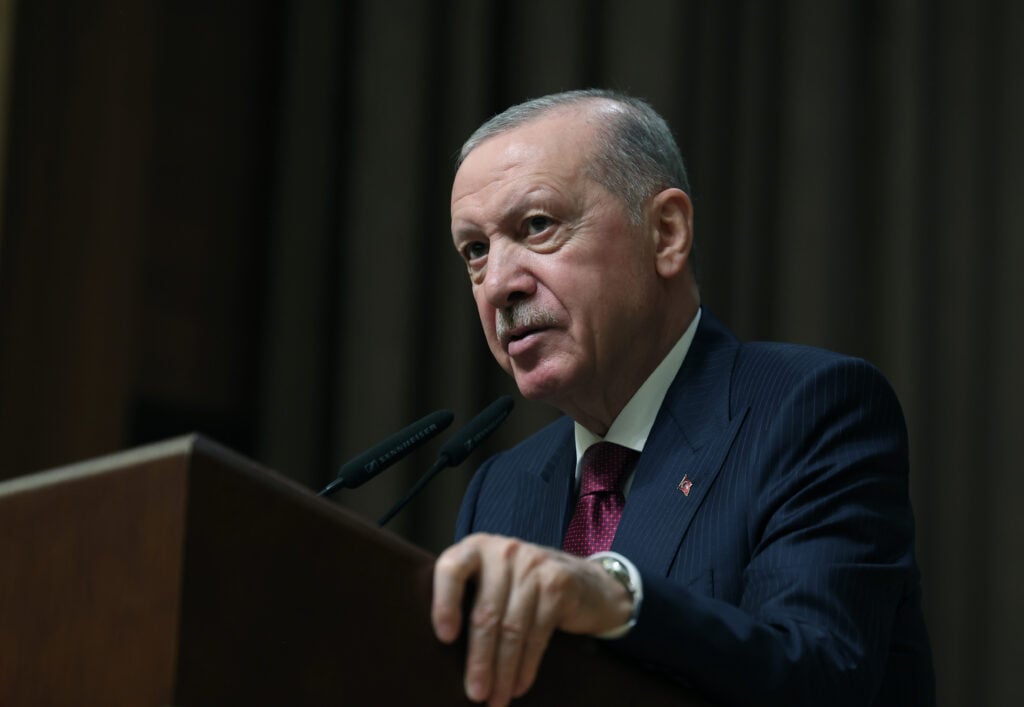
6+Trump himself addressed the F-35 issue in a recent Oval Office meeting with NATO Secretary General Mark Rutte, declaring that he plans to bring Erdoğan a gift that will make him “very happy,” later adding tersely: “We’ll work it out.”
The American plan is drawing fierce international opposition, led by Israeli Prime Minister Benjamin Netanyahu, who sharply attacked the move in an interview with Fox News: “Turkey is a great country, but it is ruled by a man who openly calls for the destruction of Israel. He occupies half of Cyprus, a NATO country. He threatens Greece, another NATO country, and he openly talks about conquering Jerusalem.”
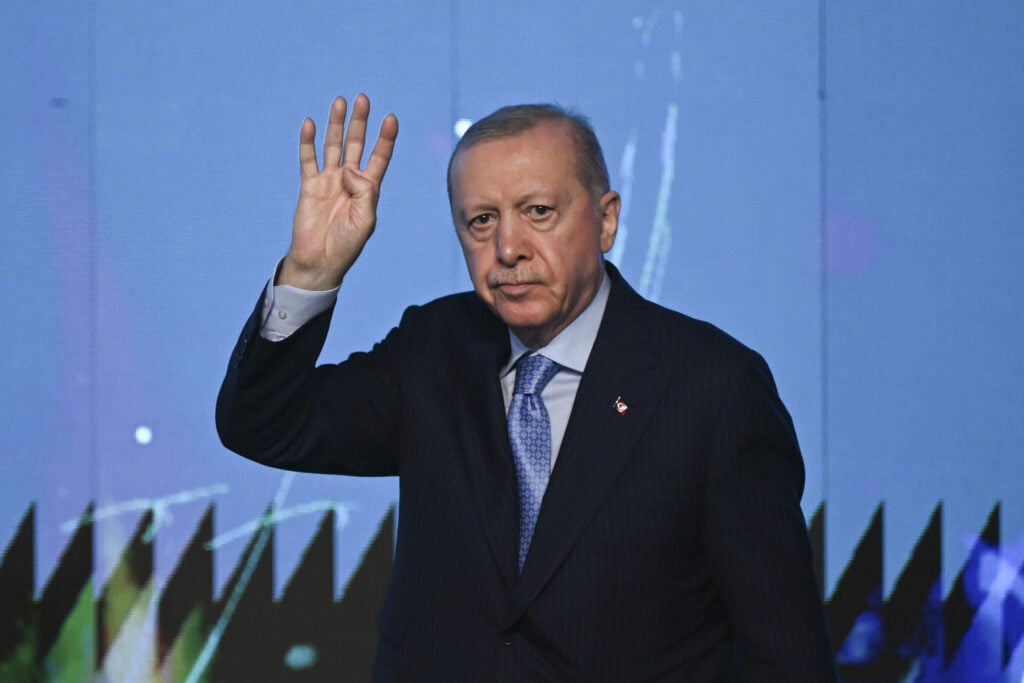 6+
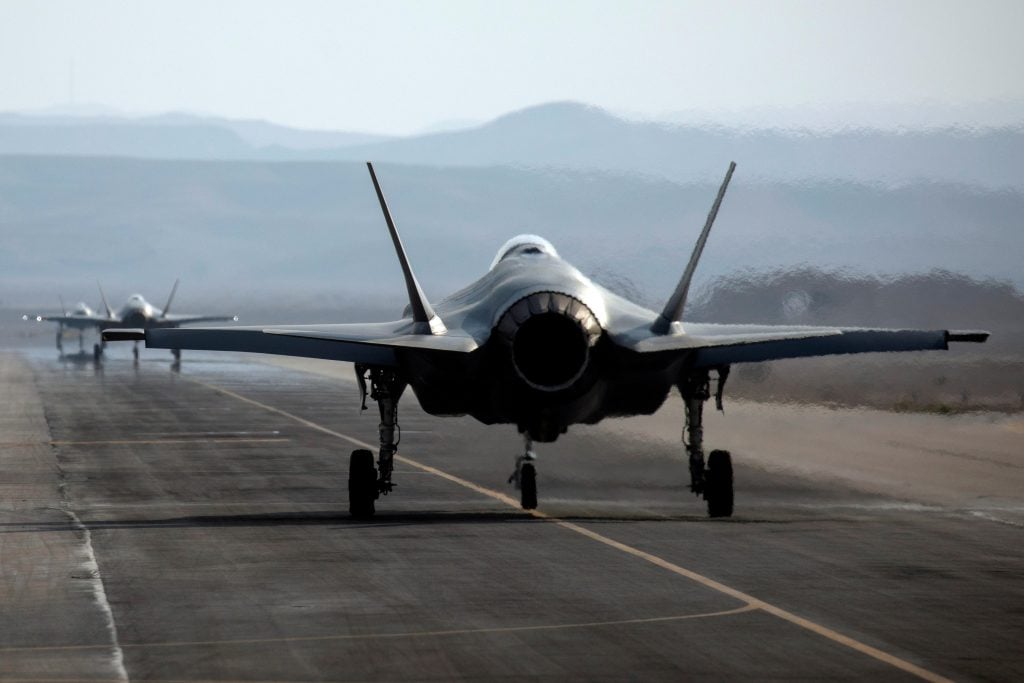
6+The main obstacle facing the administration is a law Congress passed in 2020 that completely prohibits the sale of F-35s to Turkey unless the administration formally determines that the Russian systems are no longer in its possession. To circumvent this restriction, a source involved in the talks revealed that Turkey is considering transferring its S-400 systems—many of which are still in their original shipping containers—to a third party.
A second administration official emphasized that the mechanism has not yet been finalized. A previous proposal to transfer them to Ukraine collapsed, and now it appears that neither Trump nor Erdoğan would agree to sell these powerful Russian systems to Kyiv. An alternative proposal under consideration is neutralizing the systems by removing critical components.
 6+
6+The current crisis began in 2019, during Trump’s first term, when Turkey was unceremoniously kicked out of the prestigious F-35 program following its decision to purchase advanced S-400 air defense systems from Russia. The heavy concern in Washington and NATO was that Turkey would train the Russian radar systems on the new F-35 jets, thereby allowing Moscow to learn the stealth capabilities and advanced missile systems of the American aircraft—an unprecedented security breach.
In 2019, the White House made its position clear in an official statement, which cost the U.S. about half a billion dollars due to the termination of the Turkish partnership: “The F-35 cannot coexist under the same roof with a Russian intelligence collection platform that will be used to learn about its advanced capabilities. Turkey has been a longstanding partner and trusted NATO ally for over 65 years, but accepting the S-400 undermines commitments that all NATO allies have made to move away from Russian systems.”
 6+
6+At the same time, the administration imposed sanctions on Turkey’s defense procurement agency, which remain in effect to this day, while F-35 jets already paid for by the Turks remain stored in the United States unclaimed. Trump never accepted the decision, routinely blamed his predecessor Barack Obama for the conditions that led to the crisis, and since returning to the White House has been exploring ways to lift the sanctions.
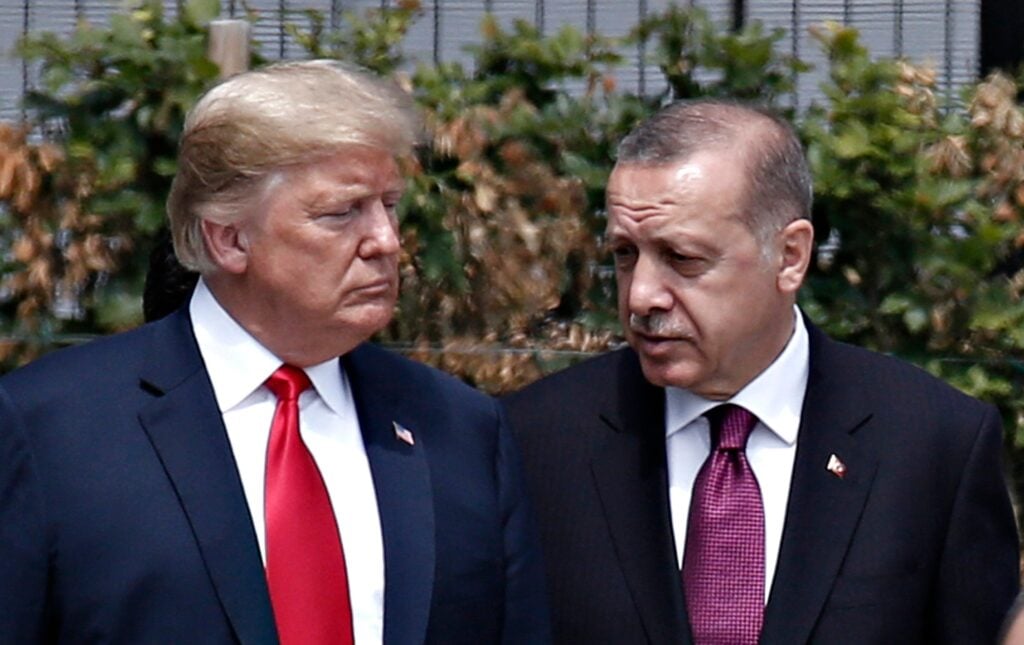
Despite the optimism expressed by former U.S. Ambassador Thomas J. Barrack Jr., who predicted in June 2025 that the impasse would be resolved by the end of that year with congressional support, the political reality proved far more complex. The move is expected to face fierce opposition from both Republican and Democratic lawmakers, led by Senator Jim Risch of Idaho, chairman of the Senate Foreign Relations Committee, who is displaying deep skepticism toward the deal.
 6+
6+The geopolitical significance of the move extends far beyond the military deal itself: it represents Trump’s attempt to strengthen ties with authoritarian leaders he admires, such as Erdoğan, even at the cost of cracks within NATO and damage to security interests vis-à-vis traditional allies like Israel and Greece. The move illustrates the unpredictable policy of the current administration, announced despite Erdoğan’s threats to the sovereignty of other NATO members, such as Greece and Cyprus, and his extreme statements against Israel.