


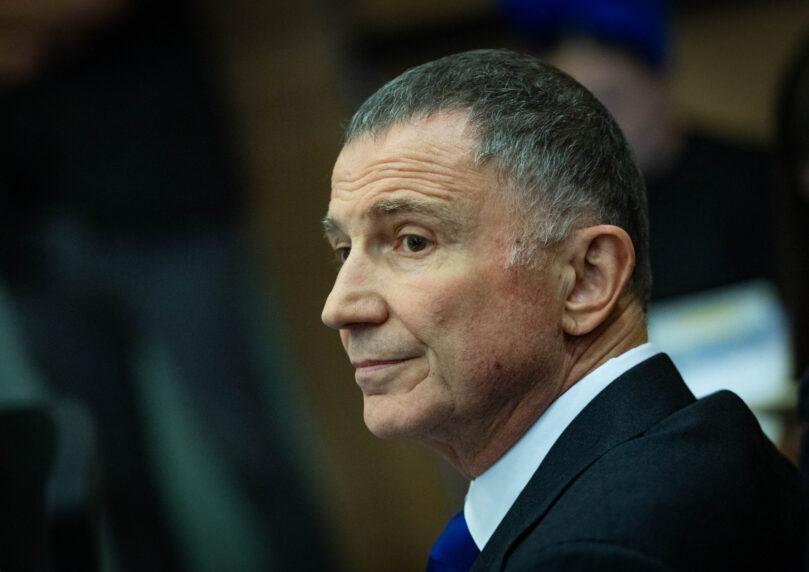

Knesset member Yuli Edelstein is a good man with decades of service to his credit, but in recent years he’s made a series of political miscalculations that have eroded his standing. The first mistake was positioning himself against Likud party chairman Benjamin Netanyahu. In 2021, Edelstein announced he would challenge Netanyahu for Likud leadership; in 2022, he withdrew his candidacy—but the move was enough to mark him as someone challenging the leadership from within.


 1+
This maneuver recalls the rally Nir Barkat held at the fairgrounds, signaling his intention to run and wrecking his standing, or Gideon Sa’ar, who challenged Netanyahu in 2019 and ultimately quit the party. Both apparently failed to internalize that in Likud, you don’t oust a sitting leader—it hasn’t happened in 80 years. It’s an entrenched political tradition. Edelstein, like former Defense Minister Yoav Gallant, made the mistake of believing polls and spin doctors who predicted in early 2024 that the government was about to fall.
They chose the wrong side of the political map and are now paying a heavy price. The haredi draft issue was just the pretext, not the real reason for their moves. While it’s true that many more haredim must serve in the IDF and there are ways to achieve that, Edelstein’s work in the Foreign Affairs and Defense Committee was far from bringing soldiers to the front urgently. Instead of advancing a practical solution, he chose a path that caused unnecessary delays in advancing legislation.
 1+
Instead of advancing an “emergency provision” that would set a quota of 4,000-5,000 soldiers already in 2025 in exchange for suspending sanctions, he held endless symposiums. These mainly served the political careers of figures like Yonatan Shalu, Shavit Raanan, “Tikun 2025,” “El HaDegel,” and Yoaz Hendel. The bottom line: soldiers didn’t arrive at recruitment offices as a result, the government didn’t fall, and there’s still no agreed-upon draft law.
Now, with this meager political harvest, Edelstein must face the voters and try to convince them of his abilities. He needs to explain how what he couldn’t accomplish as a senior representative in a 32-mandate party, he’ll manage to do with the political power of just four mandates. At the end of the day, the public—and voters in particular—want to see proven successes on the ground, not explanations and excuses for moves that didn’t pan out.