


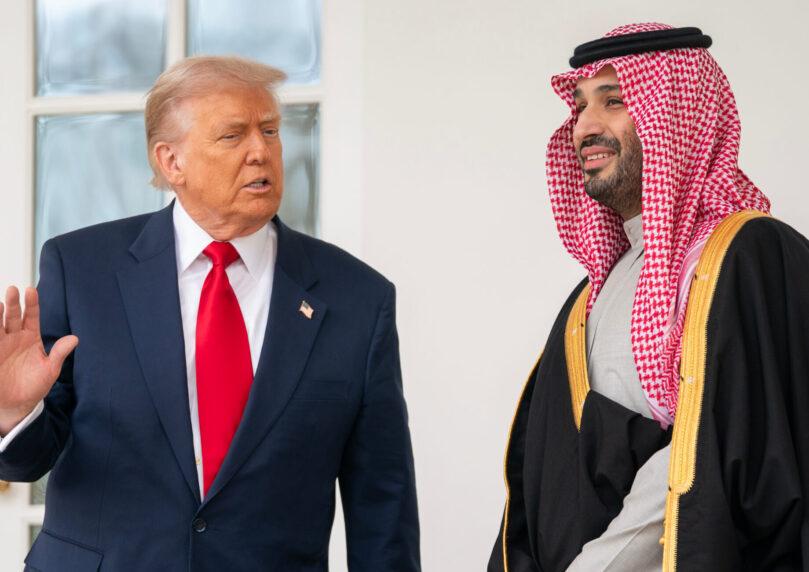

An unprecedented diplomatic crisis erupted between Washington and Riyadh after Saudi Arabia refused to allow the U.S. military to use its bases and airspace for “Operation Freedom.” The Saudi refusal—driven by fears of Iranian retaliation against the kingdom’s oil facilities—forced the United States to cancel a military operation and led to direct threats from the White House to halt shipments of critical air defense missiles to Riyadh.
Last spring, during the war with Iran, more than 100 American fighter jets were ready to take off from bases and aircraft carriers across the Middle East when they hit an unexpected obstacle: Saudi Arabia imposed a veto and closed its skies and bases to U.S. forces. The dramatic move, now revealed for the first time by U.S. officials, forced the White House to abruptly cancel the operation that President Donald Trump had announced just hours earlier. It sparked a severe diplomatic crisis that led to canceled official visits, harsh recriminations, and fears of dismantling the decades-old security architecture in the Persian Gulf, the Wall Street Journal reported Wednesday.


 2+
Tensions between the two countries escalated after Secretary of State Marco Rubio visited the United Arab Emirates, Kuwait, and Bahrain last week—but conspicuously skipped Saudi Arabia from his itinerary. Riyadh interpreted the move as a deliberate and calculated insult, coming just one week after Saudi Crown Prince Mohammed bin Salman declined an invitation to attend the G7 summit in France in protest of how the U.S. was conducting the war. While senior U.S. officials denied any malicious intent and pointed to a positive joint statement signed with Gulf states, Arab and American sources confirm this represents the deepest rupture in relations in decades.
The Saudis made clear to the White House even before the conflict erupted that any attempt to topple the regime in Tehran would lead to the closure of the Strait of Hormuz, upheaval in energy markets, and severe damage to the U.S. economy and regional stability. Despite the warnings, the United States launched the war alongside Israel, and Iran responded with precise missile and drone attacks that severely damaged critical energy infrastructure in the Gulf, including the Saudi oil complex at Ras Tanura. Following the strikes, bin Salman changed course and worked to calm tensions with Tehran through Pakistani mediation—a step that led him to refuse cooperation with Trump’s tanker defense operation, fearing further escalation.
 2+
The Saudi refusal triggered enormous anger in Washington, as well as in Israel and the United Arab Emirates, which recently withdrew from OPEC and tightened its security ties with the U.S. and Israel. The White House responded with a harsh ultimatum, threatening to halt shipments of missile interceptors that the kingdom desperately needs to defend against Iran and the Houthis. Saudi Arabia eventually backed down and lifted the restrictions, but the damage was already done: the U.S. did not relaunch “Operation Freedom,” and instead moved ships under cover of darkness with transponders turned off. Now, the Pentagon is examining a realignment and transfer of forces to more stable and supportive countries in the region.
The roots of the current rift lie in a deep gap in war strategy between the American administration and the Gulf states. While the Trump administration pursued a sharply aggressive line aimed at subduing Iran, Saudi Arabia felt that its decades-long investment in relations with the U.S. was not giving it real influence over decision-making in Washington, even as it paid the direct economic and security price on the ground.
 2+
Just last fall, the Saudi crown prince received a warm welcome at the White House, where Trump praised him and ignored international criticism over the Jamal Khashoggi affair. But the wartime reality changed the equation. As former senior Saudi intelligence official Prince Turki al-Faisal wrote in the newspaper Arab News: “When Iran and others tried to drag the kingdom into the furnace of annihilation, our leadership chose to absorb the pain to protect the lives and property of its citizens.”